Skip to content

Revision Blepharoplasty at Keangnam Korea: Restoring Beautiful Eyes After Botched Eyelid Surgery
When eyelid surgery goes wrong, the result is more than cosmetic. It affects confidence, daily comfort, and even how the eyes function. Yet too many people live with bad blepharoplasty outcomes because they fear another procedure will only make things worse. The truth is far more hopeful: with the right surgeon and the right technology, almost every botched case can be corrected.
At Keangnam Korea, we have successfully performed countless revision blepharoplasty procedures for people suffering from droopy lids, asymmetric eyes, lid retraction, scarring, and lifeless gaze. Read on for everything to know about how revision works, when to schedule it, and why Keangnam Korea has become the trusted destination for restoring beautiful, natural eyes.
Bad Blepharoplasty Complications & Causes
Eyelid surgery is one of the most popular aesthetic procedures today, transforming monolids, hooded skin, under-eye bags, and excess lid fat into bright, youthful eyes. Yet alongside this rising demand, botched eyelid surgery cases have multiplied, leaving lasting damage to both appearance and ocular health.
The root cause is almost always the same: choosing an inexperienced clinic or undertrained surgeon. The most common complications include:
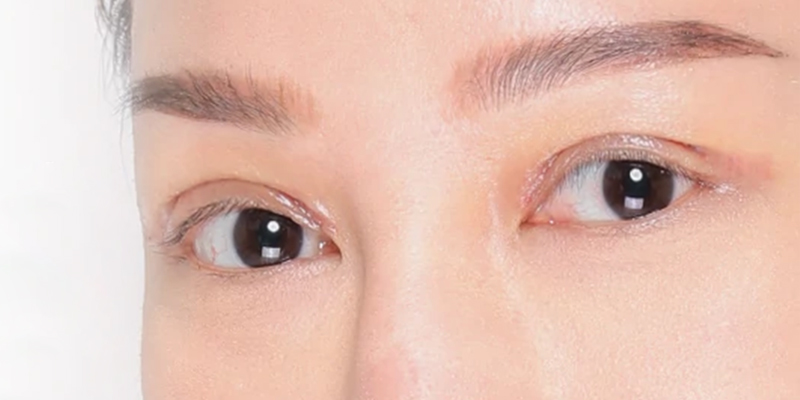
1. Asymmetric Eyes After Bad Blepharoplasty
Asymmetric eyes are the most frequent complication after a failed procedure. The two eyelids end up uneven in height, slanted at different angles, or retracted upward on one side.
This typically happens when the surgeon removes too much skin, cuts too deeply, or accidentally damages the levator muscle that controls lid movement. Imprecise technique can also cause the wound to widen during healing, which makes the eyelid contract abnormally and form scar tissue that pulls the eye out of alignment.
2. Sunken, Droopy, or Hollow Eyes
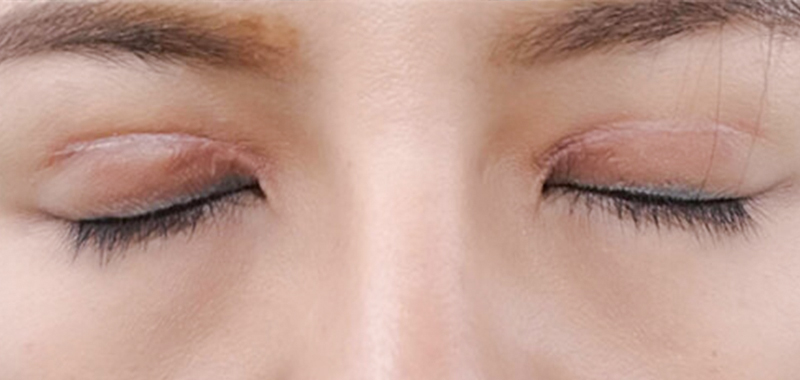
After a failed procedure, the eyes can appear deeply set, droopy, and lifeless. The most common reason is incorrect surgical execution that breaks or disconnects the levator muscle responsible for opening the eyelid.
The complication often becomes worse when loose or excess skin is not fully removed during the original surgery, which leaves the lid sunken, sagging, and unable to support a smooth, refreshed contour.
3. Lid Retraction (Eye Pulled Open Too Wide)
Lid retraction is the most serious complication of a botched eyelid surgery. It occurs when the surgeon removes excessive skin, leaving such a severe tissue deficit that the lid is pulled upward and held open. The eye becomes difficult to close, the cornea is exposed during blinking, and the orbit appears hollowed out. Telltale signs include persistent swelling, redness, and a vacant, lifeless gaze that no skincare or makeup can mask.
4. Keloid Scars and Pus Formation
This complication can stem from individual healing tendencies, inadequate aftercare, poor surgical technique, or substandard clinic conditions. The result: thick keloid scars, raised welts, infection, and pus, all of which destroy the natural beauty of the eye area.
Can a Bad Blepharoplasty Be Corrected?
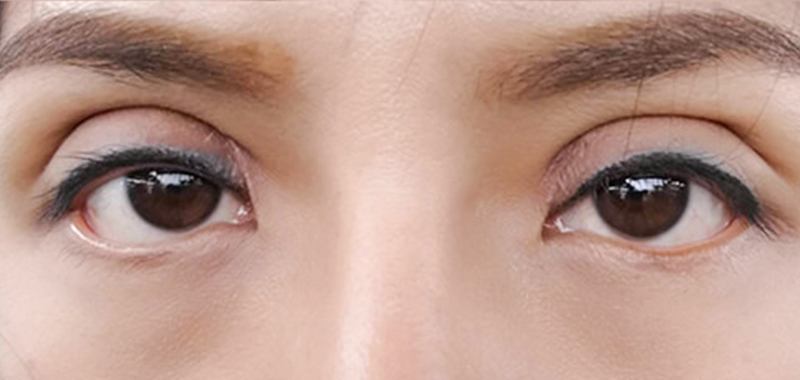
Yes, a bad blepharoplasty can almost always be corrected. With modern revision blepharoplasty techniques and an experienced surgeon, the vast majority of botched eyelid surgery cases (including asymmetric eyes, lid retraction, hollow lids, scarring, and droopy creases) can be successfully restored to a natural, balanced result.
The key conditions for a successful correction are:
- Waiting 3 to 6 months after the original procedure for tissue to fully heal and stabilize
- Choosing a clinic with proven expertise in revision eyelid surgery
- Selecting the right corrective technique for the specific complication
- Following post-revision aftercare carefully to optimize healing
What Can Be Corrected
| Botched Outcome | Corrective Technique | Success Rate |
| Asymmetric eyelids | Crease redesign + suture rebalancing | Very high |
| Lid retraction (eye pulled open too wide) | Skin grafting from autologous tissue | High |
| Sunken or hollow lids | Levator muscle suspension + fat grafting | High |
| Droopy / sagging lids | Excess skin removal + muscle repair | Very high |
| Keloid or hypertrophic scars | Scar excision + hidden-suture redesign | Moderate to high |
| Lifeless, lid lag, incomplete blink | Levator reconstruction | Moderate to high |
| Mismatched fold heights | Crease re-formation with calibrated suturing | Very high |
While most cases are correctable, certain factors can reduce the achievable result:
- Excessive skin removal in the original surgery (limited tissue available to redistribute)
- Severe levator muscle damage from aggressive cutting
- Long-standing scar tissue that has matured for years without intervention
- Multiple previous failed revisions (each surgery removes more usable tissue)
- Underlying medical conditions that impair wound healing
Even in these cases, significant improvement is still possible, though absolute perfection may not be achievable.
What to Expect From Revision Blepharoplasty
A well-performed revision delivers:
- Restored eyelid symmetry within 0.5 mm tolerance
- Natural, well-proportioned crease that matches facial structure
- Functional eye opening and closing without strain
- Hidden incision lines (especially with Korean micro-suture techniques)
- A refreshed, confident gaze that no longer reveals the botched history
How Long After Bad Blepharoplasty Can Revision Be Done?
Revision after botched eyelid surgery requires patience. The wound must fully heal and the eye area must stabilize, which typically takes 3 to 6 months before any corrective intervention is performed. Operating too early (before tissue softens and inflammation resolves) compromises the new result.
The standard waiting period is:
- Minimum 3 months for mild aesthetic concerns (uneven crease height, minor asymmetry)
- 6 months or longer for severe complications (lid retraction, scar tissue, muscle damage)
- 12 months if multiple revisions have already been attempted and tissue needs full recovery
Where to Get Revision Blepharoplasty Done Right?
Most botched eyelid surgery cases trace back to one root cause: the original procedure was performed at an unreliable or low-quality clinic. To avoid repeating the mistake, the single most important factor in revision is choosing a safe, internationally credentialed aesthetic hospital with proven expertise.
Keangnam Korea is currently the top choice for customers seeking high-success-rate revision blepharoplasty with minimal risk of further complications. Here is why:
1. Korean Perfect Eyes Microsurgical Technology
Keangnam Korea applies Perfect Eyes, a hidden-suture eyelid contouring technology powered by BernaStitch, transferred exclusively from Korea’s LUX Group. The technique uses ultra-fine 0.001 mm sutures placed just beneath the epidermis, sealing incisions invisibly so wounds heal rapidly without scarring.
2. Face AI Pro Simulation Technology
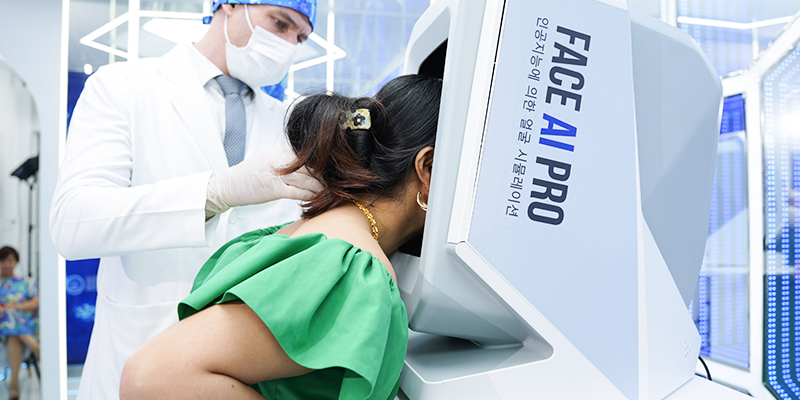
Beyond Korean-leading surgical methods, Keangnam Korea uses Face AI Pro, an artificial intelligence simulation system that previews surgical results with 99% accuracy before the procedure begins. This means clients see exactly what their eyes will look like after revision surgery, eliminating uncertainty and aligning expectations precisely with results.
The fully sterile aesthetic environment, combined with the most advanced surgical equipment, ensures every procedure runs smoothly and delivers optimal outcomes.
3. 10+ Years of Surgeon Expertise
Keangnam Korea is staffed by board-certified specialists with over 10 years of aesthetic surgery experience. Every procedure begins with thorough diagnosis, detailed consultation, and meticulous surgical execution, producing eyelid creases that look natural and beautifully refined.
4. Comprehensive Eye Aesthetic Services
Beyond revision blepharoplasty, Keangnam Korea offers a complete suite of eye aesthetic services:
- Non-incisional double eyelid surgery (suture method)
- Upper blepharoplasty
- Lower blepharoplasty
- Brow lift
- Inner corner widening (epicanthoplasty)
- Under-eye fat removal
- Ptosis (weak levator) correction
- Revision of botched eyelid surgery
- Eyelid fat grafting
Every service comes with a guarantee of high effectiveness and complete client satisfaction.
Effective Methods to Correct Botched Eyelid Surgery
At Keangnam Korea, we offer modern surgical techniques and AI-base consulting, customized to each case’s specific condition. Below are the most common corrective eye surgery types and how each one works.
1. Correcting Lid Retraction from Botched Eyelid Surgery
For cases where bad blepharoplasty has pulled the lid open too wide, surgeons perform a skin grafting procedure. This replenishes the over-excised skin, restores levator muscle function, and corrects the abnormal lid contraction. The graft tissue is harvested from the client’s own body to ensure complete biocompatibility and zero rejection risk.
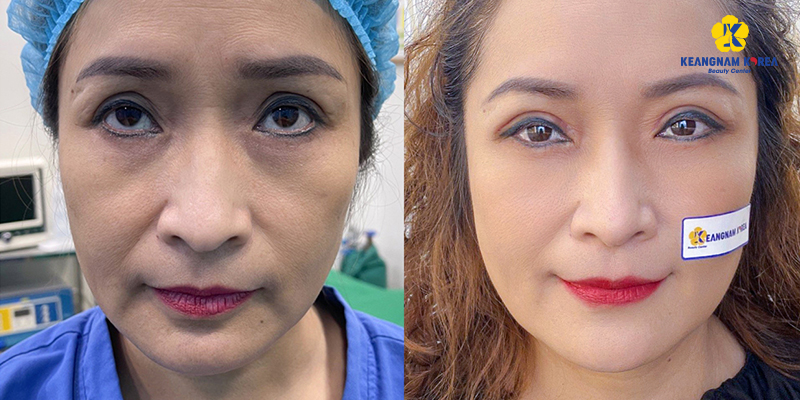
2. Correcting Sunken, Hollow, or Droopy Eyes
For sunken or sagging lids caused by failed surgery, our team performs levator muscle suspension surgery to restore proper eyelid lift. The surgeon then fully removes any remaining excess fat or skin that the previous procedure failed to address, fine-tuning until both eyes are perfectly balanced.
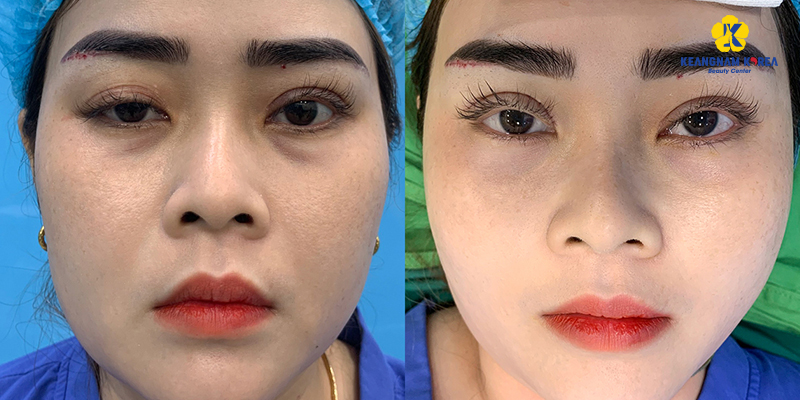
3. Correcting Scars from Botched Eyelid Surgery
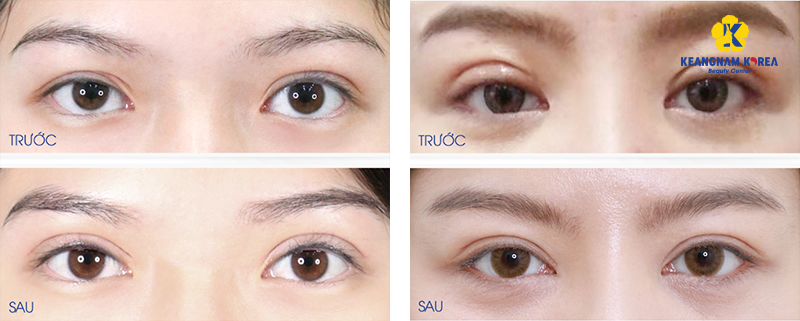
For scarring caused by previous failed surgery, the team carefully removes the hardened scar tissue along the original incision line. A new, clean eyelid crease is then created according to the client’s desired aesthetic. Aftercare includes prescribed scar treatment medications and a healing-supportive diet.
Revision Blepharoplasty Cost at Keangnam Korea
Revision blepharoplasty cost varies depending on:
- The severity of the original complication
- Whether skin grafting, fat repositioning, or scar removal is required
- The combined techniques needed in a single session
- The pre-existing eyelid condition
For an exact quote, call 0911 833 555 or visit Keangnam Korea to begin the journey back to bright, balanced, beautiful eyes.
RELATED ARTICLES

Alarplasty and Rhinoplasty Comparison: Which Procedure Fits Your Nose Shape
Selecting between alarplasty and rhinoplasty depends on whether your lower nose appears wide due to flared soft tissue or a low, unsupported structural bridge. Alarplasty isolates and reshapes the nostril wings at the base, whereas rhinoplasty elevates, straightens, or rebuilds
Nose Wing Reduction: Is Alarplasty Worth It? Pros, Cons, and Recovery Time
A nose wing reduction (alarplasty) is a surgical option for those whose nostril wings are naturally thick, wide, or flared while their nasal bridge height and tip projection already suit their overall facial proportions. This procedure selectively reshapes or excises
Alar Base Reduction Technique: Rolling vs. Excision Comparison
An alar base reduction technique narrows flared or wide nostrils by either folding the nostril rim inward with internal sutures or excising a targeted strip of tissue. In Ho Chi Minh City, Vietnam, plastic surgeons perform four main surgical variations
Top 5 Rhinoplasty Clinics in Ho Chi Minh
Rhinoplasty clinics in Ho Chi Minh City offer safe cosmetic nose surgery: Gangwhoo Aesthetic Hospital, JW Korean Aesthetic Hospital, Kangnam Aesthetic Hospital, Thu Cúc Aesthetic Hospital, and Keangnam Korea. In 2026, market rates for cosmetic nose surgery across these facilities
Collagen Injection vs. Laser for Facial Skin: Cost, Recovery, and Fit
A collagen injection vs laser for aging facial skin, which is better? They are two distinct approaches to facial rejuvenation and do not replace each other. Lasers work from the outside in to correct surface texture and pigment, while injected

Collagen Shots for the Face vs. Mesotherapy: Aging Grades, Cost, and Results
Deciding between collagen shots for the face and mesotherapy comes down to identifying which layer of your skin is experiencing aging. Mesotherapy nourishes the superficial skin layers for quick surface hydration, whereas collagen shots for the face rebuild structural density