Skip to content

Aesthetic Clinics in Ho Chi Minh City: Services, Costs, and How to Choose One
Aesthetic clinics in Ho Chi Minh City offer everything from a $16 acne light session to a $5,680 course of skin-tightening treatments. That range surprises most first-time visitors, and it isn’t arbitrary. Three very different kinds of facilities all describe themselves as “clinics” in English, and each one is licensed to do different things.
Here’s what these clinics treat, what you can expect to pay in 2026, and how to confirm a facility is licensed before you book.
What Aesthetic Clinics Treat
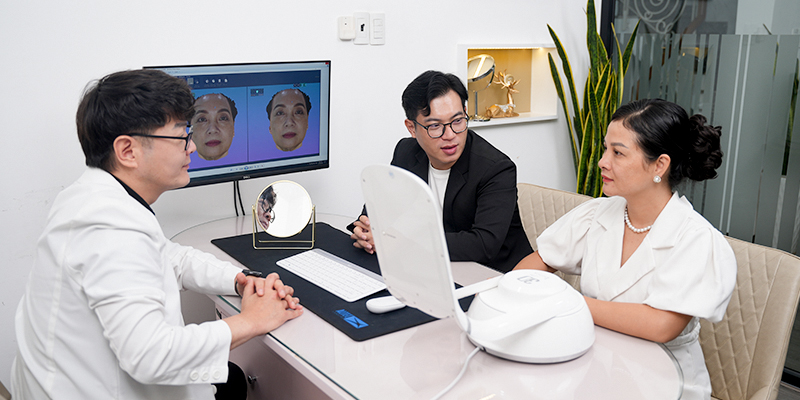
Most clinics in Ho Chi Minh City organize their menus around a handful of concerns rather than around technology. If you know which concern you’re bringing in, you’ll find the right kind of facility much faster.
1. Skin laxity and early sagging
Ultrasound and radiofrequency devices deliver heat a few millimeters below the surface, which prompts the skin to firm over the following weeks. Micro-focused ultrasound reaches about 1.5 to 4.5 mm down, the depth where the tissue supporting your jawline sits. These treatments work well on mild to moderate looseness. They won’t lift skin that has already sagged substantially.
2. Volume loss
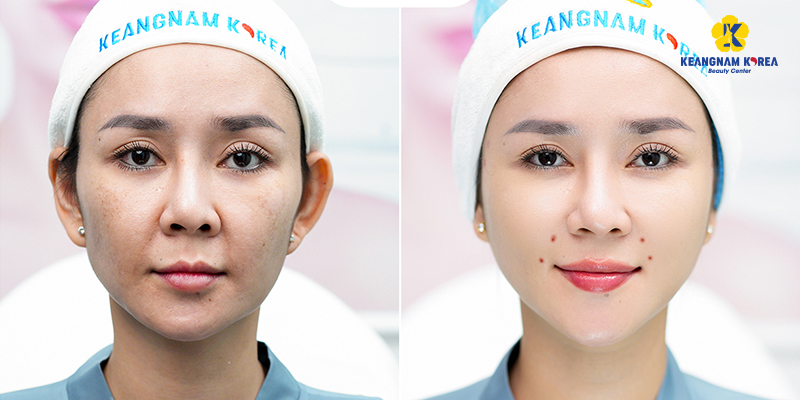
Hyaluronic acid fillers restore fullness in the cheeks, temples, and chin are the most common services at skin clinics in Vietnam. Korean-made fillers typically last 6 to 12 months; European and American brands last 12 to 24 months, because their gels are more tightly cross-linked and take longer for your body to break down.
3. Melasma, sun spots, and uneven tone
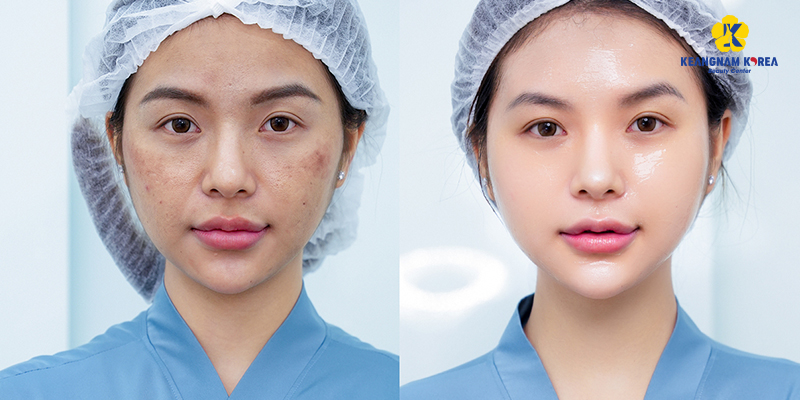
Pigment concerns are treated in courses rather than single visits, usually with laser toning, picosecond laser, or mesotherapy. Melasma in particular needs a dermatologist’s assessment first, since the wrong laser setting can darken the patch instead of clearing it.
4. Acne and acne scarring
Active acne is managed with light therapy, peels, and mesotherapy. Depressed scars left behind need a combination approach, because each scar shape responds to a different technique.
5. Eyelid and nose surgery
Some, though not all, facilities are licensed for surgery. Upper eyelid surgery, canthoplasty, ptosis repair, and rhinoplasty all fall here.
Explore more at:
What Treatment Costs in 2026
Prices below reflect the Ho Chi Minh City market and vary by facility.
1. Skin Tightening and Lifting
| Treatment | Cost per session or course |
| Radiofrequency skin firming | $47–$300 |
| Micro-focused ultrasound (Ultraformer MPT) | $380–$610 |
| Dual-wave radiofrequency (Density) | $470–$1,330 |
| Ultherapy Prime | $680–$2,460 |
| Thermage FLX, eye area | $1,140–$1,890 |
| Thermage FLX, full face | $1,890–$5,680 |
2. Injectables
| Treatment | Cost |
| Korean hyaluronic acid filler | $76–$190 per cc |
| European or American filler | $300–$530 per cc |
| Hyaluronic acid mesotherapy | $57–$150 per session |
| Polynucleotide (salmon DNA) | $98–$280 per 2 ml vial |
| Profhilo | $320–$760 per course |
| Sculptra or Radiesse | $380–$950 per vial |
| Platelet-rich plasma | $49–$380 per session |
3. Pigmentation, Acne, and Scarring
| Treatment | Cost |
| Acne care with IPL | $16–$56 per session |
| Chemical peel | $38–$76 per session |
| Laser toning for melasma | $57–$95 per session |
| Picosecond laser | $150–$270 per session |
| Mesotherapy for melasma | $57–$150 per session |
| Fractional CO2 laser for scars | $57–$130 per session |
| Full melasma course | $450–$1,140 |
| Full acne scar course (3–6 sessions) | $570–$1,520 |
4. Eyelid and Nose Surgery
| Procedure | Cost |
| Upper eyelid surgery | $300–$570 |
| Plasma or 6D eyelid surgery | $570–$980 |
| Canthoplasty | $380–$830 |
| Ptosis correction | $420–$830 |
| Revision eyelid surgery | $760–$1,670 |
| Rhinoplasty with synthetic implant | $530–$850 |
| Structural rhinoplasty | $1,140–$2,920 |
| Rib cartilage rhinoplasty | $3,030–$8,330 |
Why the Same Treatment Costs So Much More at One Clinic
Four things account for most of the difference between two quotes for the same procedure.
- The materials: Fillers, implants, and device tips certified by the FDA or carrying a CE mark cost the clinic considerably more, partly in the product itself and partly in licensing fees for the technology. Older transferred platforms, off-brand laser tips, and grey-market filler are what make rock-bottom prices possible.
- Who’s holding the device: A board-certified specialist with years of case volume charges more than a technician performing a treatment.
- How complicated your case is: A first-time procedure and a repair of a failed one may share a name, but the repair takes longer, carries more risk, and costs several times as much.

Who is not a candidate for aesthetic clinic in Vietnam
Some people are better served by postponing due to the time limitation or treatment’s special requirements:
- If you have less than three weeks in Vietnam, don’t start a course-based treatment. Melasma and scar protocols run three or more sessions about a week apart, and stopping partway leaves you with the full cost and a partial result.
- If your treatment needs close monitoring, a short trip won’t accommodate it. Deeper resurfacing and aggressive pigment work require in-person reviews on a set schedule.
- If you’re pregnant or breastfeeding, most injectables and energy devices are off the table.
- If you take blood thinners, immunosuppressants, or isotretinoin, say so before booking. These affect bleeding and healing enough to change or rule out your options.
How to Confirm a Clinic Is Licensed In Ho Chi Minh City?
This takes about five minutes and is the single most useful thing you can do before booking.
- Ask for the operating license number of aesthetic clinic. Licensed facilities display it, and it looks something like 06303/HCM-GPHĐ.
- Look it up. Search the facility name on the Ho Chi Minh City Department of Health portal at thongtin.medinet.org.vn.
- Check that the license covers what you’re booking. A skin-treatment license doesn’t authorize surgery. If you’re booking eyelid or nose surgery, the facility needs surgical permission specifically.
- Ask who performs the treatment. Doctor or technician is a perfectly reasonable question, and a legitimate clinic answers it without hesitating.
- Ask whether the aesthetic clinic allowed to treat foreign nationals. This is a separate permission, and plenty of licensed facilities don’t hold it.
Step three is the one people skip. A facility can hold a genuine license and still be operating outside it when it books you for surgery.

What to Expect at Your First Visit
A first appointment should be an examination, not a treatment. Expect the doctor to look at your skin under magnification, ask about your history, and only then recommend a protocol and quote a price.
Bring a list of any medications you take, mention any laser or resurfacing work from the past month, and say how long you’ll be in the city. If the clinic quotes you before examining you, that’s worth noting.
It’s also reasonable to ask what language your consent form is written in, and who will interpret during the consultation. That form lists the risks you’re agreeing to accept, and you should be able to read it.
When to Call Your Doctor
Contact the aesthetic clinic that treated you the same day if you notice any of the following:
- Skin that turns white, gray, or dusky after an injection. The FDA lists blanching among the warning signs of injection into a blood vessel.
- Any change in vision after a facial injection, including blurring or a dark patch. This needs emergency care.
- Pain that increases after the first day, especially alongside heat, spreading redness, or fever, which suggests infection.
- A blister, open sore, or dark crust following an energy-based treatment, which may indicate a burn.
How much does treatment at an aesthetic clinic in Ho Chi Minh City cost?
Surface treatments like IPL and peels run $16 to $95 per session. Injectables range from $49 to $950. Laser and scar work costs $15 to $270 per session, and skin-tightening devices run $47 to $5,680 per course. Eyelid and nose surgery ranges from $110 to $8,330.
What’s the difference between a skin clinic and a dermatologist?
A dermatologist is a doctor trained to diagnose and treat skin disease, and may work in a public hospital or private practice. A skin clinic is a facility offering cosmetic skin services, which may or may not have a dermatologist actually performing them. Asking who will treat you is the simplest way to tell.
Are Korean clinics in Ho Chi Minh City better?
Korean-affiliated clinics generally use licensed protocols and imported equipment, which affects the menu more than the outcome. What determines your result is the qualification of whoever treats you, the materials used, and whether the protocol suits your skin. Verify the license and credentials regardless of branding.
Can I finish a treatment course during a short trip?
Single treatments like filler, mesotherapy, or laser toning take a day. Course-based protocols typically need three sessions about a week apart, so allow around three weeks, plus a day at the start for your consultation. Melasma and scar courses of three to six sessions need proportionally longer.
What happens if I have a problem after I leave the city?
Routine progress checks on pigment or texture can usually be handled with photos taken in consistent lighting. Anything involving pain, color change, vision change, a suspected burn, or infection needs to be seen in person. Agree on a follow-up channel before your first session.
Book a consultation
The price gap across aesthetic clinics in Ho Chi Minh City looks alarming until you understand what’s behind it: materials, the qualifications of whoever performs the treatment, the complexity of your case, and the cost of running a properly licensed room. Read a price list next to a license number and the picture becomes much clearer than either one gives you alone.
Book a consultation with a doctor who examines your skin before quoting anything. A treatment chosen for your actual condition, at a facility whose license you’ve verified yourself, is worth considerably more than a discount on the wrong protocol.
RELATED ARTICLES

Alarplasty and Rhinoplasty Comparison: Which Procedure Fits Your Nose Shape
Selecting between alarplasty and rhinoplasty depends on whether your lower nose appears wide due to flared soft tissue or a low, unsupported structural bridge. Alarplasty isolates and reshapes the nostril wings at the base, whereas rhinoplasty elevates, straightens, or rebuilds
Nose Wing Reduction: Is Alarplasty Worth It? Pros, Cons, and Recovery Time
A nose wing reduction (alarplasty) is a surgical option for those whose nostril wings are naturally thick, wide, or flared while their nasal bridge height and tip projection already suit their overall facial proportions. This procedure selectively reshapes or excises
Alar Base Reduction Technique: Rolling vs. Excision Comparison
An alar base reduction technique narrows flared or wide nostrils by either folding the nostril rim inward with internal sutures or excising a targeted strip of tissue. In Ho Chi Minh City, Vietnam, plastic surgeons perform four main surgical variations
Top 5 Rhinoplasty Clinics in Ho Chi Minh
Rhinoplasty clinics in Ho Chi Minh City offer safe cosmetic nose surgery: Gangwhoo Aesthetic Hospital, JW Korean Aesthetic Hospital, Kangnam Aesthetic Hospital, Thu Cúc Aesthetic Hospital, and Keangnam Korea. In 2026, market rates for cosmetic nose surgery across these facilities

Collagen Injection vs. Laser for Facial Skin: Cost, Recovery, and Fit
A collagen injection vs laser for aging facial skin, which is better? They are two distinct approaches to facial rejuvenation and do not replace each other. Lasers work from the outside in to correct surface texture and pigment, while injected
Collagen Shots for the Face vs. Mesotherapy: Aging Grades, Cost, and Results
Deciding between collagen shots for the face and mesotherapy comes down to identifying which layer of your skin is experiencing aging. Mesotherapy nourishes the superficial skin layers for quick surface hydration, whereas collagen shots for the face rebuild structural density