Skip to content

Is Nose Thread Lift Safe? Results, Risks and Alternatives
A nose thread lift is generally safe when a trained doctor performs it in sterile conditions on an appropriate nose shape, but it still carries surgical risks such as infection, visible thread outlines, and thread migration. Results typically persist for 6 to 18 months, with market prices in Ho Chi Minh City ranging from $268 to $1,725 (7 to 45 million VND) depending on thread material.
Ideal candidates for this non-surgical procedure:
- People with a slightly low bridge: Seeking subtle elevation without surgical implants.
- People with a drooping tip: Desiring a more defined tip rotation.
- People testing a new nasal shape: Evaluating visual changes prior to committed rhinoplasty.
- Busy professionals: Requiring a brief 1 to 2-day recovery period.
Below is an overview of how a thread lift functions, clinical safety evidence, candidacy criteria, step-by-step procedures, recovery, direct comparisons with filler and surgery, and nose thread lift cost in Ho Chi Minh City.

Key Takeaways
- Anatomical Boundary: A nose thread lift elevates the bridge and supports the tip by placing dissolvable threads into soft tissue without scalpels, bone scraping, or solid implants.
- Removal Complexity: Barbed threads stimulate local collagen and tissue anchoring. If early thread removal is required due to misalignment or infection, surgical dissection may be necessary, potentially leaving internal scar tissue.
- Temporary Nature: Threads naturally dissolve within 6 to 12 months, with secondary collagen synthesis maintaining the refined shape for up to 18 months.
What Is a Nose Thread Lift?
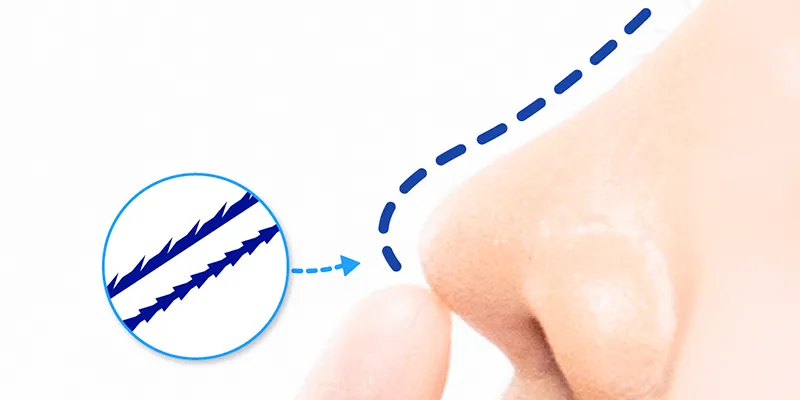
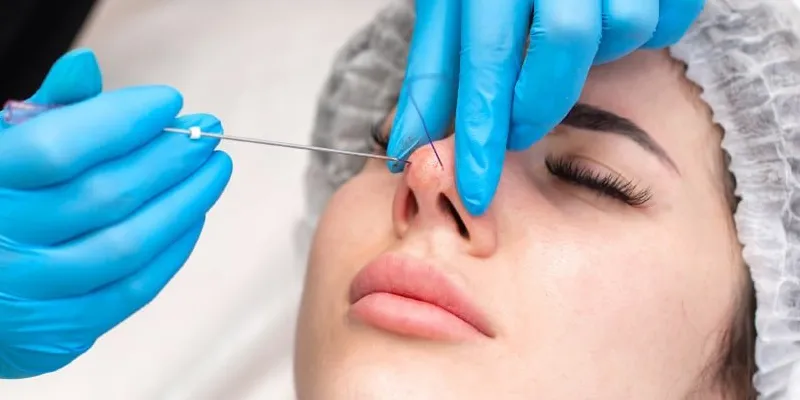
A nose thread lift introduces dissolvable bio-compatible threads into the nose via a fine guide needle, typically entering at the tip or the columella (the tissue bridge between nostrils). The threads are placed vertically to support tip projection and longitudinally along the nasal bridge to increase height. The procedure involves no surgical incisions, tissue dissection, or permanent synthetic implants.
How a Nose Thread Lift Is Done
- Medical Consultation: The physician evaluates nasal structure, skin thickness, and procedure history to select thread type, quantity, and vector orientation.
- Cleansing and Mapping: The nose is disinfected and entry points are marked.
- Local Anesthesia: Numbing medication is administered, requiring a 10 to 15-minute wait for full effect.
- Thread Insertion: Threads are introduced via a guide cannula into targeted dermal layers under sterile conditions.
- Symmetry Assessment: The physician verifies alignment and provides aftercare instructions.
The procedure takes approximately 20 to 60 minutes depending on thread volume.
Pros and Cons of a Nose Thread Lift
Pros:
- Minimal Downtime: Requires no surgical recovery, allowing most patients to resume normal daily activities within 1 to 2 days.
- No Surgical Incisions: Leaves only a single pinpoint entry mark at the tip without visible scarring or permanent structural alteration.
- Immediate Visual Lift: Delivers instantaneous bridge height elevation and subtle tip projection on the same day.
- Naturally Dissolvable: Uses biocompatible PDO, PLLA, or PCL materials that naturally dissolve over 6 to 12 months, making it a reversible alternative to permanent implants.
Cons:
- Temporary Duration: Results generally persist for 6 to 18 months, requiring periodic repeat treatments to maintain shape.
- Anatomical Limits: Cannot fix a prominent dorsal hump, reduce wide nostril wings (alar base), or correct a deviated septum.
- Tissue Dissection Risks on Removal: Early thread removal due to misalignment or infection is complex, as barbed threads anchor into tissue and may require surgical extraction.
- Risk of Thread Visibility: Thin nasal skin increases the potential risk of visible thread outlines or extrusion at entry points.
Types of Thread for Nose Lifting
- PDO (Polydioxanone): The most widely used material. PDO has a long history of safe use in surgical sutures. A PDO nose thread lift serves as the baseline clinical option.
- PLLA (Poly-L-Lactic Acid): Provides greater longevity and stimulates stronger dermal collagen synthesis.
- PCL (Polycaprolactone): Offers the longest breakdown timeline among dissolvable materials.
All three material types gradually dissolve and are safely absorbed by the human body over time.
Nose Thread Lift Prices in Ho Chi Minh City (2026)
In Ho Chi Minh City, the overall cost of a nose thread lift depends primarily on the specific thread material and technology selected (such as PDO, PLLA, PCL, or specialized collagen threads). Each material offers a different dissolution timeline, structural strength, and collagen-stimulating capability, directly dictating the price per session.
Below are market reference rates across non-surgical thread materials in Ho Chi Minh City:
| Treatment Category | Key Thread Material / Technology | Market Price Range (2026) |
| PDO Thread Lift | Polydioxanone (standard 6–12 month longevity) | $575 – $95915 – 25 Million VND |
| PLLA Thread Lift | Poly-L-Lactic Acid (stronger collagen boost) | $959 – $1,34225 – 35 Million VND |
| PCL Thread Lift | Polycaprolactone (longest 12–18 month longevity) | $1,150 – $1,72530 – 45 Million VND |
| Nano Collagen Thread | Fine bio-collagen mesh for light bridge smoothing | $38310 Million VND |
| Multi-Layer Collagen Thread | Multi-strand collagen vector for tip & bridge support | $95925 Million VND |
Note: While thread material is the main pricing driver, total costs are also influenced by the number of threads required for your nasal anatomy, physician expertise, and clinic operating standards.
Is Nose Thread Lift Safe?
A nose thread lift reaches maximum safety when three criteria align: an accredited medical setting, a qualified physician, and an anatomically suitable nose shape. Deviating from these parameters increases clinical risk.
Because the procedure introduces foreign material into soft tissue layers, it requires strict surgical sterility rather than standard cosmetic spa hygiene.
Risks of a Nose Thread Lift
- Needle Point Infection: Bacterial entry at the insertion site.
- Thread Extrusion: Threads becoming visible or poking through thin nasal skin.
- Thread Migration: Shifting of placed threads due to facial movement.
- Subcutaneous Granulomas: Inflammatory tissue reactions surrounding the material.
- Septal Deviation or Tissue Necrosis: Resulting from improper depth or excessive pressure.
- Difficult Removal: Barbed threads anchor firmly into tissue. Emergency removal requires precise surgical dissection, which can leave localized scar tissue.
→ Learn more: whether rhinoplasty is dangerous

Who Is a Good Candidate for Nose Thread Lift?
A nose thread lift produces optimal results for individuals presenting:
- A low bridge with balanced symmetry: Free of prominent dorsal humps or structural crookedness.
- A slightly drooping or soft nasal tip: Requiring light vertical support.
- Adequate skin thickness: Thin skin increases thread visibility risks.
- No prior nasal surgery or implants: Intact natural tissue architecture.
- Expectations of subtle enhancement: Seeking natural refinement rather than drastic reshaping.
Note: A nose thread lift for wide nose concerns provides minimal benefit. Threads cannot narrow broad alar cartilage or reduce a wide tip. Addressing a broad nose, prominent hump, or crooked septum requires structural rhinoplasty, often combined with alar base reduction.
→ Learn more: structural rhinoplasty

Nose Thread Lift Recovery Time
Nose thread lift recovery time typically spans 1 to 3 days. Essential post-treatment guidelines:
- Avoid touching or applying pressure to the needle entry point for 3 to 5 days.
- Clean entry points using sterile saline; avoid harsh alcohol-based toners.
- Refrain from applying makeup to the nose area for 3 to 5 days.
- Pause strenuous exercise, heavy lifting, and facial massages during the first week.
- Sleep in a supine position (on your back) for at least two weeks.
Contact your medical provider if swelling or redness increases after day three, if fluid drains from the entry point, or if pain worsens.
How Long Does a Nose Thread Lift Last?
Results of thread lift generally last 6 to 18 months, depending on thread material, quantity, and individual metabolic rates. Collagen synthesized along the thread tracks helps maintain subtle structure after the material dissolves. Repeat procedures are typically evaluated at 12 to 18-month intervals.
Alternative Options for Non-Surgical and Surgical Nose Refinement
When evaluating a nose thread lift, comparing it directly against other clinical alternatives helps you determine whether a non-surgical tweak or permanent surgical restructuring best fits your anatomical needs:
| Comparison Variable | Nose Thread Lift | Nose Filler (Liquid Nose Job) | Structural Rhinoplasty |
| Procedure Time | 20 to 60 Minutes | 10 to 30 Minutes | 1.5 to 3 Hours |
| Recovery Timeline | 1 to 3 Days | 1 to 3 Days | 1 to 2 Weeks (Swelling settles over 3 months) |
| Result Duration | 6 to 18 Months | 6 to 18 Months | Long-Lasting / Permanent |
| Primary Risk | Infection, thread outline, extrusion | Vascular occlusion, tissue necrosis | Surgical & anesthetic risks |
| Degree of Change | Subtle bridge & tip lift | Subtle to moderate bridge volume | Complete structural reshaping |
| Best Indication | Minor tip & bridge elevation | Bridge hollows & minor bumps | Major anatomical restructuring |
Nose Thread Lift vs. Dermal Filler (Liquid Nose Job)
Both options provide temporary non-surgical enhancement, but they function through completely different mechanisms:
- When to Choose Dermal Fillers: Dermal fillers (hyaluronic acid) excel at filling deep depressions, disguising minor dorsal humps, and building smooth bridge volume. Fillers can also be dissolved using hyaluronidase enzymes if necessary.
- When to Choose Threads: Threads provide structural vector support rather than fluid volume, making them superior for defining a drooping nasal tip without spreading sideways or widening over time.
- Safety Distinction: Fillers carry a risk of vascular occlusion (arterial blockage) which can cause skin necrosis or visual impairment. Threads present zero risk of arterial embolization, though improper placement can lead to thread extrusion or localized infection.
→ Learn more: liquid nose job options
Nose Thread Lift vs. Structural Rhinoplasty
Choosing between threads and surgery comes down to whether you require a subtle temporary adjustment or permanent anatomical correction:
- When to Choose Structural Rhinoplasty: Surgical rhinoplasty physically alters bone and cartilage frameworks. It is essential if you need to reduce a prominent dorsal hump, narrow a broad nasal base (alar reduction), straighten a crooked septum, or rebuild a severely collapsed tip.
- When to Choose a Thread Lift: A thread lift serves as a brief, non-surgical alternative if your underlying nasal structure is already balanced and you only desire mild bridge height and tip rotation with minimal downtime.
→ Learn more: surgical vs non-surgical rhinoplasty cost
Elevate Your Nasal Profile at Keangnam Korea
Ready to enhance your nasal contours while staying in Ho Chi Minh City? At Keangnam Korea, we understand that every face possesses distinct proportions, and non-surgical nose refinement should be completely tailored to your individual features and schedule. Honored with multiple national awards for excellence in aesthetic care, our medical team delivers precise, personalized non-surgical options in a comfortable setting.
Instead of applying uniform thread patterns, our board-certified physicians utilize Face AI 3D Diagnostic Technology to evaluate your nasal bone structure, skin thickness, and tissue elasticity in real time. You will collaborate directly with your doctor to preview, adjust, and approve your custom vector plan—whether choosing PDO thread lifting, targeted filler, or structural surgery—ensuring a seamless, flight-ready experience.
Call or Zalo us at 0911 833 555 right now to claim your complimentary Face AI 3D skin analysis and receive a personalized treatment plan.
Does a nose thread lift hurt?
Local anesthesia is administered prior to thread placement, making the procedure comfortable. Mild post-procedure soreness is normal, but persistent or worsening pain should be evaluated by your doctor.
Can nose threads be removed early?
Threads dissolve naturally over 6 to 12 months. Early removal of barbed threads is complex because the material anchors into soft tissue; removal may require surgical dissection and can leave localized scar tissue.
Can I get a nose thread lift after nose filler?
Consult a qualified physician. Combining threads and dermal fillers in the same anatomical area carries higher clinical risks, including localized tissue inflammation or vascular compromise, requiring careful doctor assessment.
Can a nose thread lift be repeated?
Yes. Repeat procedures are typically performed after 12 to 18 months once previous threads have dissolved. Your doctor will evaluate underlying tissue elasticity before placing new threads.
Is a nose thread lift better than rhinoplasty?
Neither is universally better; they serve different anatomical needs. A thread lift provides a subtle, non-surgical adjustment with minimal downtime, whereas rhinoplasty permanently reshapes bone and cartilage to address humps, wide wings, or septal deviations.
RELATED ARTICLES

Top Korean Rhinoplasty Clinics in Ho Chi Minh City & Latest Price List
A Korean rhinoplasty clinic in Ho Chi Minh City charges about $537 to $859 (14 to 22.4 million VND) for a basic Korean-style nose lift with an artificial implant, and $1,150 to $2,995 (30 to 78.1 million VND) for structural

Mesotherapy for Skin Brightening: Costs, Clinic and Safety Guide
Mesotherapy for skin brightening cost in Ho Chi Minh City ranges from $58 to $192 (1.5 to 5 million VND) per session for basic vitamin C and hyaluronic acid formulas, reaching $460 to $959 (12 to 25 million VND) for

How Much Does Mesotherapy Cost in Vietnam?
Mesotherapy in Vietnam costs about $77 to $575 (2 to 15 million VND) per session in Ho Chi Minh City, depending on your treatment goal and active ingredients. A basic hyaluronic acid session starts lower, at $58 (1.5 million VND).

How to Get Fair Skin for Men? 6 Skin Brightening Treatments for Men in Ho Chi Minh City
How to get fair skin for men? Skin brightening for men focuses on eliminating sun tan, rough texture, and dark spots to reveal your natural skin tone. While daily sun protection and niacinamide serums manage light surface dullness, professional options

Collagen Injection: Benefits, Types, Pain and Price in Ho Chi Minh City
A collagen injection places purified collagen, or a biostimulatory substance that prompts your skin to build its own collagen, into the dermal layer to improve firmness, skin thickness, and fine lines. Collagen injection prices in Ho Chi Minh City vary

Collagen Injection Benefits, Types, Pain and Price in Ho Chi Minh City
A collagen injection places purified collagen, or a biostimulatory substance that prompts your skin to build its own collagen, into the dermal layer to improve firmness, skin thickness, and fine lines. Collagen injection prices in Ho Chi Minh City vary