Skip to content


Cosmetic Surgery in Vietnam: Costs, Recovery, and Planning the Trip
Most people researching cosmetic surgery in Vietnam start with the price. If you’re flying in, the more useful number is how many days you’ll need to stay. Eyelid surgery ties you to the country for about ten days. Rib cartilage rhinoplasty takes three weeks. That difference will shape your trip far more than the difference in cost will.
Surgery here runs roughly $110 to $8,330 depending on what you’re having done, which is a fraction of what the same procedures cost in Singapore and well below Korean and Thai pricing. Here’s what each procedure involves, how long it keeps you in Vietnam, and what to check before you book anything from overseas.

How Long You’ll Need to Stay After Cosmetic Surgery in Vietnam
Sutures come out between day five and day seven for most procedures, and you’ll want at least one review appointment after that before flying. Working backwards from those two fixed points gives you a realistic minimum.
| Procedure | Visible healing | Plan to stay |
| Nose filler | Same day | 1 day |
| Thread lift | 1–3 days | 4–6 days |
| Non-surgical eyelid stitching | No incision | About 1 week |
| Upper eyelid surgery | 7–10 days | 10–13 days |
| Rhinoplasty with synthetic implant | 5–7 days | 8–10 days |
| Rhinoplasty with cartilage tip graft | 7–10 days | 10–13 days |
| Structural rhinoplasty | 10–15 days | 2–3 weeks |
| Rib cartilage rhinoplasty | 15–20 days | About 3 weeks |
| Revision surgery | Assessed case by case | 2–3 weeks |
Add two or three days at the front for your consultation and pre-operative health screening. Your surgeon confirms the technique only after examining you, and that examination can change everything downstream.
This is the part worth planning conservatively. A nose booked as a straightforward implant case can be reassessed as structural work once a surgeon sees the skin thickness and septum, which moves you from eight days to three weeks. Book your return flight after that conversation, not before it.
Swelling continues settling long after you leave. Eyelid height and crease shape reach their final position over one to three months, and a nose keeps refining for several months past the point where it looks healed.
Why People Travel to Vietnam for Cosmetic Surgery
Medical tourism to Vietnam has grown for two straightforward reasons. Prices sit at the low end of Southeast Asia for equivalent procedures, and most of the country’s surgical capacity is concentrated in one city, which makes the logistics manageable.
The price gap is easiest to see in a procedure with published figures across several markets. Lower eyelid surgery costs $270 to $830 in Ho Chi Minh City. The same operation runs $1,000 to $3,000 in Korea, $1,050 to $1,670 in Thailand, and $4,690 to $11,720 in Singapore, where you’ll also pay a separate consultation fee of $39 to $117.
For Vietnamese living abroad there’s a practical draw on top of the financial one. The procedure fits inside a family visit that was already happening, and the consultation takes place in a shared first language, which matters more than people expect when you’re discussing risk.
Worth knowing before you get attached to the savings: the gap closes quickly if something needs correcting. Revision eyelid surgery runs $460 to $2,270 and revision nose work reaches $4,550, and that’s before a second set of flights.
Eyelid Surgery Options & 2026 Cost in Vietnam
Eye procedures are the most commonly booked category among visitors, largely because the healing window fits comfortably inside a two-week trip.
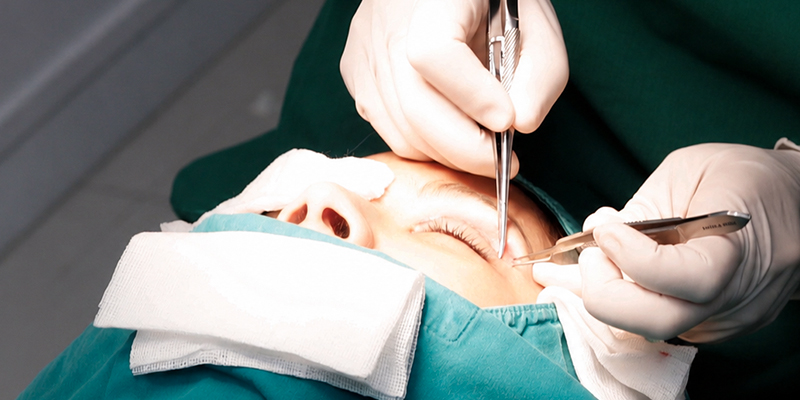
- Double eyelid surgery creates a crease in the upper lid. Standard incisional surgery costs $300 to $570. The surgeon opens a small incision along the crease line, removes some fat, and trims mild excess skin, with healing over seven to ten days. Plasma and 6D variations cost $570 to $980 and use a high-frequency blade that seals blood vessels as it cuts, which reduces bruising and shortens the swollen phase.
- There’s also a non-surgical eye lift option at $110 to $300, where sutures link the lid skin to the underlying muscle through small entry points. It suits younger people with firm lid muscle and no excess skin, and it doesn’t last as long as incisional surgery.
- Lower eyelid surgery and eye bag removal runs $200 to $950, with endoscopic fat removal at the top of that range. In some cases the surgeon repositions the fat within the socket rather than removing it, which avoids the hollowed look that plain removal sometimes leaves behind.
- Canthoplasty costs $380 to $830 and opens the inner or outer eye corner using a small skin flap, adjusting the length of the crease and the apparent spacing between the eyes.
- Ptosis correction costs $210 to $1,700 and tightens the muscle that lifts the eyelid. If the droop is affecting your vision rather than just your appearance, public eye hospitals treat straightforward cases from around $230 per eye.
- Revision eyelid surgery costs $460 to $2,270. The wide range reflects how variable this work is: releasing scar tissue, rebuilding the lifting muscle, and sometimes grafting fat back into the socket are all different jobs.
Rhinoplasty Techniques and Their Trade-offs
Nose surgery spans the widest price range of anything on the list, because the techniques do fundamentally different jobs. Your surgeon should select one based on your nasal structure and skin thickness, not on your budget.
| Technique | Cost | Healing | Typical lifespan |
| Synthetic implant | $530–$850 | 5–7 days | 10–25 years |
| Cartilage tip graft | $760–$1,040 | 7–10 days | 15–20 years |
| Structural | $1,140–$2,920 | 10–15 days | No replacement schedule |
| Rib cartilage | $3,030–$8,330 | 15–20 days | No replacement schedule |
| Thread lift | $270–$1,700 | 1–3 days | 6–12 months |
| Filler | $230–$760 | Same day | 12–18 months |
- Synthetic implant rhinoplasty raises the bridge with a soft silicone implant placed through a closed incision inside one nostril. It leaves the tip, septum, and nasal bone alone, so it’s suited to a nose that’s already reasonably long with a slim tip and thick soft tissue. If your skin is thin, this is where problems show up over time: the implant can shift, redden at the tip, or become visible through the skin.
- Cartilage tip graft rhinoplasty wraps ear cartilage over the tip above a synthetic bridge implant. That layer acts as a buffer against the redness and visibility that thin skin invites, which is why it holds fifteen to twenty years against ten to twenty-five for a bare implant. The trade-off is a second small incision behind your ear. Grafted ear cartilage loses five to ten percent of its volume over the first year or two, and what remains firms into a stable cushion.
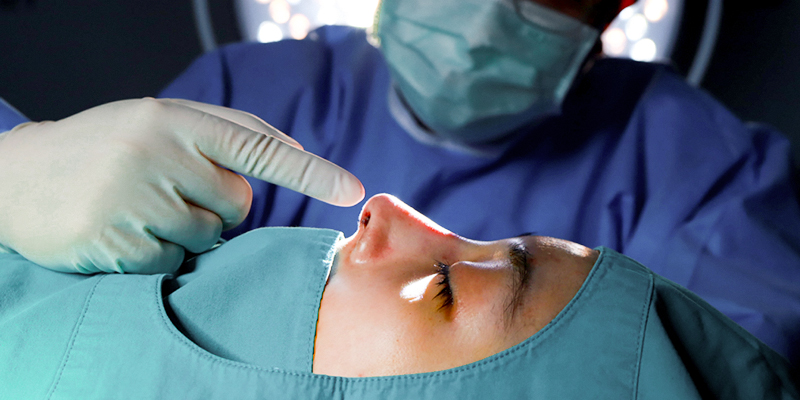
- Structural rhinoplasty is the technique for a nose that needs actual rebuilding. Through an open incision, the surgeon constructs a support strut from septal or biological cartilage, raises the bridge with a micro-porous material like Surgiform or Nanoform that tissue grows into, and shapes the tip with ear cartilage. This is what corrects a short upturned nose, a bulbous tip, a dorsal hump, or a deviation.
- Rib cartilage rhinoplasty rebuilds the entire support structure from two to three centimeters of your own sixth or seventh rib. Because the material is yours, rejection isn’t a concern. It’s major surgery under general anesthesia in a hospital with emergency facilities, it adds a chest incision, and warping or partial reabsorption occurs in two to five percent of cases. Surgeons reserve it for badly damaged noses, scar contracture, repeat revisions, and people who’ve reacted to synthetic material.
- Non-surgical options deserve a clear-eyed look. Thread lifts and filler reshape the bridge without an incision and keep you off work for a day or less, but they last six to eighteen months and neither one touches the support structure underneath. They won’t fix a deviated bridge, a bulbous tip, or a short nose. Threads are also difficult to remove if the result disappoints, since the barbs bind to tissue and form fibrous bands that need surgical dissection.
What Actually Drives the Price of Plastic Surgery in Vietnam
Four variables explain most of the gap between two quotes for the same operation.
- The materials: Implants and grafts certified by the FDA or carrying a CE mark cost the hospital considerably more, both in the product and in technology licensing. Cheaper quotes generally involve older transferred platforms or materials sourced outside official channels.
- Who’s operating: A specialist with high case volume in your particular procedure charges more than a general practitioner performing something with the same name.
- How complex your case is: A first-time procedure and a repair of a failed one share a name and nothing else. The repair takes longer, carries more risk, and costs several times more.
- What the room costs to run: Sterile theaters, anesthesia teams, pre-operative screening, and scheduled follow-up are all inside a licensed hospital’s price.
How to Read Before-and-After Photos
Photo galleries are useful, but only with three pieces of context that most of them leave out.
- When was it taken: A photo from two weeks post-op still shows swelling. Eyelid results settle over one to three months and noses keep changing for longer, so a fair comparison image sits at least three months out.
- Which technique produced it: A single gallery usually mixes implant, tip graft, and structural cases. A structural result isn’t available to you if your anatomy and budget point toward a simple implant.
- What the starting point was: Ask to see cases that began somewhere close to where you are. That’s a more useful request than asking for the best results on file.
What you’re looking for in a good result is balance with the rest of the face, not height. And expect some unevenness in the first few weeks, since the two sides settle at different rates. Persistent asymmetry is what follow-up appointments exist to catch.
Choosing a Hospital From Overseas
Vetting a facility you can’t visit takes five checks, none of which involve the advertised price.
- Confirm the surgical license: The hospital needs a Department of Health license that specifically covers cosmetic surgery. A skin-treatment license is a different class and does not authorize an operating theater. Search the facility name on the Ho Chi Minh City Department of Health portal at thongtin.medinet.org.vn.
- Confirm they can treat foreign nationals: This is a separate permission on top of the operating license, and plenty of licensed hospitals don’t hold it.
- Ask about case volume in your specific procedure: Ask how many of your procedure the surgeon has performed, which is a different number from the hospital’s total volume.
- Ask about the theater and pre-operative screening: A sterile theater, a proper anesthesia setup, and a health check before surgery are the baseline. They also reduce swelling and shorten healing, which matters when your dates are fixed.
- Get the aftercare terms in writing: How many follow-up visits are included, how you’ll reach them once you’ve flown, and what the revision policy covers.
Ask for a video consultation before you commit to dates. A surgeon willing to look at your photographs and talk through the likely technique in advance is giving you the single most useful piece of planning information you can get.
Follow-Up Once You’re Home
This is the part that worries people most, and reasonably so. Sort it out before surgery rather than after.
Some appointments simply can’t happen remotely. Suture removal, the first wound assessment, and anything involving pain, fever, spreading redness, or a change in skin color need a doctor to look at the area directly. Build enough days into your trip that these happen before you fly.
Routine progress checks are a different matter. Swelling and shape can be tracked from clear photographs taken in consistent lighting, front and both profiles, at intervals your surgeon sets. Agree on the channel and the schedule before you leave.
The question people forget to ask is what the revision policy covers and for how long. Get it in writing before the procedure. A revision means a second trip, a second set of flights, and a second block of time off work, so the terms matter more here than they would if you lived nearby.
Who Should Postpone
Some people are better off waiting for a later trip, and hearing that from a surgeon is a good sign rather than a bad one.
- If you have fewer than ten days in Vietnam, don’t book surgery. Sutures come out on day five at the earliest, a review has to follow, and leaving before that means flying with a wound nobody has assessed.
- If your case needs repeated in-person review, compressing the schedule doesn’t work. Rib cartilage reconstruction and complex revision need fifteen to twenty days of healing plus review appointments on top.
- If you take blood thinners or immunosuppressants, or you have uncontrolled diabetes, a bleeding disorder, or a history of keloid scarring, get medical clearance before you book anything. These affect bleeding and healing enough to change your options or rule out surgery entirely.
Pregnancy and breastfeeding rule out elective surgery. Isotretinoin affects skin healing, so mention it even if you stopped taking it recently.
Surgery at Keangnam Korea in Ho Chi Minh City
Keangnam Korea operates in Ho Chi Minh city, under Department of Health operating license 06303/HCM-GPHĐ and holds the additional Department of Health clearance to perform cosmetic surgery on foreign nationals, which is a smaller list than the general licensing register.
How we work:
- The technique is chosen after examination: The surgeon assesses nasal structure, skin thickness, facial proportion, and what you’re hoping to change before naming a procedure, which means you’re not booked into something heavier than your case calls for.
- The result is modeled during the consultation: The hospital uses a system called Face AI Pro that projects the intended shape onto your own face and analyzes facial proportion, so the plan can be settled in a single visit when your time is limited.
- Screening happens before surgery is confirmed: Pre-operative assessment covers thirty-six health measurements to check that you can safely take the anesthesia and the procedure.
- Eye work is handled in one operation: The Perfect Eyes Iconic technique addresses lid height, crease, and the surrounding area together rather than staging them, so one healing window covers the lot. Cold plasma afterward helps settle the swelling.
Consultation is free, and appointments are arranged around the days you have left in the country. Call 0911 833 555 to book an examination, and ask for the schedule and quote in writing before you commit to dates.

Cosmetic surgery in Vietnam works well for people who plan the trip around the healing time rather than the price. The cost advantage over Singapore, Korea, and Thailand is real and measurable, and it disappears entirely if a result needs correcting, since revision is consistently the most expensive category on any price list.
Two decisions do most of the work in protecting your outcome: choosing a hospital whose surgical license you’ve verified yourself, and booking your return flight only after a surgeon has examined you and confirmed the technique. Start with a video consultation, and get the schedule, the quote, and the revision terms in writing before anything else.
RELATED ARTICLES

Collagen Injection vs. Laser for Facial Skin: Cost, Recovery, and Fit
A collagen injection vs laser for aging facial skin, which is better? They are two distinct approaches to facial rejuvenation and do not replace each other. Lasers work from the outside in to correct surface texture and pigment, while injected

Collagen Shots for the Face vs. Mesotherapy: Aging Grades, Cost, and Results
Deciding between collagen shots for the face and mesotherapy comes down to identifying which layer of your skin is experiencing aging. Mesotherapy nourishes the superficial skin layers for quick surface hydration, whereas collagen shots for the face rebuild structural density
How Long Does a Fox Eye Thread Lift Last? Costs, Risks, and Results
A fox eye thread lift is a minimally invasive procedure that uses dissolvable barbed threads to suspend the outer corner of the eye (lateral canthus) and the eyebrow tail toward the temple. By gently pulling these soft tissues upward, the

What Is a Liquid Nose Job? Cost, Longevity and When Do Threads Work Better?
What is a liquid nose job? A liquid nose job (clinically known as liquid rhinoplasty) is a non-surgical procedure that reshapes the nose using precision injections of hyaluronic acid (HA) filler. The treatment takes 10 to 15 minutes, requires zero

Semi-Structural Rhinoplasty for a Low Bridge and Wide Tip: Cost and Recovery
Semi-structural rhinoplasty is a targeted surgical procedure that reshapes specific portions of the nose, typically modifying a broad, rounded tip with autologous cartilage while elevating a slightly low bridge with a biocompatible implant. The procedure takes 45 to 90 minutes

Non-Surgical Rhinoplasty Price in 2026: Cost by Filler and Thread Type
The non-surgical rhinoplasty price in Ho Chi Minh City, Vietnam, ranges from $230 to $1,720 (6 to 45 million VND) per treatment in 2026. The overall cost is determined primarily by the specific material and technique selected: The material used