Skip to content


Droopy Eyelid: Causes, How to Fix It, and Surgery Cost in Vietnam 2026
One droopy eyelid (unilateral ptosis), is most often caused by an underdeveloped levator muscle present from birth, and the only lasting fix is ptosis surgery. In Vietnam, droopy eyelid surgery cost in 2026 ranges from about 6,000,000 to 45,000,000 VND (roughly 230 to 1,710 USD), depending on the severity of the droop and the technique required.
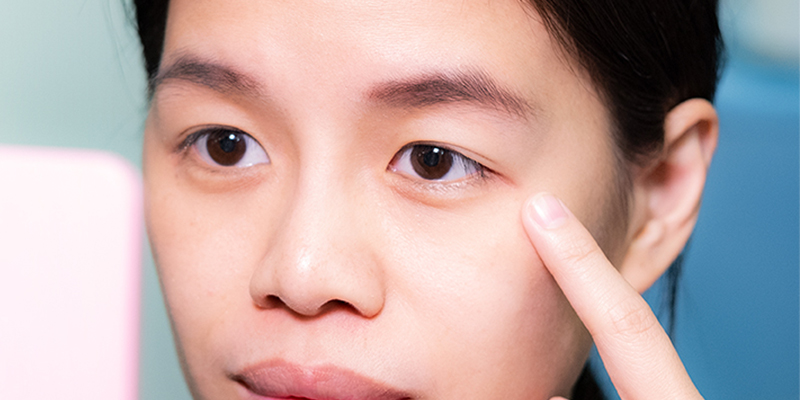
What Causes One Droopy Eyelid?
One droopy eyelid occurs when the levator muscle, the muscle responsible for lifting the upper lid, is too weak to hold the eyelid at its normal height. When only one eye is affected, the asymmetry is far more noticeable than a bilateral droop, because the healthy eye provides a constant point of comparison. As a result, one eye looks open and alert while the other appears sleepy, smaller, or heavy.
The most common causes include:
- Congenital ptosis: The levator muscle fails to develop fully before birth. The droop may be subtle in childhood and become more obvious in adulthood, and it is frequently accompanied by refractive errors, eye movement abnormalities, or other differences in the eye area. This is the group most often treated with congenital ptosis surgery.
- Age-related (aponeurotic) ptosis: The tendon connecting the levator muscle to the eyelid stretches or detaches over time, allowing the lid to slide downward. It can affect one eye earlier than the other.
- Nerve or muscle conditions: Less commonly, conditions affecting the nerves or muscles that control the eyelid can cause a new droop. A sudden onset of one droopy eyelid warrants prompt medical evaluation to rule out these causes before any cosmetic planning.
- Previous trauma or eye surgery: Injury to the levator structure can leave one lid lower than the other.
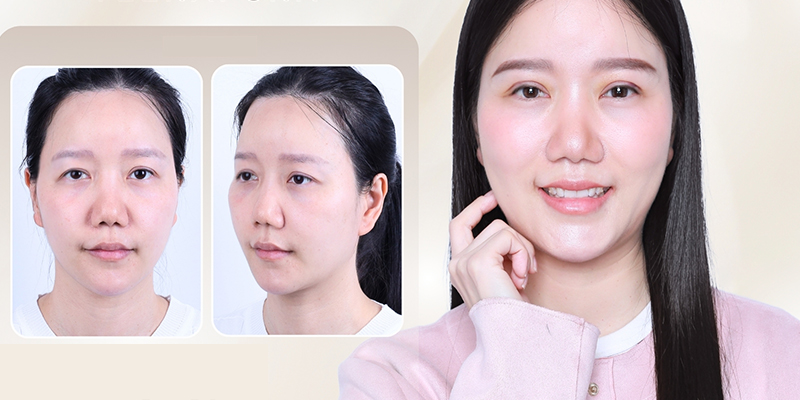
Should You Fix Droopy Eyelid?
Whether one droopy eyelid needs treatment depends on how much it affects vision and quality of life. If the droop is mild, does not block the visual field, and causes no daily difficulty, treatment may not be urgent. Correction becomes necessary when the lid begins to interfere with sight, causes eye strain or brow fatigue from constantly lifting the forehead to see, or creates enough facial asymmetry that it affects confidence.
There is also a practical reason not to wait indefinitely. Congenital ptosis tends to become more visible with age as skin loses elasticity, and long-term compensation habits (raising the brow, tilting the head back) can create secondary concerns such as forehead lines and neck tension. Early assessment by a qualified oculoplastic or aesthetic surgeon establishes the severity grade and the right timing, even if surgery is scheduled later.
[Image caption: early ptosis assessment helps determine the right timing for droopy eyelid correction]
How to Fix Droopy Eyelid With Surgery
The honest answer to how to fix one droopy eyelid is that true ptosis cannot be corrected with eye exercises, tapes, or skincare. The problem is mechanical: a weak or detached muscle. Lasting droopy eyelid correction requires adjusting that muscle surgically, and the technique is chosen based on how much levator function remains.
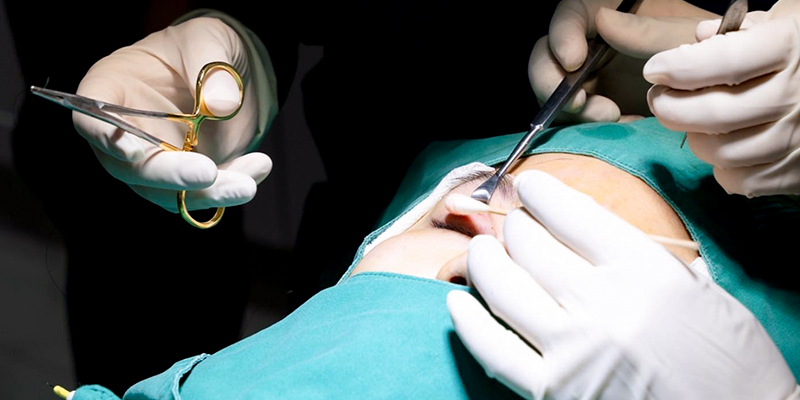
- Levator resection: The core technique for mild to severe congenital ptosis. The surgeon shortens the levator muscle so it lifts the lid to the correct height. This is the workhorse procedure when the muscle still has usable function, and it allows fine calibration against the healthy eye.
- Levator advancement or plication: For age-related cases where the muscle itself works but its tendon has stretched, the surgeon reattaches or tightens the tendon. Recovery is typically faster than a full resection.
- Frontalis sling (brow suspension): For severe ptosis with very poor levator function, the eyelid is suspended from the frontalis (forehead) muscle using surgical material, so raising the brow opens the eye. This is reserved for the most significant droops.
- Combined ptosis correction and double eyelid surgery: When the droopy side also lacks a defined crease, surgeons often create a matching double eyelid fold in the same operation, so both the lid height and the crease line mirror the healthy eye.
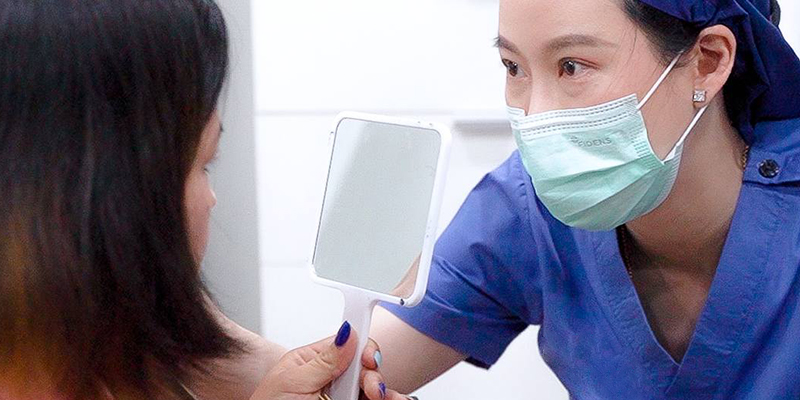
[Image caption: the surgeon measures levator muscle strength in both eyes to calibrate a symmetrical result]
Can You Fix One Droopy Eyelid Without Surgery?
For very mild cases, or for individuals whose health does not permit surgery, non-surgical options can temporarily improve the appearance of a mildly drooping lid. These do not treat true ptosis at its source, and results are limited and temporary.
- Thread lifting: Aesthetic threads can lift lax tissue around the eye without incisions, suited to mild skin-related heaviness rather than muscle weakness.
- Laser skin tightening: Laser energy firms the skin of the eyelid area, helping mild droops caused by skin laxity rather than levator dysfunction.
Non-surgical treatment for a mildly droopy eyelid generally costs 3,000,000 to 10,000,000 VND (roughly 110 to 380 USD) depending on the method and the condition. For unilateral ptosis, particularly congenital cases, these options cannot restore lid height, and surgery remains the only solution.
Congenital Ptosis and Droopy Eyelid Surgery Cost in 2026
Droopy eyelid surgery cost in Vietnam depends primarily on the severity grade of the ptosis and the technique the surgeon assigns. The table below reflects the 2026 market range across reputable hospitals and aesthetic clinics. USD figures are approximate, based on an exchange rate of about 26,300 VND to 1 USD.
| Ptosis severity | Surgical technique | Price range (VND) | Approximate (USD) |
| Mild (grade 1 to 2) | Levator plication or tightening, per eye | 6,000,000 – 12,000,000 | 230 – 460 |
| Moderate | Levator resection, often with crease formation | 11,200,000 – 25,000,000 | 430 – 950 |
| Severe (poor levator function) | Maximal resection or frontalis sling | 23,000,000 – 45,000,000 | 870 – 1,710 |
| One-sided (unilateral) correction | Single-eye levator surgery with symmetry calibration | 16,500,000 – 22,000,000 | 630 – 840 |
Public eye hospitals treat ptosis at stabilized prices, from about 6,100,000 VND (roughly 230 USD) for one eye and 7,000,000 to 12,000,000 VND (roughly 270 to 460 USD) at military and university hospitals.
Large private aesthetic hospitals charge from about 11,200,000 VND (roughly 430 USD) for congenital ptosis correction up to 30,000,000 to 38,000,000 VND (roughly 1,140 to 1,440 USD) for advanced levator muscle work, usually with longer warranties and more aesthetic refinement.
Revision of a droop caused by previous failed surgery or aging runs to about 35,000,000 VND (roughly 1,330 USD).
→ Read more: Asymmetrical Eye Surgery Cost
What Factors Change the Final Price?
- Severity of the droop: Mild ptosis needs a simpler intervention, less operating time, and a shorter recovery. Severe cases require more complex muscle work, sometimes combining several techniques, which raises both the cost and the demand on the surgeon’s skill.
- The facility and the surgeon: Reputable centers with modern equipment, sterile operating standards, and experienced oculoplastic surgeons price higher, and that premium reflects safety protocols, accurate symmetry outcomes, and structured aftercare. In unilateral ptosis especially, surgeon experience directly determines how closely the corrected eye matches the healthy one.
- The technique and materials: Newer technology, premium surgical threads, and combined procedures (such as adding a double eyelid crease or removing excess fat in the same session) increase the price but improve the refinement and durability of the result.
Ptosis Surgery at Keangnam Korea
A droopy eyelid is worth correcting when it affects vision, causes brow strain from constantly lifting the forehead to see, or creates asymmetry that weighs on confidence. Once you decide to proceed, the facility matters more than the marketing. The best place for ptosis surgery is one that is licensed, measures before it operates, quotes, and stands behind the result with aftercare.
Besides, Keangnam Korea addresses ptosis through Perfect Eyes, an integrated technique built for clients who have a droopy eyelid alongside other eye-area concerns such as fat pockets, loose skin, or a sagging brow.
The approach corrects the lid height, matches the new crease to the healthy eye, and refreshes the surrounding area within a single recovery period. For anyone weighing where to have the procedure, that consolidation is the practical advantage: one operation, one healing window, and a result calibrated for symmetry rather than pieced together over multiple sessions.
- Ptosis and muscle correction: 9,000,000 – 17,000,000 VND (roughly 340 – 650 USD)
- Double eyelid creation: 7,500,000 – 10,000,000 VND (roughly 290 – 380 USD)
- Brow lift: 7,500,000 – 10,000,000 VND (roughly 290 – 380 USD)
- Corner opening (canthoplasty): 7,500,000 – 10,000,000 VND (roughly 290 – 380 USD)
- Eye fat repositioning: 7,500,000 – 10,000,000 VND (roughly 290 – 380 USD)
Contact 0911 833 555 to reserve an appointment and get personal quote.
Is surgery on just one droopy eyelid noticeable?
The entire goal of unilateral ptosis surgery is symmetry. A specialist surgeon measures the muscle strength of both eyes on the operating table and calibrates the lift so both lids open evenly, whether the eyes are moving or looking down. The micro-incision is hidden completely inside the new crease line, so no visible trace of surgery remains once healing is complete.
Can one droopy eyelid fix itself without surgery?
No. True ptosis is caused by a weak or detached levator muscle, which cannot be strengthened with exercises, tapes, or creams. Non-surgical options such as Botox or thread lifting can temporarily improve very mild droops, but congenital ptosis surgery is the only lasting correction.
How much does droopy eyelid surgery cost for one eye in Vietnam?
Correcting one droopy eyelid costs about 6,100,000 to 22,000,000 VND (roughly 230 to 840 USD) in 2026, depending on severity and facility. Public eye hospitals sit at the lower end, while private aesthetic hospitals with symmetry-focused unilateral techniques range from 16,500,000 to 22,000,000 VND (roughly 630 to 840 USD).
What do ptosis surgery before and after results look like?
A successful result shows the treated lid resting at the same height as the healthy one, a visible and symmetrical crease on both sides, and a brighter, more alert expression. Final results settle over 1 to 3 months as swelling resolves.
Is congenital ptosis surgery safe for adults?
Yes, when performed by a qualified surgeon at a licensed facility. Adults with congenital ptosis are routine candidates, and a pre-operative assessment of levator function, tear film, and general health confirms suitability. Risks such as under- or over-correction, dry eye, and asymmetry exist with any eyelid surgery, which is why surgeon experience and proper follow-up matter.
Will I have uneven eyelids after surgery?
Minor asymmetry during the first weeks of healing is normal while swelling settles at different rates. Persistent uneven eyelids are uncommon in experienced hands, and reputable facilities include follow-up reviews so any needed adjustment is identified early.
RELATED ARTICLES

Alarplasty and Rhinoplasty Comparison: Which Procedure Fits Your Nose Shape
Selecting between alarplasty and rhinoplasty depends on whether your lower nose appears wide due to flared soft tissue or a low, unsupported structural bridge. Alarplasty isolates and reshapes the nostril wings at the base, whereas rhinoplasty elevates, straightens, or rebuilds
Nose Wing Reduction: Is Alarplasty Worth It? Pros, Cons, and Recovery Time
A nose wing reduction (alarplasty) is a surgical option for those whose nostril wings are naturally thick, wide, or flared while their nasal bridge height and tip projection already suit their overall facial proportions. This procedure selectively reshapes or excises
Alar Base Reduction Technique: Rolling vs. Excision Comparison
An alar base reduction technique narrows flared or wide nostrils by either folding the nostril rim inward with internal sutures or excising a targeted strip of tissue. In Ho Chi Minh City, Vietnam, plastic surgeons perform four main surgical variations
Top 5 Rhinoplasty Clinics in Ho Chi Minh
Rhinoplasty clinics in Ho Chi Minh City offer safe cosmetic nose surgery: Gangwhoo Aesthetic Hospital, JW Korean Aesthetic Hospital, Kangnam Aesthetic Hospital, Thu Cúc Aesthetic Hospital, and Keangnam Korea. In 2026, market rates for cosmetic nose surgery across these facilities

Collagen Injection vs. Laser for Facial Skin: Cost, Recovery, and Fit
A collagen injection vs laser for aging facial skin, which is better? They are two distinct approaches to facial rejuvenation and do not replace each other. Lasers work from the outside in to correct surface texture and pigment, while injected

Collagen Shots for the Face vs. Mesotherapy: Aging Grades, Cost, and Results
Deciding between collagen shots for the face and mesotherapy comes down to identifying which layer of your skin is experiencing aging. Mesotherapy nourishes the superficial skin layers for quick surface hydration, whereas collagen shots for the face rebuild structural density