Skip to content


What Is An Endoscopic Facelift? How Long Does It Last
Aging used to mean choosing between dramatic surgery with months of downtime or non-surgical treatments that fade within a year. The endoscopic facelift changed that equation entirely. By combining minimally invasive technique with deep-tissue precision, this procedure now delivers up to a decade of facial rejuvenation through tiny incisions hidden beneath the hairline.
What Is an Endoscopic Facelift?
An endoscopic facelift is a minimally invasive rejuvenation procedure that lifts and tightens facial tissue from within, without the long incisions of a traditional facelift. The surgeon makes a few tiny incisions hidden along the hairline, then inserts a thin endoscope (a miniature camera) to visualize and reposition deep facial structures with surgical precision.
The technique has become one of the most trusted rejuvenation methods in Korean aesthetic medicine, where minimally invasive longevity is the gold standard.
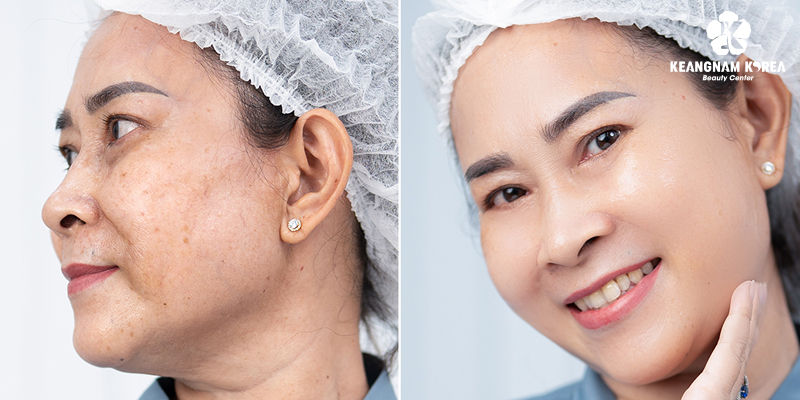
Endoscopic Facelift vs Deep Plane Facelift
Both procedures lift the deeper structures of the face rather than just the skin, but they differ significantly in approach, downtime, and ideal candidate profile.
| Feature | Endoscopic Facelift | Deep Plane Facelift |
| Incision length | Multiple tiny incisions (5 to 10 mm each) hidden in hairline | Long incision in front of and behind the ear |
| Visible scars | Virtually invisible, hidden beneath hair | Fine scar requiring careful camouflage |
| Tissue manipulation | Endoscopic visualization, repositions tissue without large dissection | Extensive dissection of the deep facial layer |
| Procedure time | 45 to 60 minutes | 3 to 5 hours |
| Recovery time | 1 to 2 weeks | 4 to 8 weeks |
| Best for | Mid-face, brow, temple area, early to moderate aging | Severe lower face and neck laxity |
| Result longevity | 8 to 10 years | 10 to 15 years |
| Ideal age range | 35 to 60 | 50 to 70 |
| Naturalness of result | Very natural (no skin pulling) | Natural when expertly done |
The endoscopic approach wins on recovery time, scarring, and naturalness. The deep plane approach remains the gold standard for severe lower-face laxity. For most candidates with early-to-moderate aging, the endoscopic facelift offers the better ratio of result to downtime.
Is an Endoscopic Facelift Worth It?
The endoscopic facelift addresses aging at its root cause. By working beneath the skin rather than just on its surface, the procedure tightens deep muscle and connective tissue, which then naturally smooths the surface above. Even the most “stubborn” zones (the corners of the eyes, the smile lines, the nasolabial folds, neck laxity) tighten visibly.
The biggest advantage of the technique is speed and gentle healing. The entire procedure typically completes in 45 to 60 minutes, with no large wound, no significant swelling, and no severe bruising. Makeup can often be applied immediately afterward. Incisions are skillfully hidden beneath the hairline, making them virtually invisible, and recovery takes only 1 to 2 weeks.
This is also why the endoscopic facelift is widely considered one of the most natural rejuvenation solutions available today. Unlike traditional facelifts that can produce a stiff, “pulled” appearance, this technique preserves natural facial expression entirely.
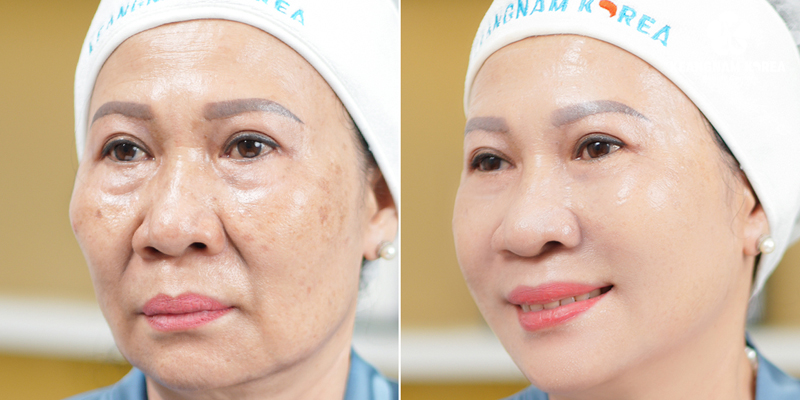
Expected Results After Endoscopic Facelift
- Targeted slimming of specific zones or full-face contouring, customized to individual aesthetic goals
- Simultaneous smoothing of nasolabial folds, cheek lines, and mouth lines
- Elimination of double chin and restoration of a defined jawline
- Sharper V-line silhouette for an attractive, youthful profile
- Comprehensive lifting of underlying muscle for full-face rejuvenation
Is an Endoscopic Facelift Safe?
The endoscopic facelift carries a high safety profile because the entire procedure is monitored in real time through endoscopic imaging. From dissection to lifting, the surgeon visualizes every step on a high-definition screen, allowing precise control at every moment.
A common concern is invasiveness. While the technique does interact with internal tissue, the disturbance is minimal and entirely localized. Unlike traditional facelifts that cut through muscle and tissue, the endoscopic approach preserves the underlying nerve network, which translates to less swelling, faster recovery, and a gentler overall experience.
That said, safety still depends on three critical factors:
- The surgeon’s level of expertise with endoscopic technique specifically
- The quality and modernity of the surgical equipment
- The clinic’s adherence to international sterilization and care protocols
Choosing a credible, internationally recognized clinic remains the single most important decision for guaranteeing a safe outcome.
Is an Endoscopic Facelift Painful?
The short answer is no. An endoscopic facelift is not considered a painful procedure. Most people describe the experience as surprisingly comfortable, often less intense than dental work or even some non-surgical aesthetic treatments.
This is one of the reasons the technique has become a top choice for first-time facelift candidates and for clients who have previously avoided surgery due to fear of pain.
During the Procedure
The endoscopic facelift is performed under either local anesthesia with sedation or light general anesthesia, depending on the case and personal preference. With either option, the surgical area is fully numbed before the procedure begins. No pain is felt during the lifting, dissection, or suturing steps. Most people report falling into a relaxed, drowsy state and remembering very little of the actual operation.
Because the technique uses tiny incisions and endoscopic visualization rather than large open dissection, there is no significant trauma to the tissue. The surgeon works with millimeter precision, preserving the underlying nerve network and avoiding the deep cutting that causes most of the pain associated with traditional facelifts.
Immediately After the Procedure
The first 24 to 48 hours bring a feeling of mild tightness and gentle pressure rather than pain. Sensations commonly described include:
- A “snug” or “stretched” feeling across the temples and cheeks
- Slight numbness around the incision sites
- Mild headache (similar to wearing a tight headband)
- Minor swelling that creates pressure but not sharp discomfort
Pain medication is prescribed but is rarely needed beyond the first 1 to 2 days. Most clients manage with simple over-the-counter pain relievers, and many stop taking them within 48 hours.
During Recovery (Days 3 to 14)
By day 3, the tightness softens noticeably. By day 7, most sensations are gone except for slight numbness near the incision lines, which is normal and resolves over 2 to 6 weeks as the small sensory nerves regenerate. There is no sharp or persistent pain at any point in normal recovery.
Pain Comparison with Other Rejuvenation Procedures
| Procedure | Typical Pain Level | Pain Duration |
| Endoscopic facelift | Mild tightness | 1 to 3 days |
| Traditional deep plane facelift | Moderate ache | 1 to 2 weeks |
| Thread lift | Mild to moderate soreness | 3 to 7 days |
| Non-surgical RF (Thermage, Ulthera) | Moderate heat sensation during treatment | Hours |
| Dermal fillers | Mild injection discomfort | Hours |
| Botox | Minimal | Minutes |
Endoscopic Facelift Recovery Time
Endoscopic facelift recovery time is significantly shorter than traditional facelift recovery:
| Phase | Duration | What to Expect |
| Initial healing | Days 1 to 3 | Mild swelling, minor tightness |
| Visible improvement | Days 4 to 7 | Most swelling resolves, light makeup possible |
| Social recovery | Week 2 | Comfortable in public, light exercise resumes |
| Full settle | Weeks 3 to 6 | Final lifted contour fully visible |
| Complete recovery | 6 weeks | All physical activity resumes |
Most candidates return to office work within 5 to 7 days, with full social recovery by the end of week 2.
How Long Does an Endoscopic Facelift Last?
When performed correctly with high-grade technology, an endoscopic facelift delivers 8 to 10 years of visible rejuvenation. The exact duration depends on:
- Genetic aging speed
- Skincare and sun protection habits
- Lifestyle (smoking, alcohol, sleep, stress all accelerate aging)
- Weight stability (significant fluctuations affect facial volume)
- Adherence to post-procedure protocols
Many people see results that hold beautifully even beyond the 10-year mark, especially those who maintain good skincare and avoid major lifestyle disruptions.
For comparison, dermal fillers last 6 to 18 months. Thread lifts last 1 to 2 years. Non-surgical RF or ultrasound treatments last 1 to 3 years. The endoscopic facelift outperforms all non-surgical alternatives by a significant margin while requiring only one session.
Who Is the Ideal Candidate For Endoscopic Surgery?
The procedure is suitable for both men and women in good general health. Endoscopic facelift for men has grown sharply in recent years, especially among executives, public-facing professionals, and anyone who wants subtle, undetectable rejuvenation rather than a dramatic change.
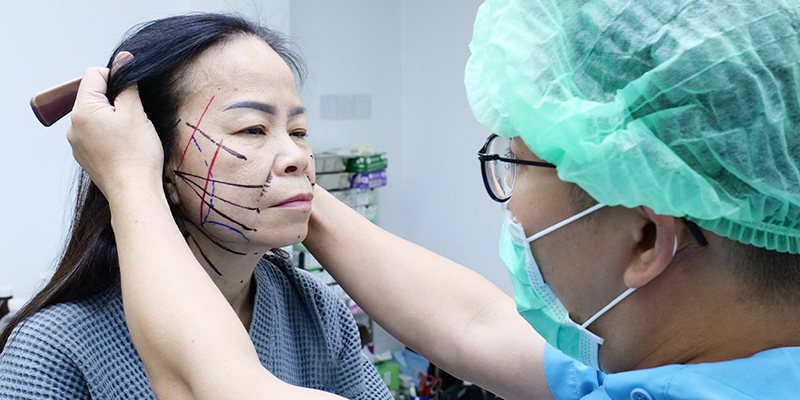
There are two treatment tiers:
1. Mini Endoscopic Facelift (Targeted Zones)
- Recommended age: 20 to 45
- Best for: mild to moderate wrinkles in specific areas (brow, temples, cheeks, mid-face)
- Treatment time: 30 to 45 minutes
2. Full Endoscopic Facelift (Comprehensive)
- Recommended age: 45 and above
- Best for: significant skin laxity and widespread sagging due to natural aging
- Treatment time: 45 to 60 minutes
The procedure is suitable only for those in good overall health. Anyone with serious cardiovascular conditions, uncontrolled hypertension, diabetes, or other major underlying illnesses is advised to avoid the procedure for safety reasons.
This is why Keangnam Korea performs a 16-point health screening before every endoscopic facelift. The screening ensures complete pre-surgical safety and gives clients absolute peace of mind before going forward.
Where to Get an Endoscopic Facelift in Ho Chi Minh City
The endoscopic facelift technique was selected by the Korean Dermatological Association journal as a Top Next-Generation Rejuvenation Technology of 2023, with Keangnam Korea Beauty Center recognized as the leading clinic delivering it in Vietnam.
Keangnam Korea is the exclusive transferee of the technique, equipment, and protocols from LUX Group, the world’s number one beauty technology corporation. This means customers receive the complete Korean rejuvenation formula, executed by a medical team with over 10 years of aesthetic surgery experience.
What the Keangnam Korea Endoscopic Facelift Experience Includes
- 16-point health screening before surgery for total safety
- SMART 5D multi-layer skin imaging to analyze collagen condition in detail
- Face AI Pro artificial intelligence measuring facial proportions and simulating the post-procedure result with 99% accuracy
- Escam AI Pro endoscopic lifting for natural, long-lasting wrinkle reduction
- Visible rejuvenation in just 45 to 60 minutes
- Result longevity of 8 to 10 years when post-care protocols are followed
- Lifetime service warranty
- Money-back guarantee if results do not meet expectations
Besides, Keangnam Korea is one of the very few clinics in Vietnam officially licensed to perform aesthetic surgery on foreign people. This credential reflects compliance with Vietnam’s Ministry of Health standards for international medical care, English-speaking consultation and aftercare, transparent pricing without hidden surcharges, and Korean-trained surgical expertise certified for international standards.
Visit Keangnam Korea Beauty Center directly, or call hotline 0911 833 555 to receive detailed advice from senior aesthetic specialists.
RELATED ARTICLES

Collagen Injection vs. Laser for Facial Skin: Cost, Recovery, and Fit
A collagen injection vs laser for aging facial skin, which is better? They are two distinct approaches to facial rejuvenation and do not replace each other. Lasers work from the outside in to correct surface texture and pigment, while injected

Collagen Shots for the Face vs. Mesotherapy: Aging Grades, Cost, and Results
Deciding between collagen shots for the face and mesotherapy comes down to identifying which layer of your skin is experiencing aging. Mesotherapy nourishes the superficial skin layers for quick surface hydration, whereas collagen shots for the face rebuild structural density
How Long Does a Fox Eye Thread Lift Last? Costs, Risks, and Results
A fox eye thread lift is a minimally invasive procedure that uses dissolvable barbed threads to suspend the outer corner of the eye (lateral canthus) and the eyebrow tail toward the temple. By gently pulling these soft tissues upward, the

What Is a Liquid Nose Job? Cost, Longevity and When Do Threads Work Better?
What is a liquid nose job? A liquid nose job (clinically known as liquid rhinoplasty) is a non-surgical procedure that reshapes the nose using precision injections of hyaluronic acid (HA) filler. The treatment takes 10 to 15 minutes, requires zero

Semi-Structural Rhinoplasty for a Low Bridge and Wide Tip: Cost and Recovery
Semi-structural rhinoplasty is a targeted surgical procedure that reshapes specific portions of the nose, typically modifying a broad, rounded tip with autologous cartilage while elevating a slightly low bridge with a biocompatible implant. The procedure takes 45 to 90 minutes

Non-Surgical Rhinoplasty Price in 2026: Cost by Filler and Thread Type
The non-surgical rhinoplasty price in Ho Chi Minh City, Vietnam, ranges from $230 to $1,720 (6 to 45 million VND) per treatment in 2026. The overall cost is determined primarily by the specific material and technique selected: The material used