Skip to content


4 Eye Widening Surgery Options in Vietnam: Cost, Recovery Time, Candidates
Eye widening surgery reshapes the corner of the eye rather than the lid above it, which lengthens the eye horizontally and changes how much of the inner corner shows. Corner surgery costs $150 to $950 (4 to 25 million VND) in Ho Chi Minh City in 2026, against $1,000 to $3,500 in Seoul and $2,800 to $9,500 in Singapore.
The article explains what each of the four corner operations costs locally, which eye shape each one suits, and how the regional prices line up. It also covers risks, recovery week by week, and the cases that should not have this done at all.

Eye Widening Surgery Cost in Ho Chi Minh City
Eye widening surgery cost in HCMC falls into 4 tiers rather than one range, from $150 for a simple epicanthal fold release to $1,255 for widening the palpebral opening in a complex case.
Correction work prices separately. Repairing a poorly done inner corner from elsewhere is around $304 locally, and revision after a failed eyelid procedure runs from $460 to $2,280 (12 to 60 million VND). Lateral corner pricing follows the same pattern, with reconstruction charged higher.
| Procedure | Price | Price (VND) | What it involves |
| Epicanthal fold release, minimal | 150–215 | 4–5.6 million | Fold removed, no flap reconstruction |
| Inner corner opening, standard | 335–420 | 8.8–11 million | Flap technique, the most requested version |
| Inner or outer corner, full reconstruction | 380–840 | 10–22 million | W-plasty or Z-plasty flap transfer |
| Widening the palpebral opening, complex case | 1,045–1,255 | 27.5–33 million | Larger structural correction of the lid opening |
4 Operations Sold as Bigger Eyes Surgery
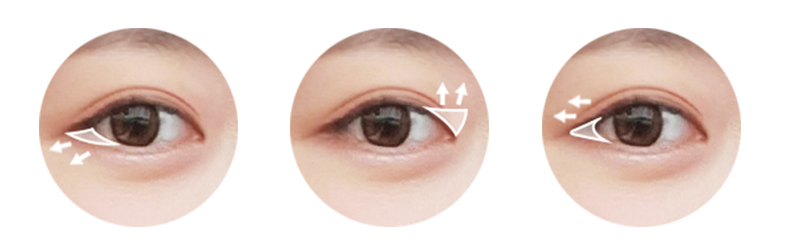
1. Inner Corner Release (Wider Eyes Surgery)
The epicanthal fold is a small web of skin covering the inner corner in many Asian eyes. Releasing it exposes the pink inner corner, lengthens the eye toward the nose, and narrows the gap between the two eyes.
This is the most requested version of wider eyes surgery locally. The flap design behind it, usually a W-plasty or a Z-plasty, is what separates a $150 fold trim from a $420 reconstruction, and medial corner shaping covers the variants in detail.
2. Outer Corner Extension (Lateral Canthoplasty)
Lateral canthoplasty works on the tail of the eye and extends it toward the temple. It suits a short eye, or an outer corner sitting low enough to read as tired, and it can soften a sharply upturned tail.
Because the outer corner has no fold to release, this is reconstruction from the start. That is why the figure runs above simple inner corner work in every market.
3. Both Corners in One Session
Opening both ends together produces the largest change in eye length and the most balanced result when both corners contribute to the problem. It also carries the longest operating time and the highest total.
The trade is flexibility. Doing both at once removes the option of stopping after the first corner if that turns out to be enough.
4. Corner Work With a Crease (Bigger Eyelid Surgery)
A crease and an opened corner enlarge the eye in different directions, so they are often planned together. What people search for as bigger eyelid surgery is usually this pairing rather than corner work alone.
Higher-tier eyelid packages locally run $570 to $990 (15 to 26 million VND) and commonly bundle the crease, fat handling, and corner opening into one session. Crease creation prices are quoted separately when the corner is left alone.
Which Eyes Suit an Operation to Make Eyes Bigger?
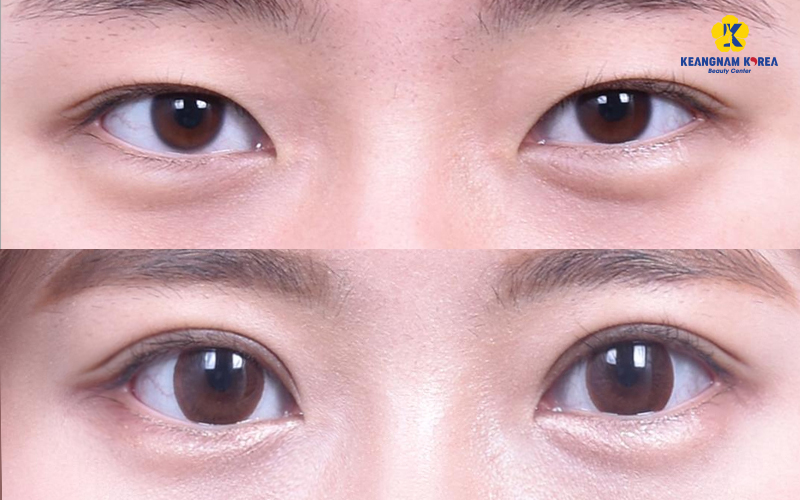
An operation to make eyes bigger is indicated when the shape of the corner, rather than the size of the eyeball, makes the eye look small. Three findings point that way:
- A short, small, or narrowed eye opening: The eye reads compressed horizontally, often because a fold hides part of the inner corner.
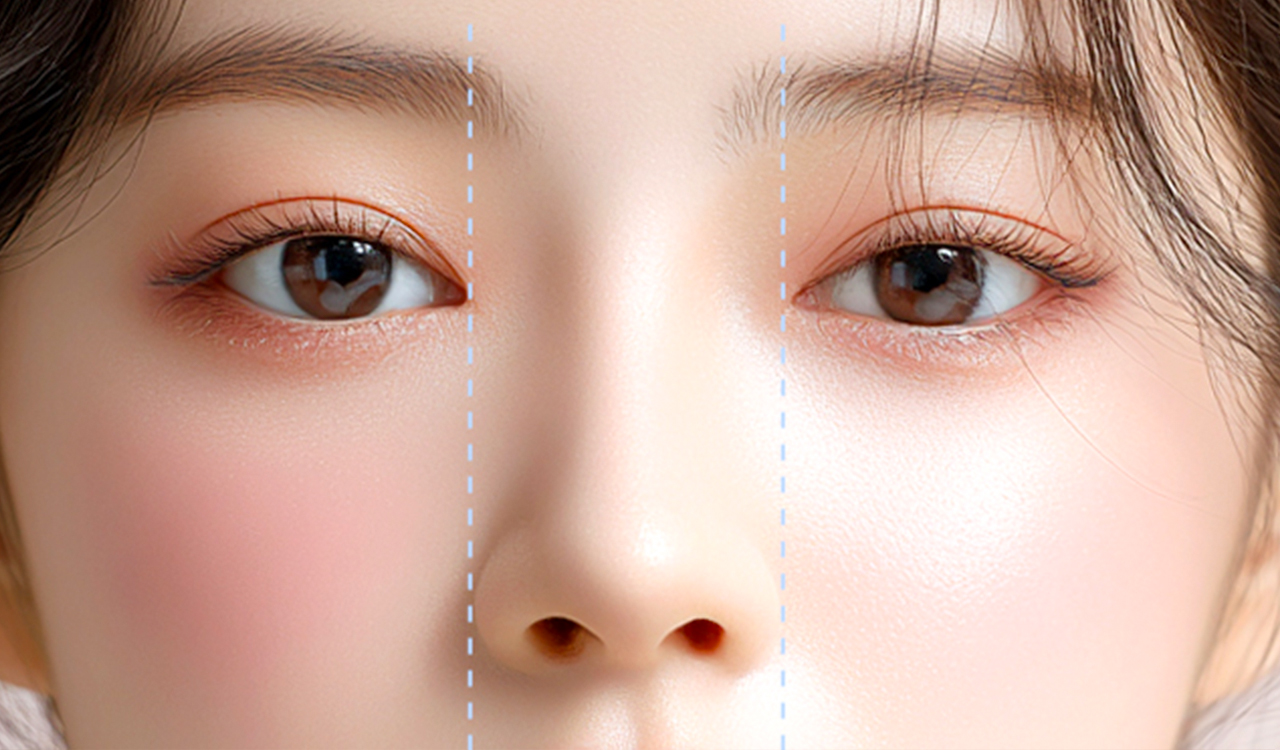
- Too much or too little distance between the eyes: Wide-set eyes usually respond to inner corner work, while close-set eyes are the opposite case and often need the outer corner instead.
- A short inner corner or an upturned tail: Either one throws the eye line out of balance with the brow and the nose bridge.
Corner position, fold depth, lid tension, and the distance between the eyes are measured rather than estimated, and those measurements decide which of the four operations applies.
What Asian Eye Surgery for Bigger Eyes Changes, and What It Leaves Alone
Asian eye surgery for bigger eyes changes the horizontal line of the eye by a few millimeters. It does not change the eyeball, the brow position, or the shape of the socket, and understanding that boundary is what keeps expectations survivable.
- What it does change: the exposed length of the eye, the visible gap between the eyes, and how much of the inner corner shows. Those three together are what most people are describing when they say their eyes look small.
- What it leaves alone: the height of the eye opening, which is a lid and elevator question rather than a corner question.
Caution: Releasing an epicanthal fold removes tissue, and the fold cannot be rebuilt to its original shape afterwards. Correction is possible and listed at $304 locally, and it rarely reads as clean as getting the first operation right.
Eye Widening Surgery Cost Across Asia
Corner surgery costs five to 13 times more in Singapore than in Ho Chi Minh City, Vietnam, and three to five times more in Seoul, for the same technique.
| Market | Basic inner corner | Advanced flap technique | Combined with a crease |
| Ho Chi Minh City | 150–420 | 380–840 | 570–990 |
| Bangkok | 1,400–2,200, all corner types | Not published separately | Not published separately |
| Seoul | 1,100–1,900 | 1,900–3,100 | 2,700–4,600 |
| Tokyo | $1,040, single published fee | Not published separately | Not published separately |
| Singapore | 2,800–4,500 | 4,500–7,000 | 6,000–9,500 |
Risks of Eye Surgery for Bigger Eyes
Eye surgery for bigger eyes is a short operation on a small area, and that combination makes it easy to underestimate. Swelling and bruising follow every case and settle over about two weeks. Beyond those two, this surgery carries some risks, such as:
- A visibly scarred inner corner: The scar sits on the nose side where skin is thin and mobile, so poor flap design or over-resection leaves a line that stays visible.
- Asymmetry between the two eyes: The corners are opened to measurements, and small differences in healing or original anatomy show up as one eye reading longer.
- The corner reopening or scarring closed: Both directions happen. A reopened corner loses the result, and a contracted one can look pinched.
- A rounded or unnaturally pointed corner: More common with aggressive release, and the main reason technique has moved toward smaller corrections.
- Dry eye or irritation in the early weeks: Exposing more of the inner corner changes tear distribution temporarily.
Ask each clinic what its revision policy pays for and how long the offer stands, since correction costs more than the original operation.
Cases That Should Not Have Plastic Surgery for Bigger Eyes
- Close-set eyes: Inner corner release shortens the visual distance between the eyes, which makes close-set anatomy look more crowded rather than less.
- A complaint that is vertical rather than horizontal: Eyes that do not open far enough upward are a lid and muscle question, and corner work adds length while leaving height untouched.
- Blood thinners, a clotting disorder, or an active eye condition: Get medical clearance first, because bleeding into corner tissue is harder to manage than bleeding elsewhere on the lid.
- Fewer than 10 days left in the country: Stitches come out around day seven and the wound needs a review before flying, so a shorter trip suits a consultation rather than the operation.
Recovering After Eye Corner Surgery
Most people return to ordinary activity within five to seven days after a 30 to 45 minute procedure. It is common to expect the following:
- Day one to day three: Swelling and bruising peak. Cold compresses and sleeping with the head raised limit fluid buildup.
- Day five to day seven: Stitches come out, and bruising fades over roughly seven to 10 days.
- Week two to week four: The wound is closed and settling, though the corner still looks slightly sharp at this stage.
- Month one: The shape reads natural in most cases.
- Month two to month three: The scar finishes maturing and the final line becomes hard to see.
Published surgical guidance for eyelid procedures puts air travel at 7 to 14 days, with 10 to 14 preferred even on short routes, because cabin pressure and dry cabin air worsen swelling.
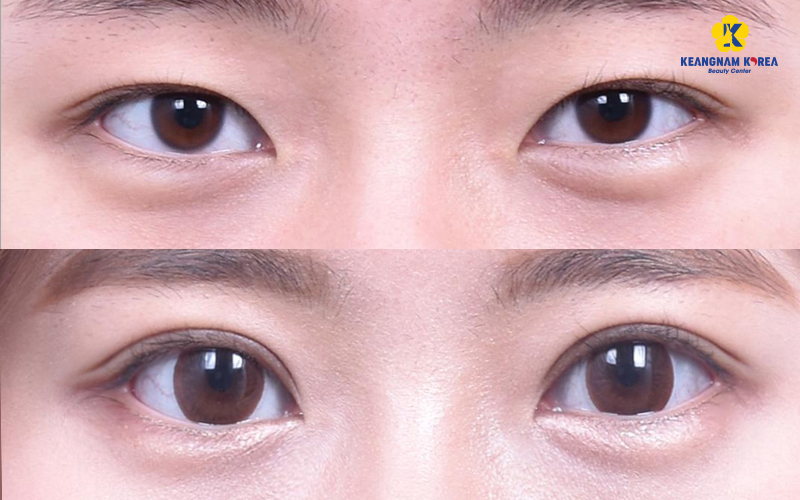
Eye Corner Surgery at Keangnam Korea
Keangnam Korea performs inner and outer corner widening at 394-396 Cao Thang, District 10, Ho Chi Minh City, and the visit starts with measurement rather than with a menu. Distance between the eyes, fold depth, and corner position are assessed first, and the technique follows to deliver the most harmonious results.
- Face AI Pro simulation before surgery: The planned shape is previewed so the design is accepted or rejected as a picture rather than a description.
- Surgeons with more than 10 years of experience: Corner scar quality depends on flap design, which is the part experience decides.
- A sterile theater built to Ministry of Health standards: The protocol runs in five documented steps, from assessment through post-operative instructions.
- A service warranty agreed before surgery: The terms of any correction are settled in advance rather than afterward.
For clients arriving on a fixed number of days, the schedule is built backward from the flight, with stitch removal and the wound review placed inside the window. An English-speaking coordinator stays through the consultation, and a contact channel stays open once you are home.
→ Eye enlargement service at Keangnam Korea

Your First Visit
Measurement of corner position and inter-eye distance, a review of any previous eyelid surgery, then a Face AI Pro simulation and a written plan naming the technique, the healing timeline, and the minimum stay before flying. Bring photographs of the result you have in mind and any quotes collected elsewhere.
Is there a surgery to make eyes bigger without cutting the corner?
Not for horizontal length. Creating or lowering a double eyelid crease makes the eye look larger vertically and leaves both corners untouched, but the exposed length of the eye is set by corner position. A crease and corner work are often combined for that reason.
How long does larger eye surgery last?
Results hold five to 10 years for most of those treated, depending on individual healing and how the tissue ages. The inner corner in particular tends to keep its new position once the scar has matured at month two to three. Aging continues around the result either way.
What does surgery to make Asian eyes bigger actually remove?
Inner corner surgery releases or repositions the epicanthal fold, the web of skin covering the corner, and trims a small amount of excess skin. Outer corner surgery reshapes the tail without a fold to release. Both work with the existing eye structure rather than creating a new one.
Does plastic surgery to enlarge eyes leave a visible scar?
The incision runs along the corner, and flap techniques such as W-plasty and Z-plasty are used to place the line where natural tension hides it. The scar is visible for weeks and matures over two to three months, and its final quality depends more on flap design than on aftercare.
Is blepharoplasty enough for bigger eyes without corner work?
Sometimes. A crease alone changes how tall the eye looks and suits cases whose only issue is a monolid or an uneven fold. Where a fold covers the inner corner, blepharoplasty leaves that length hidden, which is why the two are so often combined in one session.
Can you fly home three days after corner surgery?
No. Stitches come out around day seven and need a review before travel, and published eyelid guidance puts flying at seven to 14 days, with 10 to 14 preferred. Cabin air worsens swelling and dryness in a healing corner, so plan a minimum 10-day stay.
RELATED ARTICLES

Alarplasty and Rhinoplasty Comparison: Which Procedure Fits Your Nose Shape
Selecting between alarplasty and rhinoplasty depends on whether your lower nose appears wide due to flared soft tissue or a low, unsupported structural bridge. Alarplasty isolates and reshapes the nostril wings at the base, whereas rhinoplasty elevates, straightens, or rebuilds
Nose Wing Reduction: Is Alarplasty Worth It? Pros, Cons, and Recovery Time
A nose wing reduction (alarplasty) is a surgical option for those whose nostril wings are naturally thick, wide, or flared while their nasal bridge height and tip projection already suit their overall facial proportions. This procedure selectively reshapes or excises

Alar Base Reduction Technique: Rolling vs. Excision Comparison
An alar base reduction technique narrows flared or wide nostrils by either folding the nostril rim inward with internal sutures or excising a targeted strip of tissue. In Ho Chi Minh City, Vietnam, plastic surgeons perform four main surgical variations

Top 5 Rhinoplasty Clinics in Ho Chi Minh
Rhinoplasty clinics in Ho Chi Minh City offer safe cosmetic nose surgery: Gangwhoo Aesthetic Hospital, JW Korean Aesthetic Hospital, Kangnam Aesthetic Hospital, Thu Cúc Aesthetic Hospital, and Keangnam Korea. In 2026, market rates for cosmetic nose surgery across these facilities

Collagen Injection vs. Laser for Facial Skin: Cost, Recovery, and Fit
A collagen injection vs laser for aging facial skin, which is better? They are two distinct approaches to facial rejuvenation and do not replace each other. Lasers work from the outside in to correct surface texture and pigment, while injected

Collagen Shots for the Face vs. Mesotherapy: Aging Grades, Cost, and Results
Deciding between collagen shots for the face and mesotherapy comes down to identifying which layer of your skin is experiencing aging. Mesotherapy nourishes the superficial skin layers for quick surface hydration, whereas collagen shots for the face rebuild structural density