Skip to content


What Is Korean Blepharoplasty? What Does It Cost in Ho Chi Minh City, Vietnam?
Korean blepharoplasty is eyelid surgery that builds a slim crease along the eye’s own tarsal border (the firm cartilage strip that gives the upper lid its shape) instead of the deeper fold favored in Western practice. The method is a set of measurement habits rather than a patented device, which is why the same techniques run in Seoul and in Ho Chi Minh City.
Price is where the two markets separate. Incisional double eyelid surgery costs $1,000 to $1,667 (1.5 to 2.5 million KRW) in Seoul, against $270 to $1,670 (7 to 44 million VND) in Ho Chi Minh City in 2026.
This article explains the four Korean eye shapes clinics design toward, the surgical steps that create them, and what the procedure costs in both markets. It also covers risks, recovery, and the cases that should wait.

What Is Korean Blepharoplasty?
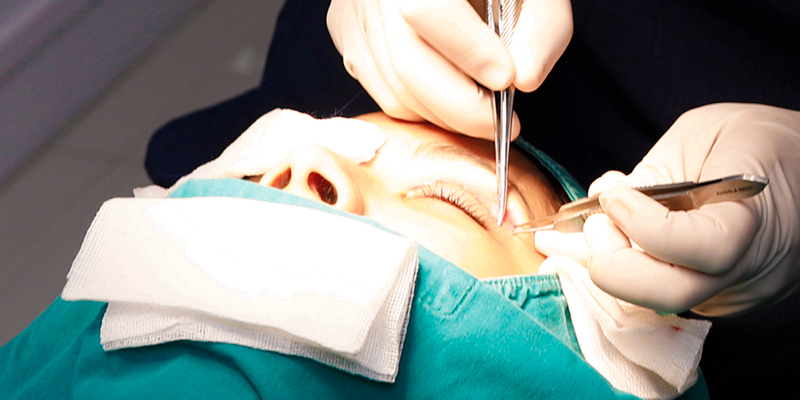
Korean blepharoplasty is surgery on the skin, muscle, and fat of the eyelid, and a standard upper lid takes about 30 to 60 minutes under local anesthesia. The surgeon marks a line along the upper tarsal border, removes excess skin and any bulging fat behind it, then anchors the skin edge so a crease forms with each blink.
The difference from Western blepharoplasty is intent, not instruments. Western technique often deepens a fold that already exists, while Korean technique starts from a monolid or a faint crease and builds a low, slim fold that stays in proportion with the face.
Howevẻm while the surgery reshapes the lid, it cannot widen the bony orbit or change the distance between the eyes. It also cannot lift a heavy brow, and removing lid skin when brow descent is the real cause pulls the brow down further.
4 Common Types of Korean Eye Shapes
Korean clinics design toward four recognizable shapes, and each one asks for a different combination of crease height and corner work.
1. Smiling Eyes
The lower lid curves gently upward on a smile, giving a soft, approachable look. This shape depends on lower lid muscle tone and on fullness under the lash line, so it responds to fat repositioning more than to a higher crease.
2. Almond Eyes
The most requested Korean shape, with the outer corner sitting slightly higher than the inner one and the inner corner opened a little for depth. It usually combines a low crease with a small inner corner release.
3. Slim Double Eyelid
A crease that reads clearly but stays narrow, sitting close to the lash line and disappearing when the eyes close. Most first-time cases are steered here, since it ages more quietly than a wide fold.
4. Korean Cat Eye
The outer corner lifts slightly for a sharper, more defined look while the East Asian lid structure stays intact. The result leans on outer corner work and on where the crease tapers at the tail.
No shape is a fixed template. Lid thickness, brow height, and the width between the eyes decide the suitable shape, and a surgeon will consult you based on their experience and face structure assessment.
Korean Blepharoplasty Technique
The Korean blepharoplasty technique runs through five stages, and the first two decide the result more than the cutting does. The procedure typically involves the following steps:
- Measurement and marking: The surgeon measures lid height, skin laxity, and brow position with the eyes open and relaxed, then checks the drawn crease while you sit upright.
- Local anesthesia: Numbing goes into the lid itself, so you stay awake and can open and close your eyes on request. That cooperation is what allows a symmetry check mid-procedure.
- Incision and tissue removal: A fine incision along the marked line opens access to excess skin, a strip of orbicularis muscle (the ring of muscle that closes the eyelid), and any herniated fat pocket. How much comes out is the most common source of an over-operated look.
- Fixation: The skin edge is anchored to the tarsal border with ultra-fine sutures so the fold reforms each time the lid moves. Hidden intradermal suturing keeps the knot buried instead of sitting on the surface.
- Corner adjustment when planned: Epicanthoplasty (inner corner release) and lateral canthoplasty (outer corner widening) are separate procedures with their own risks, and neither is required for a good crease.
Non-incisional methods skip stages three and four. Threads pass through micro-punctures and tie the skin to deeper tissue in about 20 minutes, with no cut line, though the method removes neither skin nor fat. While the crease it creates holds about three to five years, an incisional result usually holds 10 to 15 years or longer.
Comparing Upper, Lower, and Infrabrow Blepharoplasty
Three operations correct three different problems, so choosing the wrong one disappoints even when the surgery goes cleanly. Prices below are 2026 market reference ranges for Ho Chi Minh City:
| Procedure | What it corrects | Incision site | HCMC price |
| Upper blepharoplasty | Absent or hidden crease, hooded upper lid skin | In the new crease line | $270–1,670 (7–44 million VND) |
| Lower blepharoplasty | Under-eye fat bulge, loose lower lid skin | Inside the lid or under the lashes | $200–950 (5.2–25 million VND) |
| Infrabrow blepharoplasty | Heavy upper lid skin where a crease incision would sit too high | Directly under the eyebrow | $380–630 (10–16.5 million VND) |
Infrabrow blepharoplasty is rarely offered upfront. Removing skin from under the brow leaves the existing crease alone and keeps the lid from looking hollow, which suits thicker lids and older skin. The trade is a scar line along the brow rather than one hidden in a fold.
Lower blepharoplasty carries its own risk profile, since the lower lid holds itself against gravity. Taking too much skin can pull it down or turn it outward, and that outcome needs a second operation to correct.
Risks of Korean Blepharoplasty
Swelling and bruising follow every eyelid procedure. Beyond those two, the American Society of Plastic Surgeons lists the risks that any consultation should cover:
- Bleeding from the incision lines, and infection
- Changes in skin sensation, or numbness of the eyelashes
- Dry eyes, and difficulty closing the eyes
- Lid lag, and ectropion (an outward rolling of the lower lid)
- Pain that may persist, and unfavorable scarring
- Sensitivity to sun or other bright light
- Possible need for revision surgery
- Temporary or lasting change in vision, with a very rare chance of blindness
Three of these come up often enough to explain plainly:
- Dry eyes: Blinking changes while the lid heals, so dryness is common in the first weeks. It matters more for anyone who already has dry eye, wears contact lenses daily, or has had laser vision correction.
- Asymmetry: The two lids rarely start identical, and swelling settles at different speeds. A difference at week two is usually swelling, while a difference at month three is usually technique.
- Secondary ptosis: A lid that sits lower than before surgery, caused by damage to the muscle that lifts it. Correcting it costs more than the original procedure, and revision after a poor eyelid result runs $460 to $2,280 (12 to 60 million VND) in Ho Chi Minh City.
Who Is a Good Candidate for Eyelid Surgery?
Good candidates share one trait: the problem sits in the lid tissue rather than in the brow. Within that group, four types of customer come up most often:
- Monolid with no visible crease: The clearest indication, and the group where a low, slim fold changes the eye most.
- Partial or uneven crease: A fold that exists but hides under skin, breaks halfway, or sits at a different height on each side.
- Hooded lids from aging skin: Excess skin resting on the lash line, dulling the eye and, in advanced cases, blocking the upper field of vision.
- Mild ptosis (a drooping upper lid): A lid margin covering more of the iris than it should. Cases where vision is affected are treated as a functional problem, and the muscle work involved is a different operation from crease creation.
Lid thickness also sorts candidates. Thin, elastic lids hold a crisp fold with less swelling, while thicker lids with heavy fat need more tissue removed and take longer to settle.
Not Every Eyelid Is Ready for Surgery
Some cases should postpone rather than negotiate, and a clinic willing to say so is telling you something useful about its judgment. Certain circumstances should prompt a delay:
- Active eye infection, uncontrolled dry eye, or recent eye surgery: Wait for clearance from an ophthalmologist (a medical doctor who treats eye disease), because healing on an irritated ocular surface is where complications start.
- Blood thinners or a bleeding disorder: Never stop prescribed medication on your own. The decision to pause an anticoagulant belongs to the doctor who prescribed it.
- Heavy brow descent as the main problem: A brow procedure comes first, or the eye ends up smaller than it started.
- A fixed expectation of a deep Western fold on a thick lid: The tissue will not hold it, and forcing it produces the wide, startled look people point at in bad results.
- A trip too short for follow-up: Stitches come out around day seven, and a visit that ends earlier leaves removal to someone who did not perform the surgery.
Recovering After Eyelid Surgery
Most swelling improves within one to two weeks, and the timeline after that is measured in months. It is common to expect the following:
- Days one to three: Tightness, swelling, and bruising peak. Cold compresses, wrapped in cloth rather than applied as bare ice, limit fluid buildup.
- Days four to seven: Bruising fades and warm compresses take over. Stitches come out around day seven unless dissolvable sutures were used.
- Weeks two to four: Most people return to desk work and normal daily activity, though residual swelling still makes the crease look higher than its final height.
- Month one: The crease shape stabilizes and swelling-related asymmetry has largely resolved.
- Months three to six: The incision line flattens and blends into the fold.
Korean clinics advising international clients suggest allowing seven to 10 days in the country for consultation, surgery, and early checks, with one to three follow-up visits inside that window.
Caution: Try to avoid rubbing the eyes and wearing contact lenses until the incision has healed. Ask your surgeon before restarting eye makeup.
Korean Eyelid Surgery Cost in Korea and Vietnam
Korean eyelid surgery cost of the same technique has a different price in Seoul and Ho Chi Minh City. The gap runs about three to five times for equivalent work. Figures below are market reference ranges for 2026, not fixed quotes.
1. Upper Blepharoplasty Cost in Korea
Upper blepharoplasty in Korea ranges from $1,333 to $2,000 (2 to 3 million KRW) at Seoul clinics, and medical travel platforms quoting packages for international clients list $2,100 to $3,300. Blepharoplasty Korea cost for the crease alone sits lower, at $667 to $1,000 (1 to 1.5 million KRW) for a non-incisional method and $1,000 to $1,667 (1.5 to 2.5 million KRW) for partial-incision or full incisional double eyelid surgery.
Add-ons move the total quickly. Ptosis correction adds $467 to $667, a combined crease and ptosis plan runs $1,333 to $2,667, and revision surgery ranges from $2,333 to $4,000. Corner opening is priced separately again, at $1,100 to $1,900 for a basic epicanthoplasty and $1,900 to $3,100 for Z-plasty or W-plasty variants.
2. Lower Blepharoplasty Cost in Korea
Lower blepharoplasty Korea prices run $1,350 to $2,600 (1.8 to 3.5 million KRW) for the transconjunctival approach, where the incision sits inside the lid and leaves no external line. Broader market figures for eye bag surgery in Korea fall between $1,000 and $3,000, depending on whether fat is removed, repositioned, or supplemented with grafting.
The Same Procedures in Ho Chi Minh City
| Procedure | Korea | Ho Chi Minh City |
| Non-incisional crease | 667–1,000 | 110–950 (3–25 million VND) |
| Incisional double eyelid surgery | 1,000–1,667 | 270–1,670 (7–44 million VND) |
| Lower blepharoplasty | 1,350–2,600 | 200–950 (5.2–25 million VND) |
| Corner opening | 1,100–3,100 | 210–950 (5.6–25 million VND) |
| Ptosis correction | 467–667 as an add-on | 210–1,710 (5.6–45 million VND) |
| Revision surgery | 2,333–4,000 | 460–2,280 (12–60 million VND) |
Four things explain the spread inside each market: the materials and devices used, the experience of the surgeon, the clinical complexity of the case, and the cost of running a sterile operating room with anesthesia support. Public hospitals in Ho Chi Minh City offer the best price, with basic crease creation from about $115 (3 million VND).
Judging the Best Korean Blepharoplasty Results
The best Korean blepharoplasty work shows traits you can check in a clinic’s own gallery before booking. Four are worth looking for:
- The crease disappears when the eyes close: A fold still visible with closed lids was placed too high or too deep.
- The two sides match with a neutral expression: Ask for photos taken straight on, both eyes open, no smile, since smiling lifts the lid and hides asymmetry.
- The scar sits inside the fold: In a healed upper blepharoplasty at six months or more, no line should show with the eyes open.
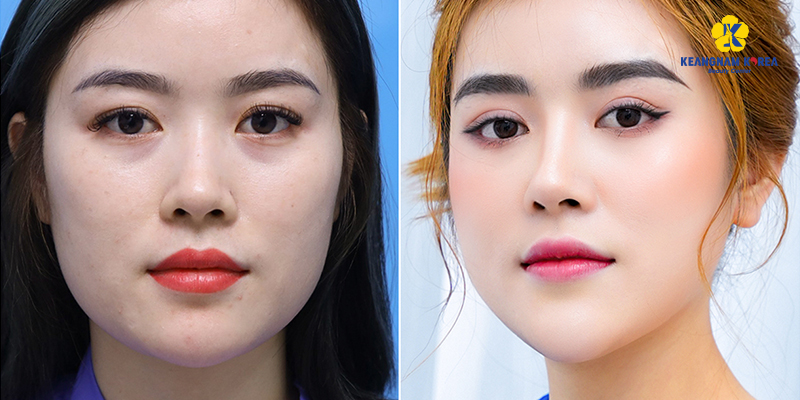
- The eye still looks like the same person’s eye: A gallery where every result carries an identical crease height is showing a template rather than a measurement.
Ask which photos are the surgeon’s own cases and how long after surgery each was taken.
Korean Blepharoplasty at Keangnam Korea
Keangnam Korea performs Korean-technique eyelid surgery at 394-396 Cao Thang, District 10, Ho Chi Minh City, under Department of Health license 06303/HCM-GPHĐ. The technique is chosen based on the crease measurement and individual face overall structure.
- Individual measurement and design: Crease height, lid thickness, and facial proportion are measured case by case, so two people asking for almond eyes leave with two different plans.
- Hidden intradermal suturing (BernaStitch): Knots stay buried inside the fold rather than resting on the skin surface, which keeps the line out of view once healed.
- AI simulation before surgery: The Face AI Pro system analyzes facial structure and previews the projected result, quoted by the clinic at up to 99% accuracy, so the design is agreed before scheduling.
- Surgeons with more than 10 years of experience: The team trains periodically in Korea, and the doctor who consults with you is the doctor who operates.
→ Korean blepharoplasty at Keangam Korea

Your First Visit
An eyelid consultation takes about an hour and covers measurement, an AI simulation of the proposed crease, a review of eye health and medical history, and a written quote afterward. Bring your current eye medications and a note of any previous eye surgery. If your time in Vietnam is short, give the exact dates at the start, because the stitch removal date decides whether surgery fits the trip at all.
RELATED ARTICLES

Alarplasty and Rhinoplasty Comparison: Which Procedure Fits Your Nose Shape
Selecting between alarplasty and rhinoplasty depends on whether your lower nose appears wide due to flared soft tissue or a low, unsupported structural bridge. Alarplasty isolates and reshapes the nostril wings at the base, whereas rhinoplasty elevates, straightens, or rebuilds
Nose Wing Reduction: Is Alarplasty Worth It? Pros, Cons, and Recovery Time
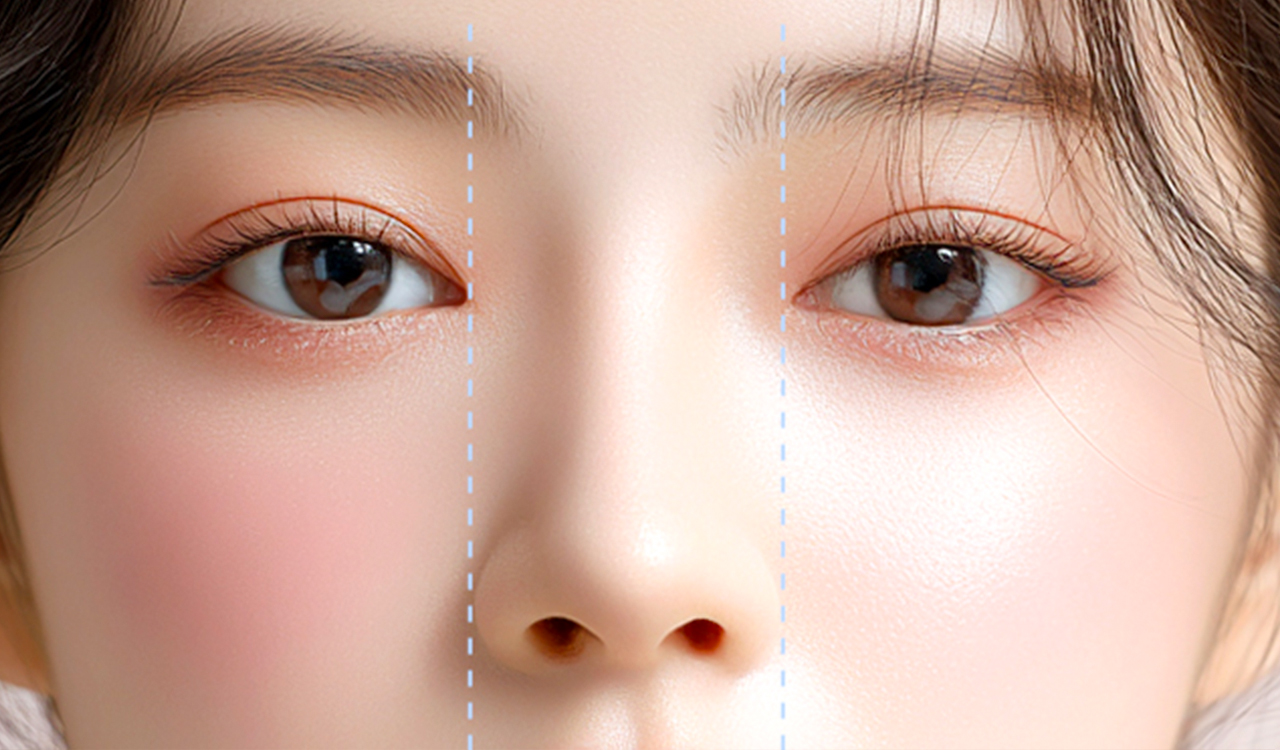
A nose wing reduction (alarplasty) is a surgical option for those whose nostril wings are naturally thick, wide, or flared while their nasal bridge height and tip projection already suit their overall facial proportions. This procedure selectively reshapes or excises

Alar Base Reduction Technique: Rolling vs. Excision Comparison
An alar base reduction technique narrows flared or wide nostrils by either folding the nostril rim inward with internal sutures or excising a targeted strip of tissue. In Ho Chi Minh City, Vietnam, plastic surgeons perform four main surgical variations
Top 5 Rhinoplasty Clinics in Ho Chi Minh
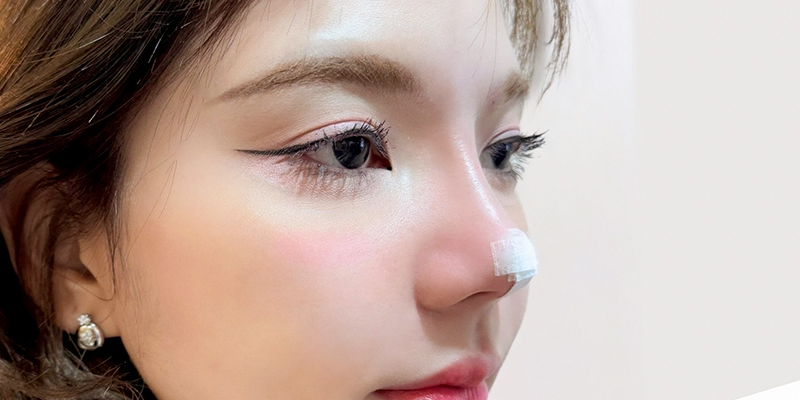
Rhinoplasty clinics in Ho Chi Minh City offer safe cosmetic nose surgery: Gangwhoo Aesthetic Hospital, JW Korean Aesthetic Hospital, Kangnam Aesthetic Hospital, Thu Cúc Aesthetic Hospital, and Keangnam Korea. In 2026, market rates for cosmetic nose surgery across these facilities

Collagen Injection vs. Laser for Facial Skin: Cost, Recovery, and Fit
A collagen injection vs laser for aging facial skin, which is better? They are two distinct approaches to facial rejuvenation and do not replace each other. Lasers work from the outside in to correct surface texture and pigment, while injected

Collagen Shots for the Face vs. Mesotherapy: Aging Grades, Cost, and Results
Deciding between collagen shots for the face and mesotherapy comes down to identifying which layer of your skin is experiencing aging. Mesotherapy nourishes the superficial skin layers for quick surface hydration, whereas collagen shots for the face rebuild structural density