Skip to content


Mesotherapy Machine vs. Manual Injection: Which Is Safer and More Effective?
When comparing mesotherapy machine vs manual injection, the short answer is that a machine delivers active ingredients evenly and almost painlessly across a wide area, while manual injection places nutrients precisely and deeply where a skilled doctor decides. A single session usually costs between 2,000,000 and 12,000,000 VND (roughly 75 to 455 USD), depending on the device, the serum, and the clinic.
Neither method is universally better; the right choice depends on your skin concern, your pain tolerance, and how deep the treatment needs to reach. This guide compares both side by side so the decision is clear before you book.
Mesotherapy Machine vs. Manual Injection: Core Technical Differences
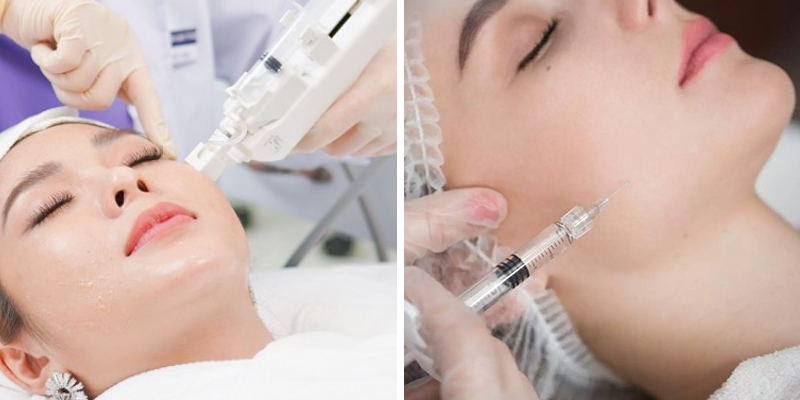
The core difference between a mesotherapy machine and manual injection is how the active ingredients cross the skin barrier. A machine relies on physical energy or an automated multi-needle head to drive serum in evenly, while manual injection depends entirely on the doctor’s needle-feel and hand control to place each drop.
That single distinction shapes everything else. Machine delivery is built for uniform depth, broad coverage, and comfort: vacuum suction or micro-channels hold the skin steady and spread active ingredients across the whole face quickly. Manual injection is built for precision: the doctor adjusts needle depth from point to point, which matters in delicate zones like the nasolabial folds, the under-eye hollow, or a deep static wrinkle.
In plain terms, a machine is a coverage and comfort tool, and manual injection is a targeting and depth tool. One treats a broad area fast and gently; the other sculpts specific problem areas with control. Understanding that split is the key to choosing between them.
What Is a Mesotherapy Machine (Mesotherapy Gun)?
A mesotherapy machine is any device that delivers active ingredients into the skin without relying on a doctor’s hand for each injection. In practice, “machine” covers two families: an automated mesotherapy injector gun that still uses fine needles, and needle-free platforms that push serum through the skin using physical energy.
1. Mesotherapy injector gun
The mesotherapy injector gun uses a multi-needle head combined with vacuum suction. The suction fixes the skin surface so the needles enter at a controlled, even depth, and a preset dose is released at each point. This is faster and more consistent than the hand across a large area, which is one of the main mesotherapy gun benefits.
The trade-off is some product wastage, because a little serum can reflux to the surface under vacuum pressure.
2. Needle-free mesotherapy
Needle-free mesotherapy skips the needle entirely and opens temporary micro-channels in the skin instead. The most common technologies are:
- Electroporation, which uses short electrical pulses to open reversible pores in the cell membrane so even large molecules like hyaluronic acid can pass
- Sonophoresis, which uses low-frequency ultrasound to loosen the outer skin layer
- Jet delivery, which fires the serum as a fine nano-mist through a micro-nozzle
Because there is no open wound, this is often marketed as painless mesotherapy, and it suits sensitive skin or anyone afraid of needles.
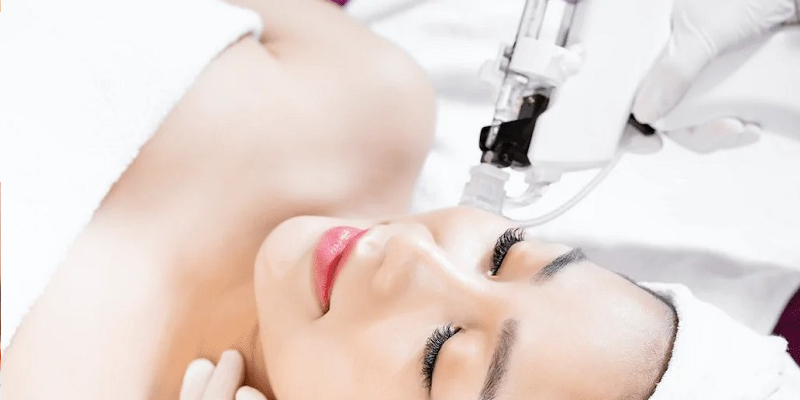
The main strengths of machine delivery are comfort and convenience: little to no pain, no need for numbing cream in most needle-free protocols, no open wounds, and essentially no downtime. The main limitation is depth. Machine and needle-free delivery reach the epidermis and shallow dermis well, so results tend to be mild to moderate and best suited to hydration, glow, and maintenance rather than deep structural repair.
What Is Manual Mesotherapy Injection?
Manual mesotherapy injection, also called micro-point or needle mesotherapy, uses a fine needle to place active ingredients directly into the dermis by hand. The doctor injects at a shallow angle (around 15 degrees to the skin) so the serum sits in the correct layer, and adjusts depth from 1 mm to 4 mm depending on skin thickness and the treatment goal.
The mesotherapy micro injection technique works in two ways at once. Beyond the direct effect of the active ingredients, the repeated needle entries create thousands of controlled micro-injuries. These trigger a mild, healthy healing response that prompts fibroblasts to produce new collagen (types I and III) and elastin, which supports remodeling of scars and wrinkles over time.
The main strength of manual injection is precision and power. A trained hand can concentrate active ingredients exactly at the base of a scar, along a specific ligament, or into a stubborn patch of pigment in a way no automated device can match. This makes it the stronger option for deeper concerns such as rolling acne scars, moderate to advanced aging, and localized hair loss.
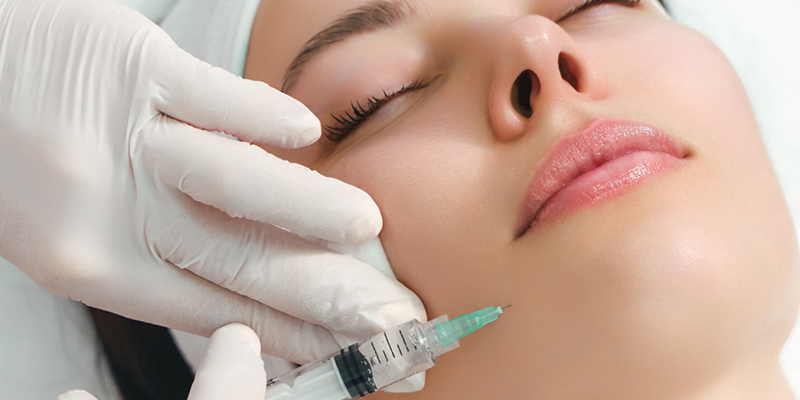
The trade-offs matter too. Manual injection is minimally invasive, so expect mild pain (numbing cream is usually applied for 30 to 45 minutes first), some redness or small bumps at each point, and occasional bruising if a tiny vessel is nicked. Recovery is short, typically 2 to 5 days, and results depend heavily on the injector’s skill.
→ Learn more at: needle-free mesotherapy vs manual injection
Mesotherapy Machine vs. Manual Comparison
The clearest way to weigh a mesotherapy gun vs manual injection is side by side. The matrix below compares the criteria that matter most when choosing between them.
| Criteria | Mesotherapy machine | Manual injection |
| Method | Automated needle head or physical energy (electroporation, ultrasound, jet) | Fine needle placed by hand |
| Invasiveness | Non-invasive to minimally invasive, no open wounds with needle-free | Minimally invasive, tiny open channels |
| Precision in thin zones | Even coverage, less point control | High, doctor sculpts depth point by point |
| Pain level | None to very mild, often no numbing needed | Mild to moderate, numbing cream required |
| Product wastage | Some reflux under vacuum, mist loss with jet | Very low, serum placed directly |
| Treatment time | Fast, broad coverage | Slower, point by point |
| Effectiveness | Mild to moderate, best for hydration and glow | High, reaches deep structural concerns |
| Downtime | None, makeup same day | Short, 2 to 5 days |
| Infection risk | Very low with needle-free, no open wound | Low to moderate if sterility slips |
| Best for | Sensitive skin, first-timers, maintenance | Scars, deep aging, targeted repair |
Is a Mesotherapy Gun Better Than Manual?
The answer is that neither wins outright; a mesotherapy gun and manual injection solve different problems, so “is a mesotherapy gun better than manual” depends on what your skin needs. The two are complementary tools rather than rivals.
- A machine (or needle-free device) is the better choice when comfort and coverage lead. It suits anyone who wants all-over hydration and glow, fears needles, has thin or reactive skin, is recovering from laser or a peel, or simply wants a fast maintenance session with no downtime. Because it avoids mechanical trauma, it is also the safer option for epidermal melasma, where needle injury can worsen pigmentation.
- Manual injection is the better choice when depth and targeting lead. Choose it for rolling or long-standing acne scars that need active ingredients placed at the scar base, for moderate to advanced aging that needs redefinition, for localized hair loss, and for concentrated brightening active ingredients delivered precisely to a pigment concern. These are jobs that reward a skilled hand over an automated pass.
For many clients the smartest plan is not one or the other. Doctors increasingly combine the two: a few deep manual sessions to rebuild the foundation with active ingredients like PRP or exosomes, then needle-free machine sessions to keep the skin hydrated, calm, and glowing between visits.
Mesotherapy Side Effects: Machine vs. Manual
Mesotherapy side effects differ mainly because of one factor: whether the skin barrier is broken during treatment. That single point separates the safety profile of the two methods.
- Manual injection side effects: Expect mild redness, small bumps, and occasional bruising at the injection points, usually settling within a few days. Because there are open micro-channels, manual injection carries a low to moderate risk of infection if strict sterile technique is not followed. The most serious complication is an inflammatory granuloma (a firm nodule under the skin), which is strongly linked to substandard or self-mixed serums, injecting into the wrong layer, over-injecting at one point, or non-sterile technique.
- Machine and needle-free side effects: Because no needle pierces the epidermis in needle-free delivery, the risks of bleeding, bruising, and cross-infection drop close to zero. Side effects are usually limited to mild, temporary flushing from increased local circulation, which fades within an hour. This makes needle-free machine delivery an ideal option for reactive skin or anyone prone to nodules.
Safety depends far more on the product and the provider than on the device. Choose a licensed clinic, a qualified doctor, and genuine certified serums (FDA or CE standard), and be cautious of unusually cheap treatments, which are the most common source of complications.
How Long Do Mesotherapy Results Last?
How long mesotherapy results last depends on the active ingredients, the method, and your skin, but most people see effects hold for a limited period before a top-up is needed. Mesotherapy delivers a temporary aesthetic result, because the nutrients are gradually absorbed and cleared on the body’s natural cycle.
Manual injection tends to last somewhat longer per course, because the micro-injuries prompt the skin to build its own collagen alongside the direct effect of the serum. Needle-free machine sessions give a shorter, hydration-focused result and are usually done more frequently, since the gentle approach allows a denser schedule with no recovery time.
As a general guide, a manual course runs 3 to 6 sessions spaced 2 to 4 weeks apart, with maintenance every 2 to 4 months. A needle-free machine course runs 4 to 8 sessions spaced 1 to 2 weeks apart, with maintenance around once a month. Longevity also depends on age, natural aging speed, lifestyle, and sun protection, so scheduled top-ups are the reliable way to keep the result from fading.
Mesotherapy Machine vs. Manual Cost: How Much Does Each Cost?
Mesotherapy machine and manual costs overlap more than most people expect, and both depend on the serum, the number of sessions, and the clinic. The table below is a 2026 planning reference for the Ho Chi Minh City market, with USD figures based on an exchange rate of about 26,300 VND to 1 USD.
| Method | Reference price per session (VND) | Approximate (USD) |
| Mesotherapy machine (needle-free) | 2,000,000 – 7,000,000 | 75 – 265 |
| Manual injection (needle) | 2,000,000 – 12,000,000 | 75 – 455 |
A few factors move the final number within these bands.
- Serum and technology: Premium hyaluronic acid lines, certified PRP kits, exosome cocktails, and next-generation devices all cost more than basic formulas.
- Number of sessions: Lasting results come from a full course. A needle-free machine plan needs more frequent sessions, so even at a lower price per visit the total for a package can reach 15,000,000 to 30,000,000 VND (about 570 to 1,140 USD) at premium clinics, similar to a shorter manual course.
- The clinic and the doctor: Accredited centers where a doctor performs the injection price the same treatment differently from unlicensed spas, and that gap reflects safety and product authenticity.
One safety note matters more than price: injectable skin treatment should never be booked on cost alone. The most severe complication, an inflammatory granuloma, is strongly linked to cheap products and untrained injectors, so a licensed clinic is worth the difference.

Learn more at:
Aftercare for Machine and Manual Mesotherapy
Aftercare protects the result and lowers the risk of complications, and the routine differs by method because of the wound difference.
- After manual injection: The skin has thousands of tiny open channels, so the first 24 hours are the sensitive window. Clean only with sterile saline, avoid makeup and harsh active ingredients, skip heat and heavy sweating, and apply strict sun protection. From day 2, gentle repair serums (B5, ceramide, peptides) help rebuild the barrier, and broad-spectrum SPF 30 or higher is essential once outdoors. Let any tiny crusts flake off on their own, and pause strong active ingredients like retinol, AHA, and BHA for at least 7 days.
- After needle-free machine delivery: The routine is simple. You can wear makeup and return to normal activity the same day. For the first 24 to 48 hours, avoid strong chemical exfoliants and harsh cleansers, focus on gentle moisturizer, and keep up daily sun protection to shield the freshly nourished skin.
Book a Consultation
Mesotherapy machine vs manual is not a contest with one winner. A machine, especially a needle-free device, gives comfort, coverage, and zero downtime, which makes it ideal for sensitive skin, first-timers, and monthly maintenance. Manual injection gives precision and depth, which makes it the stronger choice for scars, deeper aging, and any concern that needs active ingredients placed exactly where they count.
The most reliable step is a face-to-face consultation, where an experienced doctor can assess your skin, your goals, and your comfort level before recommending a method or a combination of both.
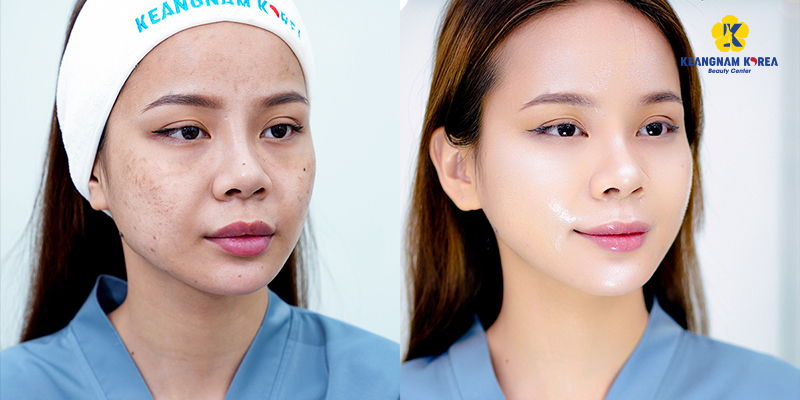
→ Needle-free mesotherapy at Keangnam Korea
Is mesotherapy machine or manual injection more painful?
Manual injection is more uncomfortable, since a needle enters the skin and numbing cream is usually applied first. Needle-free machine delivery is close to painless, with only a mild tingling or pressure sensation, which is why it is often called painless mesotherapy.
Is a mesotherapy gun better than manual injection?
Neither is universally better. A mesotherapy gun or needle-free device is better for comfort, even coverage, hydration, and sensitive skin, while manual injection is better for deep, targeted concerns like acne scars and advanced aging. Many clients get the best result by combining the two.
Does a mesotherapy machine really work without needles?
Yes. Needle-free devices use electroporation, ultrasound, or jet pressure to open temporary micro-channels so active ingredients can pass into the skin. Studies of these methods show meaningfully improved absorption over topical products, though delivery stays shallower than a needle can reach.
How long do mesotherapy results last?
Results are temporary because the active ingredients are gradually absorbed. Manual courses often hold a little longer thanks to collagen stimulation, while needle-free machine results are shorter and topped up more often. Maintenance every one to four months keeps the effect going.
What are the main mesotherapy side effects?
Manual injection can cause redness, small bumps, and occasional bruising, with a small risk of infection or granuloma if products or technique are poor. Needle-free machine delivery usually causes only brief flushing, because the skin barrier stays intact.
How much does mesotherapy cost, machine vs manual?
Both usually fall between 2,000,000 and 12,000,000 VND per session (about 75 to 455 USD). Needle-free machine sessions can be cheaper per visit but need more of them, so full-course totals often land in a similar range.
RELATED ARTICLES
Collagen Injection vs. Laser for Facial Skin: Cost, Recovery, and Fit
A collagen injection vs laser for aging facial skin, which is better? They are two distinct approaches to facial rejuvenation and do not replace each other. Lasers work from the outside in to correct surface texture and pigment, while injected
Collagen Shots for the Face vs. Mesotherapy: Aging Grades, Cost, and Results
Deciding between collagen shots for the face and mesotherapy comes down to identifying which layer of your skin is experiencing aging. Mesotherapy nourishes the superficial skin layers for quick surface hydration, whereas collagen shots for the face rebuild structural density
How Long Does a Fox Eye Thread Lift Last? Costs, Risks, and Results
A fox eye thread lift is a minimally invasive procedure that uses dissolvable barbed threads to suspend the outer corner of the eye (lateral canthus) and the eyebrow tail toward the temple. By gently pulling these soft tissues upward, the
What Is a Liquid Nose Job? Cost, Longevity and When Do Threads Work Better?
What is a liquid nose job? A liquid nose job (clinically known as liquid rhinoplasty) is a non-surgical procedure that reshapes the nose using precision injections of hyaluronic acid (HA) filler. The treatment takes 10 to 15 minutes, requires zero
Semi-Structural Rhinoplasty for a Low Bridge and Wide Tip: Cost and Recovery
Semi-structural rhinoplasty is a targeted surgical procedure that reshapes specific portions of the nose, typically modifying a broad, rounded tip with autologous cartilage while elevating a slightly low bridge with a biocompatible implant. The procedure takes 45 to 90 minutes
Non-Surgical Rhinoplasty Price in 2026: Cost by Filler and Thread Type
The non-surgical rhinoplasty price in Ho Chi Minh City, Vietnam, ranges from $230 to $1,720 (6 to 45 million VND) per treatment in 2026. The overall cost is determined primarily by the specific material and technique selected: The material used