Skip to content


Open vs Closed Rhinoplasty: Which Nose Surgery Technique Is Right for You?
Open vs closed rhinoplasty, which is better? The difference is where the incision is placed and how much of the nasal framework the surgeon can see and rebuild. Closed rhinoplasty hides every incision inside the nostrils and costs about 14,000,000 to 27,500,000 VND ( 530 to 1,050 USD) in Vietnam in 2026, while open rhinoplasty adds a small incision across the columella for full structural access and runs from 30,000,000 to 220,000,000 VND (1,140 to 8,370 USD) depending on the cartilage used.
Neither technique is better. The right choice depends on how complex the correction is, how the nose has healed from any previous surgery, and how much downtime is acceptable. This guide compares both approaches, breaks down every sub-technique within each, and explains which one suits which nose.

What Is the Difference Between Open and Closed Rhinoplasty?
The two techniques differ only in the incision, yet that single detail changes everything about what the surgeon can do.
- Open rhinoplasty: The surgeon makes a small V-shaped (inverted-V) incision across the columella, the strip of skin between the nostrils, then lifts the nasal skin upward. This exposes the entire framework of cartilage and bone, giving direct visibility for precise reshaping, cartilage grafting, and rebuilding of the tip and septum. Open rhinoplasty is the foundation of modern structural rhinoplasty.
- Closed rhinoplasty: All incisions stay hidden inside the nostrils. The surgeon works through these internal openings without lifting the nasal skin, usually to place a bridge implant or perform limited tip refinement. Because no skin on the outside is cut, closed rhinoplasty is often described as scarless rhinoplasty.
Open rhinoplasty trades a tiny external scar for maximum surgical control, while closed rhinoplasty trades some visibility for a faster, scar-free recovery.
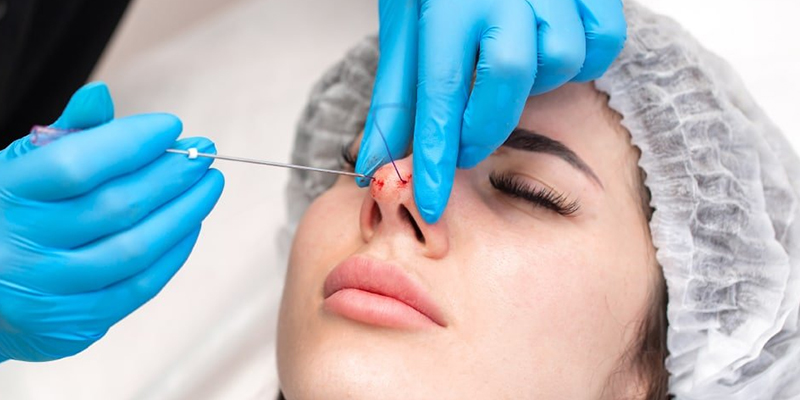
Open Rhinoplasty vs Closed Rhinoplasty Comparison
Closed rhinoplasty wins on downtime, scarring, and cost, while open rhinoplasty wins on precision, correction power, and durability.
| Criteria | Open Rhinoplasty | Closed Rhinoplasty |
| Incision | Small inverted-V cut across the columella plus internal incisions | Entirely inside the nostrils |
| Surgical visibility | Full, direct view of cartilage and bone | Limited, the surgeon works by feel and experience |
| External scarring | Faint columellar scar, fades to a fine white line in 3 to 6 months | None (scarless) |
| Surgery time | 60 to 120 minutes (up to 180 with rib cartilage) | 15 to 60 minutes |
| Anesthesia | Local or general, general anesthesia for rib cartilage cases | Usually local |
| Swelling and bruising | More swelling, especially at the tip | Minimal |
| Recovery time | 10 to 15 days of downtime, final shape in 3 to 6 months | 5 to 10 days of downtime, settles faster |
| Complexity of correction | Handles short noses, deviated noses, weak septums, and failed surgeries | Best for simple bridge augmentation and mild refinement |
| Result longevity | Permanent when built with structural grafts | 10 to 25 years for implant-only augmentation |
| Typical 2026 price in Vietnam | 30,000,000 – 220,000,000 VND (1,140 – 8,370 USD) | 14,000,000 – 27,500,000 VND (530 – 1,050 USD) |
What Procedures Use the Open Rhinoplasty Technique?
Open rhinoplasty is not a single procedure but a family of structural techniques. In Vietnam, three main services rely on the open approach, and each targets a different level of complexity.
1. Structural and Semi-Structural Rhinoplasty
Structural rhinoplasty is the signature open technique. Through the inverted-V incision, the surgeon rebuilds the nasal pillar with septal cartilage or a biological graft, raises the bridge with premium materials such as Surgiform or Nanoform, and shapes the tip with ear cartilage. The result is a complete redesign (S-line or L-line) that corrects a short or upturned nose, a bulbous tip, a humped or deviated bridge, and even previously failed surgery.
Surgery takes 60 to 120 minutes, downtime is about 10 to 15 days, and the result is considered permanent. Structural and semi-structural rhinoplasty costs 30,000,000 to 77,000,000 VND (roughly 1,140 to 2,930 USD) in 2026.

2. Rib Cartilage Rhinoplasty
For the most damaged noses, the open approach allows full reconstruction using the individual’s own rib cartilage (usually a 2 to 3 cm segment of the 6th or 7th rib). Because the material is autologous, there is no rejection and strong resistance to infection, making it the optimal option for severe contracture, multiple failed revisions, or allergy to synthetic implants.
This is major surgery performed in a hospital under general anesthesia, with a chest incision and 15 to 20 days of recovery. A small percentage of cases (2 to 5 percent) can show cartilage warping, which experienced surgeons limit with ultrasonic carving and matrix suturing. Rib cartilage rhinoplasty costs 80,000,000 to 220,000,000 VND (roughly 3,040 to 8,370 USD).
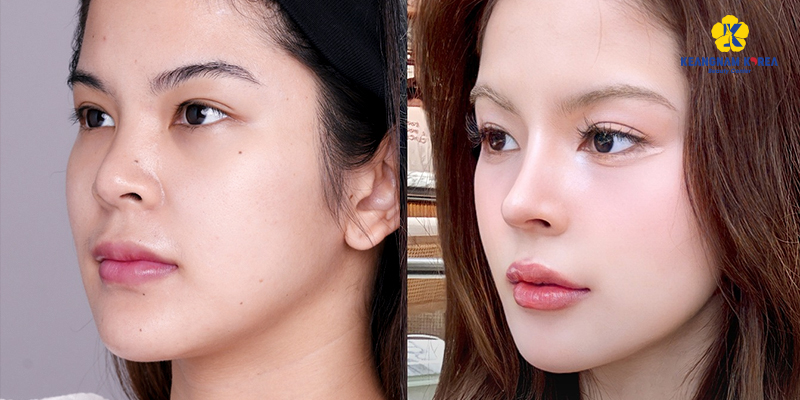
3. Revision and Reconstructive Rhinoplasty
Noses that have dropped, shifted, or become infected after a previous procedure almost always require the open technique, because the surgeon must remove scar tissue, take out the old implant, and rebuild the framework under direct vision. Simple implant removal starts around 8,000,000 to 22,000,000 VND (roughly 300 to 850 USD), while complex reconstruction with dermal fat grafting for infected or damaged noses runs 40,000,000 to 120,000,000 VND (roughly 1,520 to 4,560 USD).
What Procedures Use the Closed Rhinoplasty Technique?
Closed rhinoplasty covers the lighter end of surgical nose reshaping. Two established services in Vietnam use hidden internal incisions.
1. Basic Implant Rhinoplasty
The most popular closed procedure places a soft silicone or Softxil implant along the bridge through a single hidden incision inside one nostril. The tip and columella are left untouched. Surgery takes only 15 to 30 minutes, recovery runs about 8 to 10 days, and the price is the lowest of any surgical option at 14,000,000 to 22,400,000 VND (roughly 530 to 850 USD).
The limitation is structural: this method cannot correct a short tip, wide nostrils, or a deviated septum, and individuals with thin skin face higher risks of implant visibility, redness, or extrusion over time. It suits a nose that is already long and well-shaped, with thick soft tissue, needing only a modest lift of the bridge.
2. Cartilage-Wrapped Rhinoplasty (Autologous Tip Protection)
This upgrade keeps the closed bridge augmentation but adds a protective layer of the individual’s own ear cartilage (or a Megaderm membrane) over the tip. The graft acts as a cushion between the implant and the skin, preventing redness and implant show, and extending durability to 15 to 20 years or longer.
It requires a small second incision behind the ear to harvest cartilage, so recovery is slightly longer than the basic version. Cartilage-wrapped rhinoplasty costs 20,000,000 to 27,500,000 VND (roughly 760 to 1,050 USD) and is the safer closed option for thin skin or a slightly weak tip.
Which Rhinoplasty Approach is Better?
Neither technique is objectively better. Each is the correct answer to a different problem.
- Closed rhinoplasty is better when: The nose needs only bridge augmentation, the tip already has good shape and projection, the skin and soft tissue are reasonably thick, and minimal downtime matters. The closed approach delivers a natural lift with no external scar and the fastest surgical recovery.
- Open rhinoplasty is better when: The nose is short or upturned, the tip is wide or poorly supported, the septum is deviated or weak, the nose has been operated on before, or the goal is a precisely sculpted S-line or L-line profile. Only the open approach gives the surgeon enough visibility to graft, suture, and rebuild with accuracy.
The more the tip and internal framework need to change, the stronger the case for open rhinoplasty. The more the correction is limited to the bridge, the stronger the case for closed rhinoplasty.
Which Technique Suits Asian Noses Best?
Asian rhinoplasty styles have developed for a low bridge, a short or upturned tip, flared nostrils, thicker skin, and a septum that is often too weak to support significant tip work. These traits directly influence the open vs closed decision.
- Complex Asian noses usually need the open technique: A short, upturned tip cannot be lengthened through hidden incisions. Extending it requires septal extension grafting, where cartilage is added to the septum to push the tip down and forward, and that graft can only be placed accurately under the full visibility of open structural rhinoplasty. The same applies to bulbous tips and flared nostril bases that need reshaping.
- Simple augmentation suits the closed technique: If the nose already has a reasonable tip and only the bridge sits low, a closed implant procedure (basic or cartilage-wrapped) raises the profile with faster healing and no external scar.
This is why, in practice, most comprehensive Korean-style makeovers for Asian noses are performed open, while quick bridge enhancements remain closed. The 2026 trend in Vietnam also favors natural-looking results built with premium biological materials such as Surgiform and Nanoform, which reinforces the shift toward open structural work for complex cases.
Open Rhinoplasty Scar and Recovery Timeline
The columellar scar is the most common concern about the open technique, and modern microsurgical closure has made it a smaller issue than most people expect.
- The open rhinoplasty scar: The inverted-V or stair-step incision sits on the underside of the columella, a spot not visible from the front or side at conversational distance. It appears light pink for the first few weeks, then fades progressively into an ultra-fine white line that follows the natural skin crease. By 3 to 6 months it is close to invisible, even when viewed from below.
- Open rhinoplasty recovery timeline: Expect visible swelling and bruising for the first week, splint and suture removal around days 7 to 10, and a return to desk work within 10 to 15 days. The bridge refines within the first month, but the tip holds subtle swelling longest, and the final shape settles over 3 to 6 months. Structural cases take longer to fully define than simple augmentations, which is the normal cost of deeper reconstruction.
- Closed rhinoplasty recovery: The closed approach heals noticeably faster. Swelling and bruising are minimal because the nasal skin is never lifted, most individuals resume normal activity within 5 to 10 days, and the result looks settled within weeks rather than months. This speed, combined with the absence of any external incision, is the main reason closed rhinoplasty remains popular for straightforward bridge work.
How Much Does Open vs Closed Rhinoplasty Cost in 2026?
The table below consolidates 2026 reference prices in Vietnam for every surgical sub-technique. USD figures are approximate, based on an exchange rate of about 26,300 VND to 1 USD.
| Technique | Approach | Reference price (VND) | Approximate (USD) |
| Basic implant rhinoplasty (Korean) | Closed | 14,000,000 – 22,400,000 | 530 – 850 |
| Cartilage-wrapped rhinoplasty | Closed | 20,000,000 – 27,500,000 | 760 – 1,050 |
| Structural / semi-structural rhinoplasty | Open | 30,000,000 – 77,000,000 | 1,140 – 2,930 |
| Revision / reconstructive rhinoplasty | Open | 40,000,000 – 120,000,000 | 1,520 – 4,560 |
| Rib cartilage rhinoplasty | Open | 80,000,000 – 220,000,000 | 3,040 – 8,370 |
Beyond the technique itself, the final quote moves with the surgeon’s experience, the implant or graft material chosen, the facility’s licensing and equipment, and whether pre-operative testing, anesthesia, and follow-up visits are bundled in. A transparent, written quote that itemizes these elements is a reliable sign of a properly run clinic.

How to Choose Between Open and Closed Rhinoplasty
The decision should base on these criteria:
- The degree of correction needed: Bridge-only enhancement points to closed rhinoplasty. Tip, septum, nostril, or revision work points to open.
- Skin thickness and tissue quality: Thin skin raises the risk of implant visibility with basic closed methods and often justifies cartilage protection or full structural work.
- Available downtime: Closed recovery fits a busy schedule. Open structural recovery needs 10 to 15 days away from work and several months of patience for the final shape.
- Surgical history: Any previously operated nose almost always requires the open approach.
- Budget and expectations: A closed implant is economical but has structural limits. Open structural surgery costs more upfront but is designed to last permanently.
→ Explore more at: Korean-style Nose lift at Keangnam Korea
Is open or closed rhinoplasty better?
Neither is universally better. Closed rhinoplasty is better for simple bridge augmentation with fast recovery and no scar, while open rhinoplasty is better for short noses, tip reshaping, deviated septums, and revision cases that need full structural access. The complexity of the correction decides the technique.
Does an open rhinoplasty scar ever completely disappear?
The V-shaped or stair-step scar on the columella turns light pink for the first few weeks, then fades into an ultra-fine white line that blends with the natural skin fold. By 3 to 6 months it is nearly invisible, even from below. It never fully vanishes at a microscopic level, but in daily life it goes unnoticed.
Is closed rhinoplasty really scarless?
Yes, in the visible sense. All incisions in closed rhinoplasty sit inside the nostrils, so no scar appears on the outside of the nose. This is why the technique is often marketed as scarless rhinoplasty.
How long is closed rhinoplasty recovery compared to open?
Closed rhinoplasty recovery typically takes 5 to 10 days of downtime with minimal bruising, and the result settles within weeks. Open rhinoplasty needs 10 to 15 days of downtime, and the tip refines gradually over 3 to 6 months.
Why do most Asian noses need open rhinoplasty?
A short or upturned tip, the most common Asian nasal trait, can only be lengthened with septal extension grafts placed under direct vision. Closed incisions do not provide the access needed for that grafting, so comprehensive Asian rhinoplasty styles rely on the open structural technique.
How much does open vs closed rhinoplasty cost in Vietnam in 2026?
Closed techniques run 14,000,000 to 27,500,000 VND (roughly 530 to 1,050 USD). Open techniques start at 30,000,000 VND for structural rhinoplasty and reach 220,000,000 VND (roughly 1,140 to 8,370 USD) for full rib cartilage reconstruction.
Can a closed rhinoplasty be converted to open later?
Yes. Many individuals start with a closed implant and later upgrade to open structural rhinoplasty when they want tip refinement or when an aging implant needs replacement. The open approach is the standard route for any secondary surgery.
RELATED ARTICLES

Alarplasty and Rhinoplasty Comparison: Which Procedure Fits Your Nose Shape
Selecting between alarplasty and rhinoplasty depends on whether your lower nose appears wide due to flared soft tissue or a low, unsupported structural bridge. Alarplasty isolates and reshapes the nostril wings at the base, whereas rhinoplasty elevates, straightens, or rebuilds
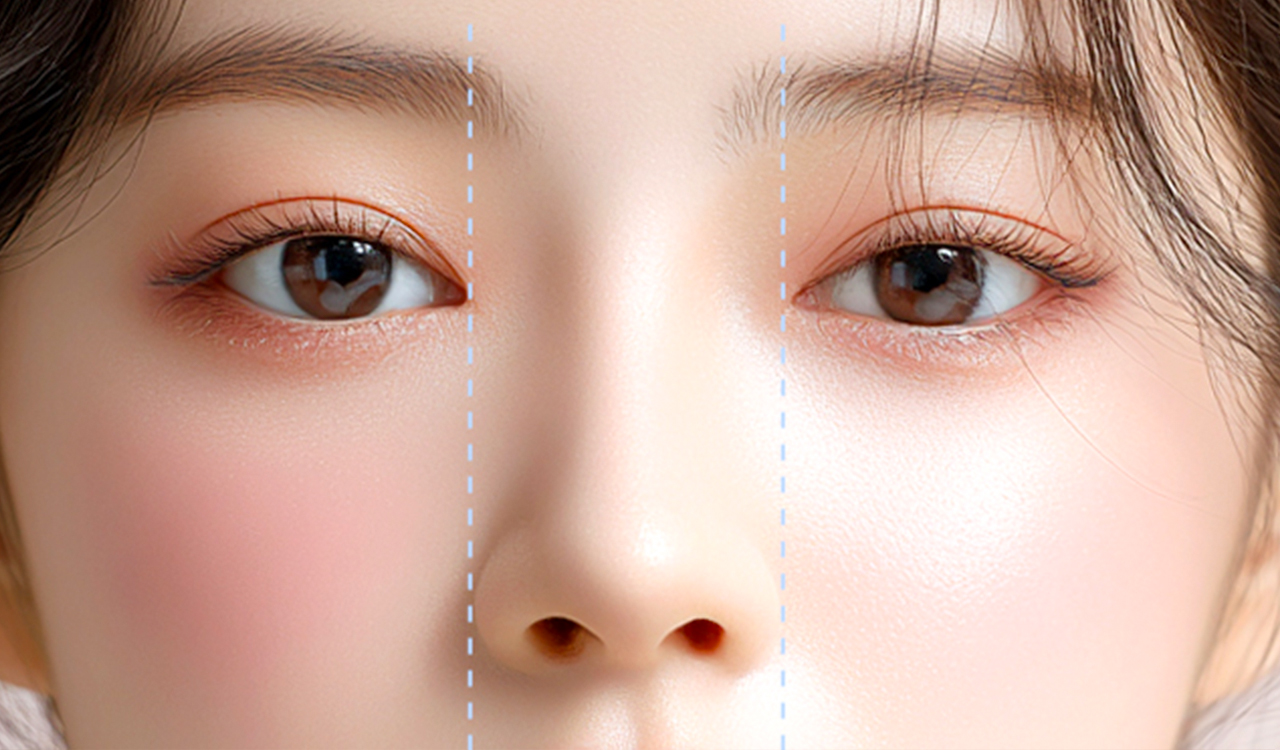
Nose Wing Reduction: Is Alarplasty Worth It? Pros, Cons, and Recovery Time
A nose wing reduction (alarplasty) is a surgical option for those whose nostril wings are naturally thick, wide, or flared while their nasal bridge height and tip projection already suit their overall facial proportions. This procedure selectively reshapes or excises

Alar Base Reduction Technique: Rolling vs. Excision Comparison
An alar base reduction technique narrows flared or wide nostrils by either folding the nostril rim inward with internal sutures or excising a targeted strip of tissue. In Ho Chi Minh City, Vietnam, plastic surgeons perform four main surgical variations
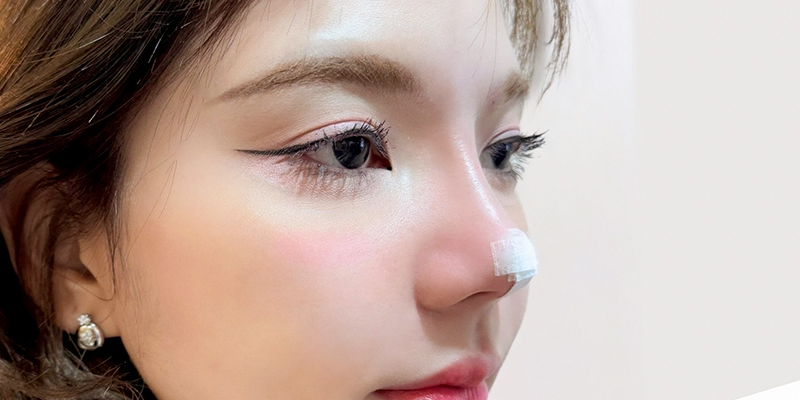
Top 5 Rhinoplasty Clinics in Ho Chi Minh
Rhinoplasty clinics in Ho Chi Minh City offer safe cosmetic nose surgery: Gangwhoo Aesthetic Hospital, JW Korean Aesthetic Hospital, Kangnam Aesthetic Hospital, Thu Cúc Aesthetic Hospital, and Keangnam Korea. In 2026, market rates for cosmetic nose surgery across these facilities

Collagen Injection vs. Laser for Facial Skin: Cost, Recovery, and Fit
A collagen injection vs laser for aging facial skin, which is better? They are two distinct approaches to facial rejuvenation and do not replace each other. Lasers work from the outside in to correct surface texture and pigment, while injected

Collagen Shots for the Face vs. Mesotherapy: Aging Grades, Cost, and Results
Deciding between collagen shots for the face and mesotherapy comes down to identifying which layer of your skin is experiencing aging. Mesotherapy nourishes the superficial skin layers for quick surface hydration, whereas collagen shots for the face rebuild structural density