Skip to content

PRP vs. Mesotherapy Skin: Which Skin Rejuvenation Is Better?
For anyone comparing PRP vs. mesotherapy skin treatments, the short answer is that PRP uses growth factors from your own blood to rebuild the skin from within, while mesotherapy (a skin booster injection) delivers ready-made active ingredients like hyaluronic acid and vitamins for fast hydration and glow. A single session of either typically costs between 2,000,000 and 15,000,000 VND (roughly 75 to 570 USD).
PRP vs. Mesotherapy Skin: What Is the Main Difference?
The main difference is where the active ingredients come from: PRP (platelet-rich plasma) is autologous and concentrated from your own blood, while mesotherapy is exogenous and uses a manufactured cocktail of hyaluronic acid, amino acids, peptides, and vitamins injected into the skin.
That single distinction shapes everything else.
- PRP works by triggering repair, as concentrated platelets release growth factors (PDGF, TGF-beta, VEGF, EGF, IGF-1) that stimulate fibroblasts, build new collagen, and heal damaged tissue over several weeks.
- Mesotherapy works by supplying, sending nutrients and hydrators straight into the middle layer of the skin (the mesoderm) to improve its condition almost immediately.
In plain terms, PRP is a regeneration treatment and mesotherapy is a nourishment treatment. One rebuilds structure slowly and durably, the other refreshes the surface quickly. Understanding that split is the key to choosing between them.
What Is PRP Injection for Skin Rejuvenation?
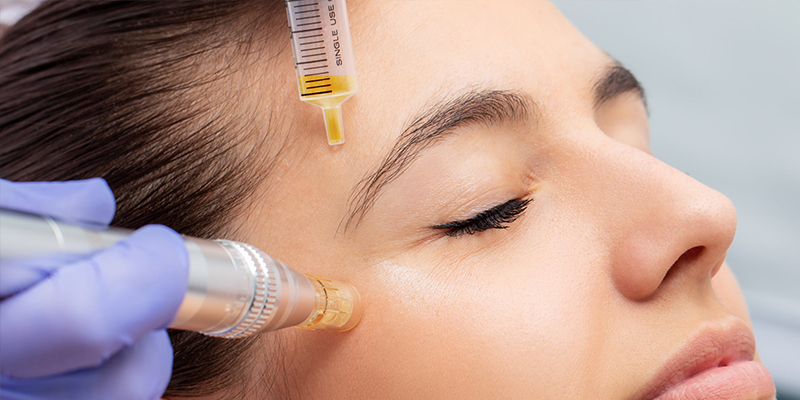
A PRP injection for skin rejuvenation uses platelet-rich plasma, concentrated from a small sample of your own blood, injected into the skin through fine needles to trigger natural collagen and tissue repair.
To prepare it, the blood is spun in a centrifuge to remove red cells and concentrate the platelets, producing plasma with a platelet count several times higher than normal circulating blood. Once activated, this concentrate is injected at a shallow depth, which is why the technique is also known as autologous blood therapy.
→ Learn more at: What is PRP treatment
1. What are the benefits of PRP for the skin?
PRP stimulates natural collagen and elastin, restores firmness, rebuilds the skin barrier, and gradually softens fine lines, crow’s feet, and rolling acne scars, all with very low allergy risk because it uses your own material.
That genuine tissue repair is what sets it apart. Since there is no added foreign substance, PRP has excellent biocompatibility and only a minimal chance of allergy or rejection, which makes it a good fit for reactive or sensitive skin.
2. Who should avoid PRP injections?
PRP is not suitable for anyone with a bleeding or clotting disorder, an active skin infection, hepatitis, certain cancers, or during pregnancy and breastfeeding, and the results also depend on the quality of your blood.
Because the outcome relies on your own platelets, factors like anemia, a low platelet count, age, and lifestyle all influence how well the skin responds. A medical consultation before treatment is essential to confirm suitability and rule out contraindications.
What Is a Skin Booster Injection (Mesotherapy)?
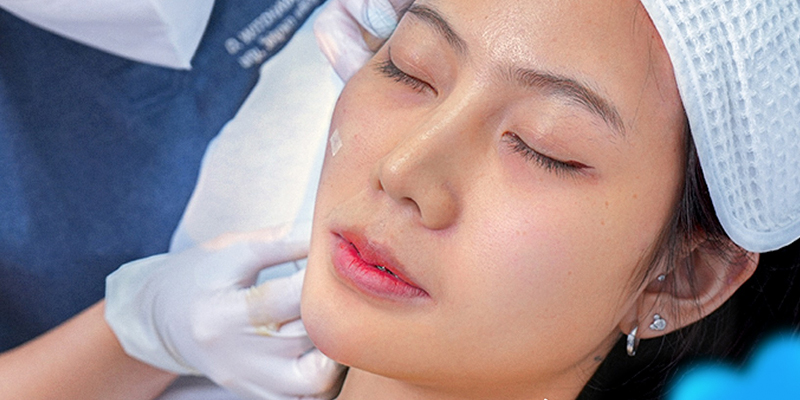
A skin booster injection is the most popular form of mesotherapy: it delivers a ready-made blend of hyaluronic acid, peptides, amino acids, and vitamins into the skin using micro-injections or an automated injector, so it hydrates and plumps right away.
Unlike PRP, it does not rely on the body to manufacture anything. The serums are already prepared, which is why the refresh appears so quickly rather than building over weeks.
→ Learn more at: Mesotherapy treatment
1. What is a skin booster injection best for?
Mesotherapy is the stronger option for dryness, dullness, fine lines, and pigmentation, because hyaluronic acid binds water on contact and brightening actives such as tranexamic acid, glutathione, and niacinamide act directly on melanin.
Its other advantage is flexibility. The formula can be tailored to each concern, and because those pigment-targeting actives work in a way PRP cannot, mesotherapy is often the better call for melasma and uneven tone. Visible hydration and glow usually show within days.
2. What are the risks of a skin booster injection?
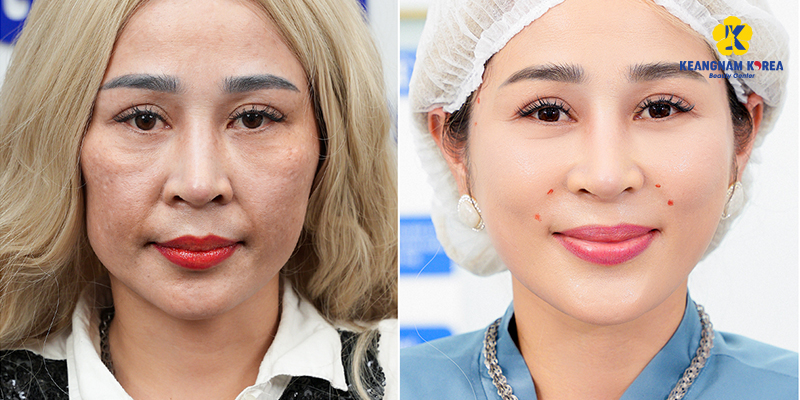
The main risks are allergy or a delayed hypersensitivity reaction to additives, faster fading that needs more frequent top-ups, and a higher chance of inflammatory granulomas (firm nodules under the skin) when substandard products or poor technique are involved.
These risks trace back to the fact that the ingredients are exogenous. Choosing a licensed clinic, a qualified doctor, and genuine, certified products keeps them low and is the single most important safeguard.
Mesotherapy vs. PRP comparison
In short, mesotherapy wins on speed and hydration, PRP wins on repair and collagen wins on depth and longevity, so the right pick depends on the concern rather than the price.
The matrix below compares the core criteria that matter most when choosing a skin rejuvenation treatment.
| Criteria | Mesotherapy (skin booster) | PRP |
| Source of actives | Exogenous cocktail (HA, peptides, vitamins) | Autologous (from the client’s own blood) |
| Primary benefit | Deep hydration and instant glow | Tissue healing, scar and collagen repair |
| Best for | Dry, dull skin, fine lines, pigmentation | Acne scars, thinning skin, early aging |
| Onset of results | Very fast (within days) | Gradual (over several weeks) |
| Downtime | Minimal | Low to minimal |
| Longevity | Shorter, needs regular top-ups | Longer once the course is complete |
| Allergy risk | Low but possible (exogenous) | Very low (autologous) |
Is PRP or Mesotherapy Better for Skin?
Neither is universally better: PRP is the stronger choice for acne scars, thin skin, and structural repair, while mesotherapy is the stronger choice for hydration, glow, and pigmentation. Many clients get the best result by combining the two.
The reason is that they solve different problems. PRP stimulates the skin to regenerate its own collagen, so it excels at rolling acne scars, fragile skin, and the early structural signs of aging. Mesotherapy delivers hydrators and brightening actives that act fast and target melanin directly, so it wins on dryness, dullness, and uneven tone.
For many people the smartest option is not one or the other. Combining autologous PRP with exogenous hyaluronic acid in a single plan pairs deep biological repair with immediate hydration, which is why doctors increasingly use the two together rather than treating them as rivals.
Mesotherapy vs. PRP: Which Skin Rejuvenation Is Better for You?
Choose mesotherapy for dry, dull skin, PRP for scars and early aging or a combined plan if you want both repair and hydration at once. The guidance below matches each profile to the method that fits it best.
- If your skin is dry, dull, and dehydrated: A skin booster injection (mesotherapy) is the best match. It restores hydration and glow quickly and suits anyone who wants a visible refresh with minimal downtime.
- If you have acne scars, damage, or need foundational repair: PRP injection for skin rejuvenation is the priority. Its autologous growth factors rebuild collagen and heal tissue, which surface hydration alone cannot do.
- If you want the best of both worlds: A combined plan is often ideal. Pairing PRP or a hyaluronic acid skin booster for repairing and hydration in the same course.
PRP vs. Mesotherapy Cost: How Much Does Each Treatment Cost?
A single session of PRP or mesotherapy typically costs 2,000,000 to 15,000,000 VND (about 75 to 570 USD). The table below is a 2026 planning reference, with USD figures based on an exchange rate of about 26,290 VND to 1 USD.
| Treatment | Reference price per session (VND) | Approximate (USD) |
| Mesotherapy / skin booster injection | 2,000,000 – 15,000,000 | 75 – 570 |
| PRP injection for skin rejuvenation | 3,000,000 – 15,000,000 | 115 – 570 |
| Reborn Cell skin treatment (premium tier) | from 15,000,000 upward | from 570 upward |
What affects PRP and mesotherapy cost?
Three things move the final number: the ingredients and technology, the number of sessions in the course, and the clinic and doctor performing the injection.
- Ingredients and technology: Premium HA lines, certified PRP kits (such as FDA- or CE-standard kits), and next-generation cell technology all cost more than basic formulas.
- Number of sessions: Lasting results come from a full course, usually three or more sessions, so budget for the course rather than a single visit.
- The clinic and the doctor: Accredited centers where a doctor performs the injection price the same treatment differently from unlicensed spas, and that gap reflects safety and product authenticity.
How Long Do Skin Boosters Last?
A mesotherapy skin booster lasts a shorter time and needs regular top-ups, PRP lasts longer once the course is complete because it builds your own collagen.
The difference comes down to how each one works. A skin booster injection relies on exogenous actives that the body metabolizes and clears on its natural cycle, so the hydrating, glowing effect fades sooner. PRP is not just adding material, it is prompting the skin to build collagen, which sustains the result.
Whichever method you choose, longevity also depends on age, natural aging speed, lifestyle, and sun protection. Periodic maintenance sessions, scheduled with your clinic, are the reliable way to keep the result from fading.
Reborn Cell Extra+ is designed for the longest-lasting renewal of the three. It works at the deepest cellular level for the most durable outcome.
→ Learn more at: Reborn Cell Extra+
Safety, Candidates, and Aftercare
All three treatments are minimally invasive and low-risk in trained hands. Good candidates are people from their mid-twenties onward with early aging, acne scars, or dry, weakened skin, and aftercare centers on gentle cleansing and strict sun protection.
Each method has its own profile. PRP is prized for its biocompatibility, with allergy and rejection essentially ruled out, though it carries strict contraindications (blood disorders, active infection, pregnancy) and depends on blood quality. Mesotherapy carries a small risk of allergy and, with poor products or technique, granulomas.
Aftercare protects the result. In the first days, keep the skin clean with gentle saline, avoid makeup and harsh actives, skip heat and heavy sweating, and apply strict sun protection to prevent post-inflammatory pigmentation. Let any tiny crusts flake off on their own, and return for review and top-up sessions on schedule.
Can you combine PRP and mesotherapy in one session?
Yes. Combining PRP and mesotherapy is entirely possible and increasingly popular. Pairing autologous plasma with exogenous hyaluronic acid creates a super-activated combination: the skin is repaired at the tissue level by PRP while being hydrated and plumped by HA, so it gains both regeneration and double the moisture in one plan.
What is the difference between PRP and mesotherapy?
PRP uses growth factors concentrated from the client’s own blood to rebuild collagen and heal tissue, working gradually and durably. Mesotherapy injects a ready-made cocktail of hyaluronic acid, vitamins, and peptides for fast hydration, glow, and pigment control. PRP is regeneration, mesotherapy is nourishment.
Is PRP or mesotherapy better for skin?
Neither is universally better. PRP is better for acne scars, thin skin, and structural repair, while mesotherapy is better for hydration, glow, and melasma. For many people a combined plan gives the strongest overall result.
What is the best skin rejuvenation treatment for aging skin?
For deep aging and laxity, Reborn Cell skin treatment offers the most comprehensive renewal by working at the cellular level. For early aging and fine lines, PRP or a skin booster injection is often enough, and the three can be combined.
How much does PRP skin treatment cost compared with mesotherapy?
Both usually fall between 2,000,000 and 15,000,000 VND per session (about 75 to 570 USD), with PRP typically starting slightly higher. Reborn Cell sits in a premium band from around 15,000,000 VND upward. Final cost depends on ingredients, sessions, and the clinic.
How long do skin boosters last?
A mesotherapy skin booster gives a shorter-lived, hydration-focused result that needs regular top-ups, PRP lasts longer once the course is complete because it builds the skin’s own collagen, and Reborn Cell is designed for the longest renewal. Longevity also depends on age, lifestyle, and sun protection.
RELATED ARTICLES
Collagen Injection vs. Laser for Facial Skin: Cost, Recovery, and Fit
A collagen injection vs laser for aging facial skin, which is better? They are two distinct approaches to facial rejuvenation and do not replace each other. Lasers work from the outside in to correct surface texture and pigment, while injected
Collagen Shots for the Face vs. Mesotherapy: Aging Grades, Cost, and Results
Deciding between collagen shots for the face and mesotherapy comes down to identifying which layer of your skin is experiencing aging. Mesotherapy nourishes the superficial skin layers for quick surface hydration, whereas collagen shots for the face rebuild structural density
How Long Does a Fox Eye Thread Lift Last? Costs, Risks, and Results
A fox eye thread lift is a minimally invasive procedure that uses dissolvable barbed threads to suspend the outer corner of the eye (lateral canthus) and the eyebrow tail toward the temple. By gently pulling these soft tissues upward, the

What Is a Liquid Nose Job? Cost, Longevity and When Do Threads Work Better?
What is a liquid nose job? A liquid nose job (clinically known as liquid rhinoplasty) is a non-surgical procedure that reshapes the nose using precision injections of hyaluronic acid (HA) filler. The treatment takes 10 to 15 minutes, requires zero

Semi-Structural Rhinoplasty for a Low Bridge and Wide Tip: Cost and Recovery
Semi-structural rhinoplasty is a targeted surgical procedure that reshapes specific portions of the nose, typically modifying a broad, rounded tip with autologous cartilage while elevating a slightly low bridge with a biocompatible implant. The procedure takes 45 to 90 minutes

Non-Surgical Rhinoplasty Price in 2026: Cost by Filler and Thread Type
The non-surgical rhinoplasty price in Ho Chi Minh City, Vietnam, ranges from $230 to $1,720 (6 to 45 million VND) per treatment in 2026. The overall cost is determined primarily by the specific material and technique selected: The material used