Skip to content

Revision Rhinoplasty Cost 2026: How Much Is It to Fix a Botched Nose Job in Vietnam?
Revision rhinoplasty cost in Vietnam ranges from about 10,000,000 to 120,000,000 VND (roughly 380 to 4,560 USD) in 2026, depending on how badly the nose was damaged and how much rebuilding it needs. The wide range reflects a simple truth: fixing a previous surgery is harder and more variable than a first nose job, so the price tracks the level of damage and the cartilage required.
This guide explains what revision rhinoplasty is, why it costs more, what the 2026 price looks like by damage level, and how to choose the right surgeon.
What Is Revision Rhinoplasty?
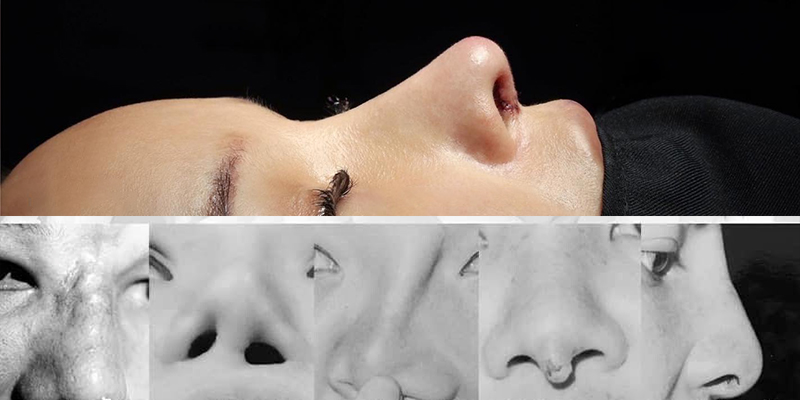
Revision rhinoplasty is a second (or sometimes third) nose surgery performed to correct problems left behind by an earlier rhinoplasty. Also called rhinoplasty correction or corrective nose surgery, it addresses both how the nose looks and how it works, since a failed nose job can affect breathing as well as appearance.
The goal is twofold: repair the structural damage from the first operation and rebuild a balanced, natural shape. Because the surgeon is working on tissue that has already been cut, scarred, and reshaped, revision rhinoplasty is widely regarded as one of the most technically demanding procedures in cosmetic facial surgery. It is not simply a repeat of the original operation. It is a reconstruction.
What Are the Signs You Need Rhinoplasty Correction?
A nose that does not heal as expected after surgery can show several warning signs. Recognizing them early helps you decide when a corrective procedure is worth discussing with a specialist.
- A crooked nose after rhinoplasty: A deviated or twisted bridge is one of the most common reasons people seek revision. It usually results from an implant placed off-center, an inexperienced surgeon, or a nasal structure that did not suit the original material.
- A red, shiny, or thin-skinned tip with exposed cartilage: When a low-quality synthetic implant sits too close to the skin, the tip can stretch, thin, and turn shiny or red over time, sometimes to the point where the implant becomes visible or threatens to break through the skin.
- A dropped or collapsed bridge: If an implant was not fixed securely or took an external knock, the bridge can sink or shift out of position.
- An infected nose job: Infection and inflammation are the most serious outcomes, often linked to surgery at an under-equipped clinic, poor sterile technique, or inadequate aftercare. An infected nose job is treated as urgent, because the implant usually has to be removed before the infection can spread.
These problems affect more than appearance. Many also interfere with breathing, cause ongoing discomfort, and take a real toll on confidence, which is why a careful assessment matters before planning any correction.
Why Does Revision Rhinoplasty Cost More Than a First Nose Job?
A frequent question is why revision rhinoplasty can cost two or three times as much as an initial nose job. The answer lies in the extra work hidden beneath the skin.
In a first-time rhinoplasty, the surgeon works with healthy, untouched tissue. In a revision, the surgeon first has to undo the damage: dissecting and removing old scar tissue, releasing the hardened capsule that forms around an implant, clearing any infection or inflammation, and managing skin that has thinned or contracted. Only after that groundwork is done can the new nose shape be built.
This added complexity demands more operating time, more advanced technique, and often more graft material, particularly the individual’s own cartilage. Each of those factors raises the cost. In short, a revision pays not just for a new nose, but for the careful repair of an old one.
[Diagram: why revision rhinoplasty costs more, showing scar tissue removal and structural rebuild steps]
What Factors Affect Revision Rhinoplasty Cost?
Several variables determine where a case falls within the overall price range. Understanding them makes any quote easier to read.
- The level of damage and difficulty of the repair: This is the single biggest driver. A mildly crooked bridge needs only minor correction and costs less, while a severely damaged nose that requires full structural reconstruction costs considerably more.
- The cartilage material used: Autologous cartilage, taken from the individual’s own ear or rib, is highly biocompatible but adds the cost of harvesting and shaping it. Premium imported synthetic implants from Korea or the United States also carry a higher price than basic materials.
- The number of surgeries required: Some damaged noses cannot be fully corrected in one operation. To protect the tissue and get the best result, the surgeon may stage the repair over two procedures spaced 6 to 12 months apart, which raises the total cost.
- The surgeon and the facility: An accredited center with an experienced revision specialist and modern equipment prices the same procedure differently from a smaller clinic, and that gap usually reflects safety standards and follow-up care.
How Much Is a Revision Rhinoplasty in Vietnam? 2026 Average Cost by Damage Level
How much a revision rhinoplasty costs depends almost entirely on the damage level and the cartilage needed to rebuild the structure. The table below organizes 2026 reference prices by severity. USD figures are approximate, based on an exchange rate of about 26,330 VND to 1 USD.
| Damage level and condition | What the repair involves | Reference price (VND) | Approximate (USD) |
| Level 1: mildly crooked or deviated nose | Reposition or replace the implant and straighten the bridge | 10,000,000 – 30,000,000 | 380 – 1,140 |
| Level 2: red or shiny tip with exposed cartilage | Remove the old implant and rebuild the tip with autologous cartilage | 30,000,000 – 60,000,000 | 1,140 – 2,280 |
| Level 3: capsular contracture or a badly botched nose | Full structural reconstruction, often with autologous rib cartilage | 80,000,000 – 120,000,000 | 3,040 – 4,560 |
| Infected nose job (any level) | Remove the implant, treat the infection, then rebuild in a later stage | 40,000,000 – 120,000,000 | 1,520 – 4,560 |
A few points help put these numbers in context.
- Simple implant removal: Taking out a problem implant or treating an inflamed nose on its own generally costs 8,000,000 to 22,000,000 VND (about 300 to 840 USD), though complex infection cases that also need a dermal fat graft move into the higher bands above.
- Rib cartilage revision rhinoplasty: A severely damaged, contracted, or repeatedly operated nose often has to be rebuilt with the individual’s own rib cartilage, which is the most stable option and sits at the top of the price range (80,000,000 to 120,000,000 VND, or roughly 3,040 to 4,560 USD).
- Botched nose job cost abroad: For comparison, the same corrective surgery in the United States commonly runs 10,000 to 30,000 USD before anesthesia and facility fees, and the most complex cases reach higher. That difference is a major reason international clients travel to Vietnam for revision work.

What Are the Challenges and Risks of Revision Rhinoplasty?
Revision rhinoplasty offers real benefits, but it is honest to weigh them against genuine challenges. Knowing both sides helps set realistic expectations.
- Damage from the previous surgery: Failed noses often come with hardened scar tissue, thinned skin, or inflamed cartilage. Working around these without harming the structure further calls for a delicate, experienced hand.
- Balancing appearance and function: A good result has to look natural and harmonious with the face while also restoring clear breathing, not just disguise the previous problem.
- A higher risk of complications: Because the tissue has already been altered, revision cases carry a somewhat higher chance of issues such as infection, reaction to new material, or uneven healing. An experienced surgeon plans ahead to reduce these risks, but they cannot be promised away.
- The emotional side: Many people considering a revision have already been through one disappointing surgery and feel anxious about trying again. Detailed consultation and a transparent plan do a great deal to rebuild trust.
How Long Should You Wait for Revision Rhinoplasty?
In most cases, the recommended wait is 6 to 12 months after the first surgery before having a revision. The soft tissue around the nose needs that time to settle, soften, and recover from swelling and stiffness, which makes the second operation safer and the result more predictable.
There is one important exception. An acute infection, ongoing discharge, or an implant pushing through the skin is treated as an emergency, and the implant usually has to be removed without delay rather than waiting out the usual healing window. After the area has fully healed, the nose can then be rebuilt in a later stage.
How Do You Choose the Best Revision Rhinoplasty Surgeon?
For a procedure this complex, the surgeon matters even more than the price. People who have already had one nose job go wrong are understandably cautious, and the strongest revision specialists share a few clear traits.
- Proven revision expertise: The best revision rhinoplasty surgeon has specific, demonstrable experience with corrective and reconstructive cases, including scar-tissue management, infection treatment, and cartilage grafting, rather than only first-time nose jobs.
- Modern, accredited facilities: Up-to-date equipment, including endoscopic tools, and proper medical licensing support precision and lower the risk on a difficult case.
- Transparent evidence and pricing: A trustworthy center can show real before-and-after results from revision clients and provide clear, written pricing before any commitment.
- Thorough aftercare: Structured follow-up and scheduled reviews help keep the result stable and catch any problem early.
Keangnam Korea is one of the established names for structural and revision nose surgery in Vietnam. Care combines detailed one-on-one consultation, a surgical team experienced in complex corrective cases, modern endoscopic technology, and strict sterile standards, with clear pricing provided before any decision is made.
For clients who have had a previous nose job fail, that combination of specialist experience and transparency is what restores confidence in trying again.
Book an appointment
Revision rhinoplasty is rarely the result anyone hoped for, but it is a reliable way to repair both the structure and the appearance of a nose that did not heal well, and to restore comfortable breathing along the way.
Revision rhinoplasty cost varies widely with the damage level and the cartilage required, from a minor correction near 10,000,000 VND to a full rib-cartilage reconstruction around 120,000,000 VND, yet the value is consistent: skilled corrective surgery at a fraction of the price charged for a comparable revision in higher-cost countries.
Before deciding, the safest approach is a detailed consultation with a qualified revision specialist and a careful choice of an accredited center, so that the second surgery is the last one needed.
Book a free 1:1 consultation with a Keangnam Korea surgeon to get a fixed quote based on your own nose, with no cost beyond the price you are quoted.
How much does it cost to fix a botched nose job?
A botched nose job cost depends on severity. Mild cases that mainly need implant removal can start around 8,000,000 to 22,000,000 VND, while severely botched noses requiring full rib cartilage reconstruction run 80,000,000 to 120,000,000 VND. In the United States, the same corrective surgery commonly costs 10,000 to 30,000 USD or more.
When is rib cartilage used in revision rhinoplasty?
Rib cartilage revision rhinoplasty is used for severely damaged, contracted, or repeatedly operated noses, and for clients who react to synthetic materials. The individual’s own rib cartilage rebuilds the entire framework and is the most stable, biocompatible option, which is why it sits at the top of the price range.
How do I find the best revision rhinoplasty surgeon?
Look for a surgeon with specific, demonstrable experience in corrective and reconstructive nose surgery, accredited facilities with modern endoscopic equipment, transparent before-and-after evidence from revision cases, and clear written pricing. Specialist revision experience matters far more than the cost of a first-time nose job.
What is the success rate of revision rhinoplasty?
With an experienced revision specialist and an accredited facility, revision rhinoplasty has a high success rate, generally reported in the range of about 85 to 90 percent for a satisfactory aesthetic and functional result. The rate is lower than a first-time nose job because scar tissue, thinned skin, and altered anatomy make the surgery harder, so the choice of surgeon has a direct effect on the odds of a good outcome.
Can a revision restore the nose perfectly to its original state?
A skilled revision can dramatically improve both shape and breathing, but it is honest to say that no surgeon can promise a return to a perfectly untouched, original nose. The previous surgery leaves permanent changes such as scar tissue and reduced skin elasticity, so the realistic goal is a natural, balanced, well-functioning nose rather than an exact reversal. Clear expectations set during consultation are part of a good result.
How many times can a nose be revised?
There is no fixed legal limit, but each additional surgery is harder than the last because scar tissue builds up and the available skin and cartilage become more limited. Most specialists aim to fully correct the nose in one well-planned revision, occasionally two staged procedures, and generally advise against repeated operations. After several surgeries, rebuilding usually depends on the individual’s own rib cartilage, and a thorough assessment is needed to confirm whether further correction is safe.
RELATED ARTICLES

Collagen Injection vs. Laser for Facial Skin: Cost, Recovery, and Fit
A collagen injection vs laser for aging facial skin, which is better? They are two distinct approaches to facial rejuvenation and do not replace each other. Lasers work from the outside in to correct surface texture and pigment, while injected

Collagen Shots for the Face vs. Mesotherapy: Aging Grades, Cost, and Results
Deciding between collagen shots for the face and mesotherapy comes down to identifying which layer of your skin is experiencing aging. Mesotherapy nourishes the superficial skin layers for quick surface hydration, whereas collagen shots for the face rebuild structural density
How Long Does a Fox Eye Thread Lift Last? Costs, Risks, and Results
A fox eye thread lift is a minimally invasive procedure that uses dissolvable barbed threads to suspend the outer corner of the eye (lateral canthus) and the eyebrow tail toward the temple. By gently pulling these soft tissues upward, the

What Is a Liquid Nose Job? Cost, Longevity and When Do Threads Work Better?
What is a liquid nose job? A liquid nose job (clinically known as liquid rhinoplasty) is a non-surgical procedure that reshapes the nose using precision injections of hyaluronic acid (HA) filler. The treatment takes 10 to 15 minutes, requires zero

Semi-Structural Rhinoplasty for a Low Bridge and Wide Tip: Cost and Recovery
Semi-structural rhinoplasty is a targeted surgical procedure that reshapes specific portions of the nose, typically modifying a broad, rounded tip with autologous cartilage while elevating a slightly low bridge with a biocompatible implant. The procedure takes 45 to 90 minutes

Non-Surgical Rhinoplasty Price in 2026: Cost by Filler and Thread Type
The non-surgical rhinoplasty price in Ho Chi Minh City, Vietnam, ranges from $230 to $1,720 (6 to 45 million VND) per treatment in 2026. The overall cost is determined primarily by the specific material and technique selected: The material used