Skip to content


Rhinoplasty or Eyelid Surgery First?
Rhinoplasty or eyelid surgery first? For most people, surgeons recommend rhinoplasty first and blepharoplasty (eyelid surgery) 3 to 6 months later, because a new nose bridge subtly changes the eye area and lets the surgeon plan a more precise eyelid result. When planning a facial transformation, rhinoplasty and blepharoplasty are the two most popular procedures selected by clients seeking overall facial harmony, since both sit at the center of the face.
This guide explains why the order matters, when the eyes should come first, and what each procedure costs in Vietnam in 2026.

Why Rhinoplasty and Blepharoplasty Are Rarely Combined in One Session
In theory, rhinoplasty and blepharoplasty can be performed at the same time for one recovery period, lower total cost, and simpler aftercare. In practice, most surgeons advise against it for two reasons.
- A larger surgical burden on the body: Operating on the nose and both eyelids at once creates a wider area of tissue trauma. Post-operative swelling and discomfort spread across the central face, wounds demand more careful care, and healing can slow noticeably if aftercare slips.
- A harder aesthetic calculation: Balancing the new nose height and the new eyelid crease in a single operation requires the surgeon to predict two changing proportions at once. Only a highly experienced surgeon can reliably deliver a harmonious face in one combined session.
For this reason, separating the two procedures is the safer route for most clients. The next question is which one to schedule first, and the answer affects the final result more than many people expect.
Rhinoplasty or Eyelid Surgery First? The Final Verdict
For most clients, the recommended order is rhinoplasty first, then blepharoplasty, unless a surgeon advises otherwise for medical reasons. A well-shaped nose is the ideal foundation for calibrating the rest of the face.
The logic is mechanical. Raising the bridge stretches some of the skin near the eyes, so the surgeon can calculate precisely how much remaining skin to remove during eyelid surgery, with no risk to the healed nose.
In contrast, many clients who had eyelid surgery first found that a later nose job pulled the eyes closer together and shifted the proportions, and the surgeon could not correct it immediately because the face was still swollen. The overall result improved far less than expected.
Every face is different, so the safest step is a direct consultation. An in-person assessment lets the surgeon confirm the right order for your anatomy and prevent avoidable revisions later.
Why a Nose Job First Usually Gives a Better Result
Rhinoplasty is the more complex of the two procedures. The surgeon dissects and reshapes the nasal framework, placing cartilage or an implant to build a new profile, so recovery takes longer than eyelid surgery. Having the nose done first gives the face time to stabilize, creating a settled foundation before any work on the eyes.
How Rhinoplasty Affects Your Eye Distance
The nose connects directly to the surrounding facial structures, including the eye area. When the bridge is raised, nearby tissue shifts with it: a higher nose bridge visibly lengthens the distance between the eyes and makes them appear deeper set. Skin around the inner corners of the eyes is also gently pulled and tightened.
Why Blepharoplasty Should Follow Your New Nose Bridge
Because the new bridge has already repositioned the skin near the eyes, the surgeon can measure exactly how much excess skin remains before the eyelid procedure. The blepharoplasty incision can then be kept minimal, often without opening the eye corners or making larger adjustments. Less invasion means faster healing, and the eyelid shape is designed to match the finished nose rather than a nose that may change later.

When Eyelid Surgery Should Come First
Blepharoplasty removes excess skin, loose tissue, and fat around the eyes to define the crease and create a brighter, larger-looking eye. There are specific situations where specialists recommend eyelid surgery before a nose job.
- Severe ptosis or eyelid trauma: When drooping lids are heavy enough to interfere with vision, or the eye area has been injured, the eyelids become the medical priority and should be treated first.
- No real plan for the nose: Around 70% of clients who choose eyelid surgery first already feel satisfied with their natural nose. If they later want refinement, it is usually a minor procedure on the nostrils or tip, which does not disturb a healed eyelid result.
- A clearer baseline for planning: Correcting the most prominent flaw first gives the surgeon a more accurate read of the face. On features that are already reasonably balanced, it becomes easier to recommend the most harmonious nose shape later.

How Much Do Rhinoplasty and Eyelid Surgery Cost in Vietnam?
Budget also shapes the decision, since the two procedures sit in different price bands. The 2026 reference ranges below use an exchange rate of about 26,300 VND to 1 USD.
| Procedure | Reference price (VND) | Approximate (USD) |
| Basic rhinoplasty (synthetic implant) | 14,000,000 – 22,400,000 | 530 – 850 |
| Rhinoplasty with autologous tip grafting | 20,000,000 – 27,500,000 | 760 – 1,050 |
| Structural / semi-structural rhinoplasty | 30,000,000 – 77,000,000 | 1,140 – 2,930 |
| Rib cartilage rhinoplasty | 80,000,000 – 220,000,000 | 3,040 – 8,370 |
| Upper blepharoplasty (double eyelid surgery) | 7,000,000 – 44,000,000 | 270 – 1,670 |
| Lower blepharoplasty / eye bag removal | 5,200,000 – 25,000,000 | 200 – 950 |
Where Should You Have Rhinoplasty and Blepharoplasty Done?
Because the order strategy only works when both operations succeed, the facility and the surgeon’s skill matter as much as the sequence itself.
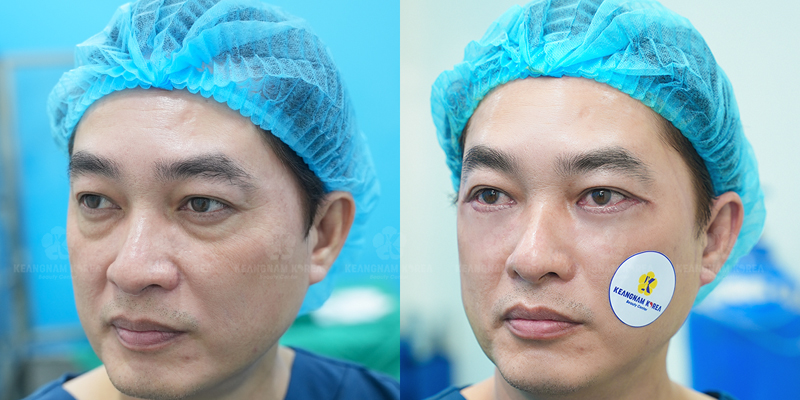
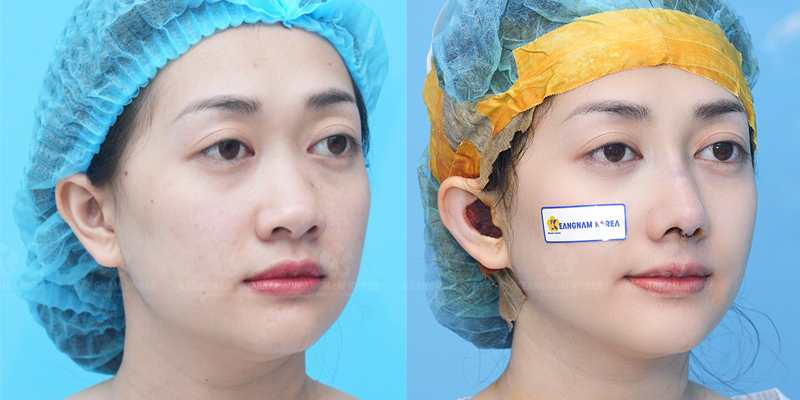
Keangnam Korea has spent 10 years building its reputation in the Vietnamese aesthetics market and is trusted by business leaders and public figures, including famous actresses, actors, and business women.
- A senior surgical team: Masters-level surgeons recruited from major aesthetic institutes and training centers abroad.
- Evidence-based planning: High technical skill combined with deep clinical experience produces accurate, standardized treatment protocols.
- FDA-recognized equipment: Machines and instruments are fully sterilized, with safety systems recognized by the US FDA.
- Continuously updated techniques: Clients receive current, world-trend results rather than dated styles.
- Personalized options: Flexible methods tailored to each individual face.
- Accessible pricing: Programs across multiple budget segments, with frequent promotions.
Every client is also assessed with FACE AI PRO, an artificial intelligence system that simulates the post-surgery result with up to 99% accuracy. Both the client and the surgeon can see exactly how the face should be adjusted, which makes planning the rhinoplasty-then-blepharoplasty sequence far more precise. Two signature techniques anchor the combo.
Korean-style rhinoplasty uses a premium biocompatible material designed to create a significantly higher, more refined bridge than conventional implants, with near-total biocompatibility that suits even individuals with a history of reactions to synthetic materials.
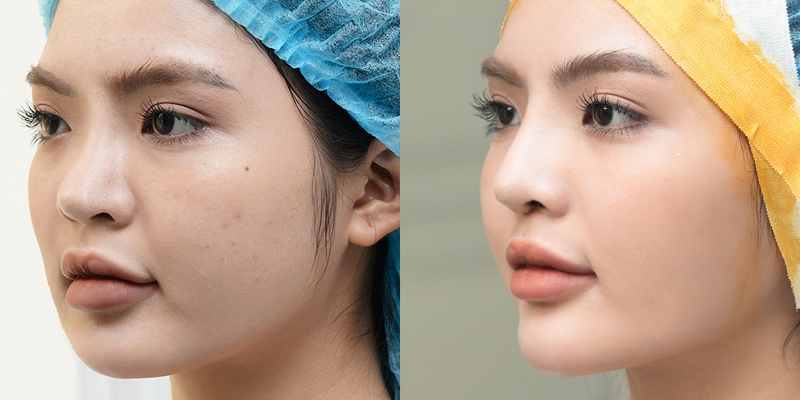
Perfect Eyes blepharoplasty with Berna Stitch intradermal suturing is exclusively transferred from LUX Group, a leading Korean aesthetics corporation. The suture line is virtually invisible, recreating naturally beautiful eyes with no visible trace of surgery.

Call the hotline 0911 833 555 to book a consultation and receive a detailed quote.
Should you get rhinoplasty or eyelid surgery first?
Most surgeons recommend rhinoplasty first, then blepharoplasty about 3 to 6 months later. The new nose bridge tightens skin near the eyes and changes eye spacing, so operating on the eyelids afterward allows a more precise, minimal incision. Exceptions include severe ptosis or eye-area trauma, where eyelid surgery takes priority.
Can rhinoplasty and blepharoplasty be done at the same time?
Yes, it is technically possible, and it saves time and cost. However, most surgeons discourage it because the wider surgical area increases swelling and slows healing, and balancing the nose and eye proportions in one operation demands an exceptionally experienced surgeon.
Does a nose job change how your eyes look?
It can. Raising the nose bridge lengthens the visible distance between the eyes and can make them appear deeper set, while skin near the inner eye corners is gently pulled tighter. This is the main reason eyelid surgery is usually planned after rhinoplasty.
How long should you wait between rhinoplasty and eyelid surgery?
A typical interval is 3 to 6 months, long enough for swelling to resolve and the nose to stabilize. The surgeon confirms readiness at a follow-up visit before scheduling the blepharoplasty.
How much does a rhinoplasty and blepharoplasty combo cost in Vietnam?
In 2026, rhinoplasty ranges from about 14,000,000 to 220,000,000 VND (roughly 530 to 8,370 USD) depending on technique, while upper blepharoplasty runs 7,000,000 to 44,000,000 VND (about 270 to 1,670 USD). Staged as two procedures, the combined budget commonly falls between 21,000,000 and 100,000,000 VND for standard techniques.
Is it safe to have eyelid surgery after a nose job?
Yes, once the nose has fully stabilized. Because rhinoplasty has already repositioned the skin around the eyes, the later blepharoplasty can be smaller and heals faster, and it poses no risk to the completed nose result.
RELATED ARTICLES

Alarplasty and Rhinoplasty Comparison: Which Procedure Fits Your Nose Shape
Selecting between alarplasty and rhinoplasty depends on whether your lower nose appears wide due to flared soft tissue or a low, unsupported structural bridge. Alarplasty isolates and reshapes the nostril wings at the base, whereas rhinoplasty elevates, straightens, or rebuilds
Nose Wing Reduction: Is Alarplasty Worth It? Pros, Cons, and Recovery Time
A nose wing reduction (alarplasty) is a surgical option for those whose nostril wings are naturally thick, wide, or flared while their nasal bridge height and tip projection already suit their overall facial proportions. This procedure selectively reshapes or excises

Alar Base Reduction Technique: Rolling vs. Excision Comparison
An alar base reduction technique narrows flared or wide nostrils by either folding the nostril rim inward with internal sutures or excising a targeted strip of tissue. In Ho Chi Minh City, Vietnam, plastic surgeons perform four main surgical variations
Top 5 Rhinoplasty Clinics in Ho Chi Minh
Rhinoplasty clinics in Ho Chi Minh City offer safe cosmetic nose surgery: Gangwhoo Aesthetic Hospital, JW Korean Aesthetic Hospital, Kangnam Aesthetic Hospital, Thu Cúc Aesthetic Hospital, and Keangnam Korea. In 2026, market rates for cosmetic nose surgery across these facilities

Collagen Injection vs. Laser for Facial Skin: Cost, Recovery, and Fit
A collagen injection vs laser for aging facial skin, which is better? They are two distinct approaches to facial rejuvenation and do not replace each other. Lasers work from the outside in to correct surface texture and pigment, while injected

Collagen Shots for the Face vs. Mesotherapy: Aging Grades, Cost, and Results
Deciding between collagen shots for the face and mesotherapy comes down to identifying which layer of your skin is experiencing aging. Mesotherapy nourishes the superficial skin layers for quick surface hydration, whereas collagen shots for the face rebuild structural density