Skip to content


Rib Cartilage Rhinoplasty Cost in Vietnam 2026
Rib cartilage rhinoplasty cost in Vietnam ranges from about 80,000,000 to 220,000,000 VND (roughly 3,040 to 8,365 USD) in 2026, making it the most expensive nose surgery on the market. The reason is structural: this is a two-in-one major operation that harvests cartilage from the chest and rebuilds the entire nose, so it demands a hospital-grade sterile theater and a highly experienced surgical team.
This guide explains what rib cartilage rhinoplasty is, why it costs more than other techniques, how autologous rib compares with donor cartilage, and exactly what you are paying for.

What Is Rib Cartilage Rhinoplasty and Why Does It Cost More?
Rib cartilage rhinoplasty is an advanced structural nose surgery that uses a section of your own rib cartilage (autologous cartilage) to rebuild the bridge, tip, columella, and septal support of the nose. A small 2 to 3 cm piece is taken from the sixth or seventh rib, then carved and fixed in place to create a strong, lasting framework. Because the graft comes from your own body, it integrates naturally and carries almost no risk of rejection.
The high price reflects the scale of the work. Unlike an implant-only procedure, rib cartilage rhinoplasty is effectively two surgeries in one: one stage harvests cartilage from the chest, and a second stage sculpts and rebuilds the nose. This is a major operation performed under general anesthesia in a hospital setting, which raises the cost of anesthesia, the operating theater, and the surgical team well above a routine bridge augmentation.
Several specific factors push the rib cartilage rhinoplasty cost higher than other methods:
- Surgeon expertise: Harvesting rib cartilage and carving it without warping requires advanced skill and years of experience, so senior surgeons command higher fees.
- Hospital-grade facilities: General anesthesia, intubation, and the small risk of a torn lung membrane mean the procedure must be done in a fully sterile, accredited operating room rather than a clinic treatment room.
- Case complexity: The amount of cartilage needed and the difficulty of the harvest both affect the final number, and complex sculpting adds operating time.
- Aftercare: A staged recovery of 15 to 20 days and the second incision on the chest call for more follow-up than a simpler nose job.
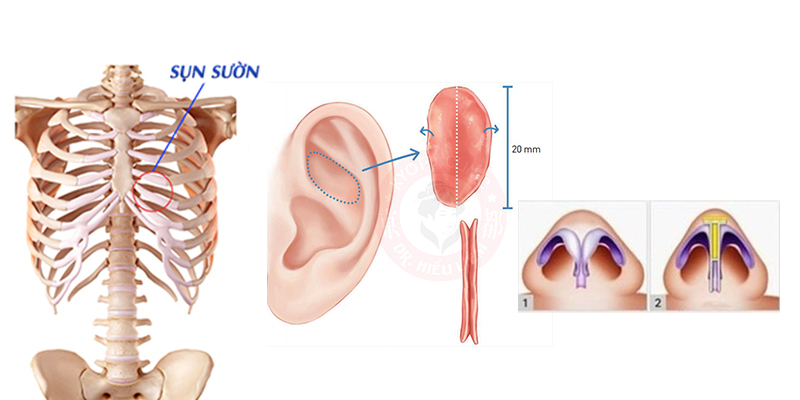
Where Is the Rib Cartilage Taken From for Rhinoplasty?
The rib cartilage used for rhinoplasty is taken from the sixth or seventh rib through a small 2 to 3 cm incision, usually placed in the natural crease under the chest so the scar stays discreet. The surgeon removes only the amount of cartilage needed to rebuild the nose, leaving the rib structure intact.
This donor site is chosen because rib cartilage is strong, plentiful, and straight enough to carve into a stable framework. It supplies far more material than ear or septal cartilage, which is why it is the preferred choice for noses that need a complete rebuild rather than a light refinement.
Rib Cartilage Rhinoplasty Cost in Vietnam 2026
Rib cartilage rhinoplasty cost depends on whether the nose is built entirely from rib cartilage, combined with a premium synthetic implant, or rebuilt during a revision of a previously failed surgery. The table below gives a 2026 planning reference for autologous rib cartilage nose surgery in Vietnam. USD figures are approximate, based on an exchange rate of about 26,300 VND to 1 USD.
| Type of rib cartilage rhinoplasty | Reference price (VND) | Approximate (USD) |
| Full autologous rib cartilage rhinoplasty | 80,000,000 – 120,000,000 | 3,040 – 4,560 |
| Rib cartilage with premium synthetic implant combo | 100,000,000 – 150,000,000 | 3,800 – 5,700 |
| Revision rhinoplasty with rib cartilage (failed nose repair) | 120,000,000 – 220,000,000 | 4,560 – 8,365 |
So how much is a rib cartilage nose job in practice? A straightforward full-rib reconstruction starts near 80,000,000 VND, while a complex revision to rescue a damaged or contracted nose can reach 220,000,000 VND. The wide spread reflects how much rebuilding the nose actually needs.
For context, the same autologous rib cartilage rhinoplasty in the United States typically runs 15,000 to 30,000 USD or more before anesthesia and facility fees, and revision cases sit at the top of that range. That gap is the main reason many international clients travel to Vietnam for rib cartilage surgery at a fraction of the price.
A safety note matters here. Any surgical nose job priced under 5,000,000 VND should be treated as a warning sign, as that range points to substandard materials, questionable sterility, and operators without proper anatomical training. Rib cartilage rhinoplasty in particular is never a budget procedure.
Autologous Rib Cartilage vs. Donor Cartilage: Which Is Worth the Investment?
Rib cartilage rhinoplasty comes in two forms: fully autologous (your own rib) and donor, also called cadaveric or biological rib cartilage. Both rebuild the nose, but they differ in compatibility, shrinkage risk, and cost. The comparison below outlines the trade-offs.
| Factor | Autologous rib cartilage | Donor (cadaveric) rib cartilage |
| Biocompatibility | 100% your own tissue, no rejection | Processed donor tissue, low but possible reaction |
| Resorption (shrinkage) | Low, integrates permanently | Higher long-term resorption risk |
| Second incision | Yes, a small chest scar | No chest harvest needed |
| Surgery scope | Major two-in-one operation | Shorter, no harvest stage |
| Cost | Higher overall | Often lower up front, varies by source |
| Longevity | Permanent | Variable, depends on processing |
- Autologous rib cartilage is the gold standard for compatibility. Because it is your own tissue, the body does not treat it as foreign, so the risk of rejection is near zero and the graft tends to last for life. The trade-off is a larger operation and a small additional scar on the chest.
- Donor rib cartilage removes the chest harvest entirely, which shortens surgery and avoids a second incision. The drawback is a higher long-term resorption rate (the graft can gradually shrink), and outcomes depend heavily on how the donor tissue was processed and stored.
For most people seeking a permanent, stable result, autologous rib cartilage is considered worth the higher investment, especially in complex or repeat cases. Donor cartilage can be a reasonable option for those who want to avoid the chest harvest or cannot supply enough of their own cartilage. The right choice depends on the nose, the goals, and a surgeon’s assessment.
Alternative Autologous Cartilage Options
Rib is not the only source of autologous cartilage rhinoplasty. Ear and septal cartilage are also taken from your own body and suit lighter corrections, which is why a surgeon weighs all three before recommending rib.
- Ear cartilage: Soft, flexible, and easy to shape, ear cartilage is harvested from the rim of the ear with minimal donor-site trauma. It is favored for tip refinement, giving a soft, natural contour, and is a good option when only a gentle adjustment is needed.
- Septal cartilage: Taken from the wall between the nostrils, septal cartilage is firm and elastic, making it well suited to correcting internal nasal structure such as a deviated septum or columella. It works best for basic to moderate noses that do not need a high bridge.
Rib cartilage stands apart for cases that demand height, strength, and a full rebuild. Ear cartilage handles delicate tip work, septal cartilage corrects structural irregularities, and rib cartilage is the choice when the nose has been badly damaged or needs maximum support. Each source has its place, and matching the cartilage to the nose is what drives both the result and the final rib cartilage rhinoplasty cost.
Who Is a Good Candidate for Rib Cartilage Rhinoplasty?
Rib cartilage rhinoplasty is built for complex cases rather than routine cosmetic touch-ups. The strongest candidates generally fall into a few groups.
- Severely damaged or collapsed noses: Trauma, infection, or scar contracture that has destroyed the nasal framework responds well to a full rib rebuild.
- Repeat revision cases: Much of the demand for rib cartilage comes from rescuing noses that have failed after previous surgery, including capsular contracture (hardened scar tissue) and shrinkage.
- Allergy or rejection of synthetic materials: Those who cannot tolerate implants benefit from an all-natural framework.
- Noses needing maximum height and support: A very low or structurally weak nose that other methods cannot correct is a good fit.
As with any major surgery, a full medical assessment confirms whether someone is a suitable candidate before the procedure is scheduled.
Is Rib Cartilage Rhinoplasty Safe?
Rib cartilage rhinoplasty is considered safe when performed by an experienced surgeon in an accredited hospital, and the use of your own tissue gives it one of the lowest rejection rates of any nose surgery. That said, a balanced view means acknowledging the risks alongside the benefits.
On the benefit side, autologous rib cartilage integrates permanently, resists infection well, and avoids the rejection and red-tip problems that can affect synthetic implants. On the risk side, this is major surgery under general anesthesia, which carries the usual anesthetic risks plus a small chance of a torn lung membrane during harvest, a chest scar, and a longer recovery.
The most discussed technical concern is warping, covered in the next section. Choosing a qualified surgeon and a properly equipped facility is the single most important factor in keeping the procedure safe and the result stable.
Does Rib Cartilage Rhinoplasty Warp Over Time?
Rib cartilage can warp (bend or curve) over time, but the risk is relatively small, estimated at around 2 to 5% of cases, and modern technique keeps it low. Warping happens because rib cartilage retains some natural memory and can shift as it settles.
Skilled surgeons reduce this risk in two main ways: carving the cartilage with ultrasonic instruments for precision, and fixing the graft with matrix suturing so it holds its intended shape. This is where surgeon experience directly affects the result, which is why the technique should only be done by a specialist with a strong track record in cartilage sculpting.
What Should You Expect During Recovery?
Recovery from rib cartilage rhinoplasty is longer than from implant-based surgery because there are two surgical sites: the nose and the chest. Knowing the timeline helps set realistic expectations.
- The first two weeks: Swelling and bruising are most noticeable, and the chest area can feel sore. Light daily activity usually resumes after 15 to 20 days, once the initial healing settles.
- Wound care: Keeping both the nose and the chest incision clean, changing dressings as instructed, and not touching the wounds lowers the risk of infection.
- Follow-up visits: Scheduled reviews let the surgeon track healing at both sites and address any concerns early.
- Avoiding strenuous activity: Skipping sports and heavy lifting for about a month protects the new nasal framework and the healing rib.
- Full settling: The nose continues to refine over several months as swelling fully resolves and the graft integrates.
A supportive, vitamin-rich diet and close adherence to aftercare instructions both improve the final outcome.
How Do You Choose Where to Have Rib Cartilage Rhinoplasty in Vietnam?
Because rib cartilage rhinoplasty is major surgery, the facility and surgeon matter even more than the price. The strongest options share a few traits.
- Hospital-grade surgical facilities: General anesthesia and rib harvest require a fully accredited, sterile operating room, not a clinic treatment room.
- Specialist surgical expertise: A surgeon experienced in structural and revision rhinoplasty handles cartilage harvest, carving, and complex rebuilds safely.
- Clear before-and-after evidence: A trustworthy center can show real results and provide transparent, written pricing before any commitment.
- Support for international clients: For those traveling to Vietnam, a center used to managing the full journey, from remote consultation to scheduling and follow-up before departure, makes the experience far easier.

If you are considering rib cartilage rhinoplasty and want a clear price for your specific case, contact us to get a quick nasal structure review and personalized plan.
→ Learn more at: Nose job at Keangnam Korea
RELATED ARTICLES

Collagen Injection vs. Laser for Facial Skin: Cost, Recovery, and Fit
A collagen injection vs laser for aging facial skin, which is better? They are two distinct approaches to facial rejuvenation and do not replace each other. Lasers work from the outside in to correct surface texture and pigment, while injected

Collagen Shots for the Face vs. Mesotherapy: Aging Grades, Cost, and Results
Deciding between collagen shots for the face and mesotherapy comes down to identifying which layer of your skin is experiencing aging. Mesotherapy nourishes the superficial skin layers for quick surface hydration, whereas collagen shots for the face rebuild structural density

How Long Does a Fox Eye Thread Lift Last? Costs, Risks, and Results
A fox eye thread lift is a minimally invasive procedure that uses dissolvable barbed threads to suspend the outer corner of the eye (lateral canthus) and the eyebrow tail toward the temple. By gently pulling these soft tissues upward, the

What Is a Liquid Nose Job? Cost, Longevity and When Do Threads Work Better?
What is a liquid nose job? A liquid nose job (clinically known as liquid rhinoplasty) is a non-surgical procedure that reshapes the nose using precision injections of hyaluronic acid (HA) filler. The treatment takes 10 to 15 minutes, requires zero

Semi-Structural Rhinoplasty for a Low Bridge and Wide Tip: Cost and Recovery
Semi-structural rhinoplasty is a targeted surgical procedure that reshapes specific portions of the nose, typically modifying a broad, rounded tip with autologous cartilage while elevating a slightly low bridge with a biocompatible implant. The procedure takes 45 to 90 minutes

Non-Surgical Rhinoplasty Price in 2026: Cost by Filler and Thread Type
The non-surgical rhinoplasty price in Ho Chi Minh City, Vietnam, ranges from $230 to $1,720 (6 to 45 million VND) per treatment in 2026. The overall cost is determined primarily by the specific material and technique selected: The material used