Skip to content


How to Get Bigger Eyes Permanently? 3 surgery for bigger eyes options and cost
Surgery for bigger eyes in Vietnam costs between 3,000,000 and 45,000,000 VND (115 to 1,710 USD) in 2026, and it works by expanding the eye in one of three directions: vertically through blepharoplasty and ptosis repair, inward through medial epicanthoplasty, or outward through lateral canthoplasty. Bigger, brighter eyes are a goal shared across every age and gender, because larger eyes draw attention and give the whole face a fresher, more confident look.
This guide explains what eye enlargement surgery is, how each of the three methods works, who suits which technique, and what the procedures cost.

Surgery for Bigger Eyes: Approaches & methods
Surgery for bigger eyes, also called eye enlargement surgery, is a group of oculoplastic procedures that increase the visible size of the eye opening. The eyes themselves do not change size; instead, the surgeon adjusts the eyelids, the corners of the eyes, or the brow position so more of the eye (especially the iris and the white of the eye) shows.
There are three main surgical directions, and each solves a different problem.
- Vertical expansion: Blepharoplasty (double eyelid surgery) and ptosis repair lift the upper eyelid so it no longer covers part of the pupil. This is the most common approach.
- Inner corner expansion: Medial epicanthoplasty opens the inner corner of the eye toward the nose bridge, lengthening the eye horizontally.
- Outer corner expansion: Lateral canthoplasty extends the outer corner, widening and lengthening the tail of the eye.
Method 1. Blepharoplasty and Ptosis Repair for Vertical Expansion
The most popular way to get bigger eyes permanently is to adjust the shape and position of the eyelid. Eyes often look small and tired because a monolid or a hidden (tapered) crease lets the lid skin hang over part of the pupil. Repositioning the lid and creating a clear crease opens the eye vertically, making it look rounder and brighter.
Depending on the eyelid condition, the surgeon will recommend one of two techniques: incisional double eyelid surgery or the non-incisional method.
Incisional Asian Double Eyelid Surgery
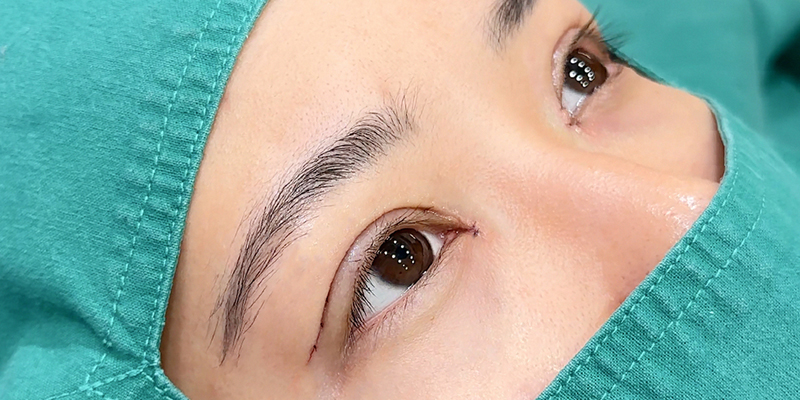
Incisional asian double eyelid surgery creates a permanent crease through a fine incision along the planned eyelid line. The surgeon removes excess skin and fat, then adjusts the levator muscle (the muscle that lifts the eyelid) to form a new, well-defined crease. When the lid droops enough to cover the pupil, this adjustment becomes formal ptosis surgery, or ptosis repair, which strengthens or shortens the levator muscle to restore a full vertical opening.
This method is recommended for individuals with significant excess skin or fat, monolids, hidden creases, congenital ptosis, or anyone who wants a bold, long-lasting crease.
Advantages:
- Long-lasting results: The crease typically holds for 5 to 10 years and often permanently.
- Complete correction: Excess skin, fat, and muscle problems are all addressed in one procedure.
- Flexible design: The crease height and shape can be tailored to each face.
- Disadvantages:
- Longer recovery: As an invasive procedure, it needs more downtime than the suture method.
- Complication risk at unqualified facilities: Choosing a licensed clinic with a specialist surgeon is essential.
Non-Incisional Double Eyelid Surgery (Suture Method)
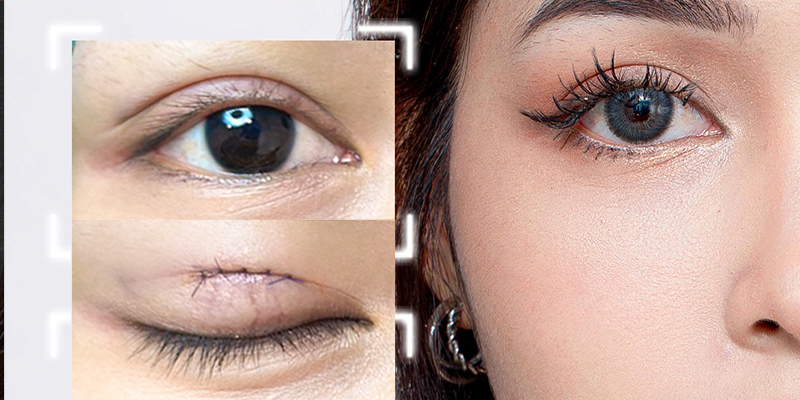
The non-incisional method suits younger clients with a hidden crease or mild drooping and little excess skin or fat. Instead of an incision, the surgeon uses ultra-fine biological sutures to create anchor points between the eyelid skin and the levator muscle, forming a crease without cutting or lifting the skin. Because it is far less invasive, it is a good trial option for anyone who wants to see a double eyelid before committing to permanent incisional surgery.
Advantages:
- Fast and minimally invasive: The procedure is quick, with little swelling or bruising.
- Simple aftercare: Most clients recover in just 1 to 2 days.
- Lower cost: Suture techniques cost less than incisional surgery.
- Disadvantages:
- Shorter-lived results: The crease can loosen over time and may need repeating.
- Limited scope: Only mild cases qualify.
- Complication risk at unqualified facilities: The same safety rule applies.
So which one is right for you? The honest answer depends on your eyelid condition. The most reliable way to decide is a direct examination and consultation with a qualified aesthetic surgeon, who can assess your lids and recommend the option that will look most harmonious on your face.
Method 2. Medial Epicanthoplasty to Lengthen the Inner Corners
Medial epicanthoplasty is a precise procedure that opens the inner corner of the eye toward the nose bridge. The surgeon removes the small fold of excess skin and tissue (the epicanthal fold) that covers the inner corner, then reconstructs the corner so the eye extends further inward. The visible distance between the two eyes narrows, and the eyes look rounder, brighter, and deeper.
This technique is ideal for individuals with small or narrow eyes, eyes set wide apart, or an inner corner hidden by skin folds or wrinkles.

Method 3. Lateral Canthoplasty for Wider Outer Corners
Lateral canthoplasty works on the opposite side of the eye. The surgeon removes excess skin and loose tissue at the outer corner, then subtly extends the tail of the eye outward. The result is a longer, wider eye shape with a lively, natural look.
This technique particularly suits individuals with upward-slanted eyes, a short eye tail, or a downturned outer corner. Some lateral canthoplasty techniques also deliver a rejuvenating effect, smoothing the skin around the outer eye area.
Choosing between medial epicanthoplasty and lateral canthoplasty depends on your aesthetic goals, facial structure, and current eye shape. Many clients combine both for maximum horizontal expansion. A specialist consultation is the safest way to decide, and the surgeon will also walk you through the procedure steps, recovery timeline, and aftercare before you commit.
Can a Brow Lift Also Make Your Eyes Look Bigger?
Yes. Unlike the three direct methods above, a brow lift enlarges the eyes indirectly by repositioning the brow. The surgeon lifts the skin and muscle in the brow area, raising the upper or lower arch depending on the case. This corrects brow sagging and mild lid droop, opens up the upper eyelid space, and creates the effect of bigger, more expressive eyes.
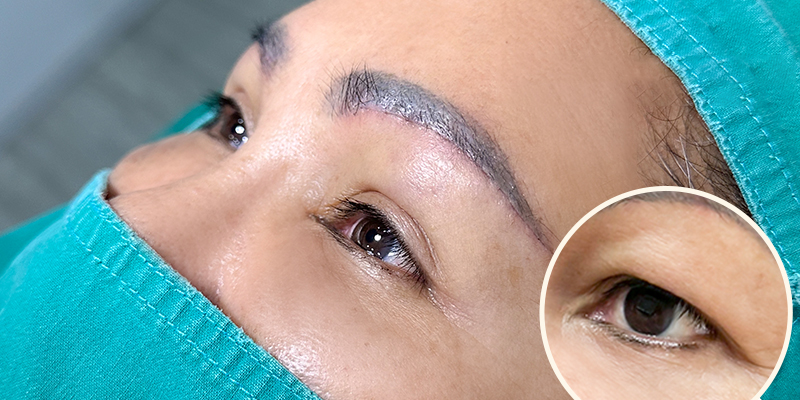
The advantage is that the brows keep their natural line and stay in harmony with the face. One procedure improves two features at once: the eyes look bigger, and the brow line becomes cleaner and more youthful.
How Much Does Eye Enlargement Surgery Cost in 2026?
Eye enlargement surgery cost depends on the method, the clinic, and the complexity of your case. The table below shows 2026 reference prices in Vietnam. USD figures are approximate, based on an exchange rate of about 26,330 VND to 1 USD.
| Procedure | Reference price (VND) | Approximate (USD) |
| Non-incisional double eyelid (suture method) | 3,000,000 – 25,000,000 | 115 – 950 |
| Incisional double eyelid surgery | 7,000,000 – 44,000,000 | 265 – 1,670 |
| Ptosis surgery / ptosis repair | 5,600,000 – 45,000,000 | 210 – 1,710 |
| Medial or lateral canthoplasty | 5,600,000 – 25,000,000 | 210 – 950 |
| Brow lift | 6,000,000 – 40,000,000 | 230 – 1,520 |
A few factors move the final price within these ranges.
- Technique and technology: Advanced incisional packages with exclusive technology cost more than standard techniques, and they usually come with longer warranties (up to 20 years or lifetime at major private hospitals).
- Case complexity: Correcting congenital ptosis or combining several procedures takes more surgical time and skill.
- The facility: Public hospitals offer basic eyelid procedures from about 3,000,000 VND, while large private hospitals charge 15,000,000 to more than 45,000,000 VND with extended warranties.
Blepharoplasty at Keangnam Korea
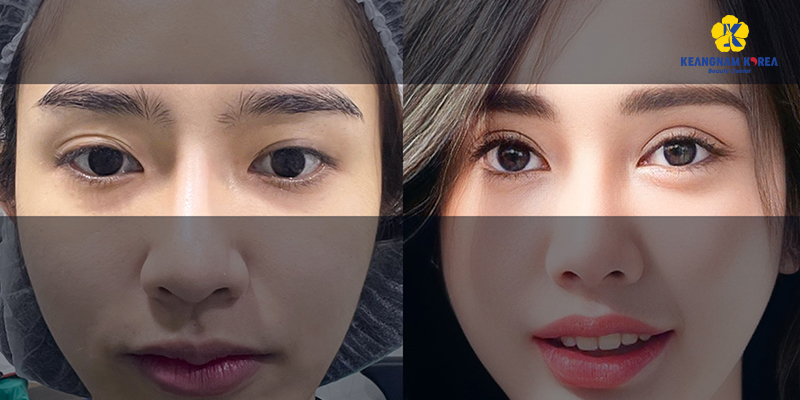
Keangnam Korea offers every eye cosmetic service, ranging from correcting, enlarging, reshaping to revising.
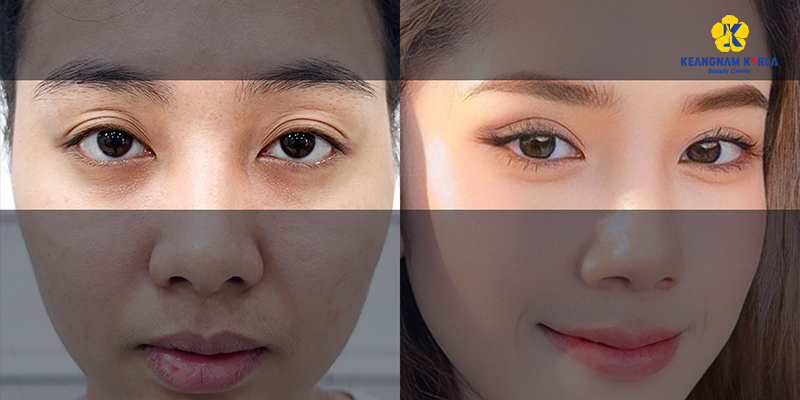
For clients who have several concerns at once, Perfect Eyes at Keangnam Korea is one of the best options in Ho Chi Minh City, Vietnam. It integrates all three enlargement techniques in a single treatment plan, addressing nearly every common eye-area concern:
- Monolids and hidden creases: Including thin or faint crease lines.
- Ptosis: Both congenital drooping and age-related sagging.
- Brow sagging: Corrected together with the eyelid work.
- Narrow corners and slanted eyes: Opened with medial or lateral canthoplasty.
- Under-eye fat and eye bags: Removed or repositioned for a smoother contour.

Rather than only widening the eyes, this comprehensive approach also adds depth and vitality, so the result looks natural rather than operated on.

For a personal assessment of which method fits your eyes, contact us at 0911 833 555 for a free consultation on services and pricing, or book an appointment with a surgeon for specialist advice before making a decision.
How can you get bigger eyes permanently?
The only proven way to get bigger eyes permanently is surgery. Incisional double eyelid surgery and ptosis repair expand the eye vertically, medial epicanthoplasty lengthens the inner corner, and lateral canthoplasty widens the outer corner. Non-surgical options like makeup or lash extensions create a temporary illusion only.
What is the cost of canthoplasty in Vietnam?
The cost of canthoplasty in Vietnam ranges from 5,600,000 to 25,000,000 VND (about 210 to 950 USD) in 2026, whether for the inner corner (medial epicanthoplasty) or the outer corner (lateral canthoplasty). Combining both corners raises the total accordingly.
Which surgery for bigger eyes is most popular?
Asian double eyelid surgery is the most widely performed option, because a monolid or hidden crease is the most common reason eyes look small. When drooping is significant, it is combined with ptosis surgery to fully open the vertical eye axis.
Is eye enlargement surgery painful?
The procedures are performed under local anesthesia, so there is no pain during surgery. Mild swelling, tightness, or bruising is normal for the first few days and is managed with cold compresses and prescribed medication.
How long is recovery after surgery for bigger eyes?
Suture-method double eyelids recover in 1 to 2 days. Incisional procedures, canthoplasty, and ptosis repair need about 7 to 10 days before normal activity, with final results settling over 1 to 3 months.
Can all three methods be combined in one surgery?
Yes. Combination protocols such as Perfect Eyes address the eyelid crease, ptosis, brow position, and both eye corners in a single coordinated plan, which is often more efficient than staging separate procedures.
RELATED ARTICLES

Alarplasty and Rhinoplasty Comparison: Which Procedure Fits Your Nose Shape
Selecting between alarplasty and rhinoplasty depends on whether your lower nose appears wide due to flared soft tissue or a low, unsupported structural bridge. Alarplasty isolates and reshapes the nostril wings at the base, whereas rhinoplasty elevates, straightens, or rebuilds
Nose Wing Reduction: Is Alarplasty Worth It? Pros, Cons, and Recovery Time
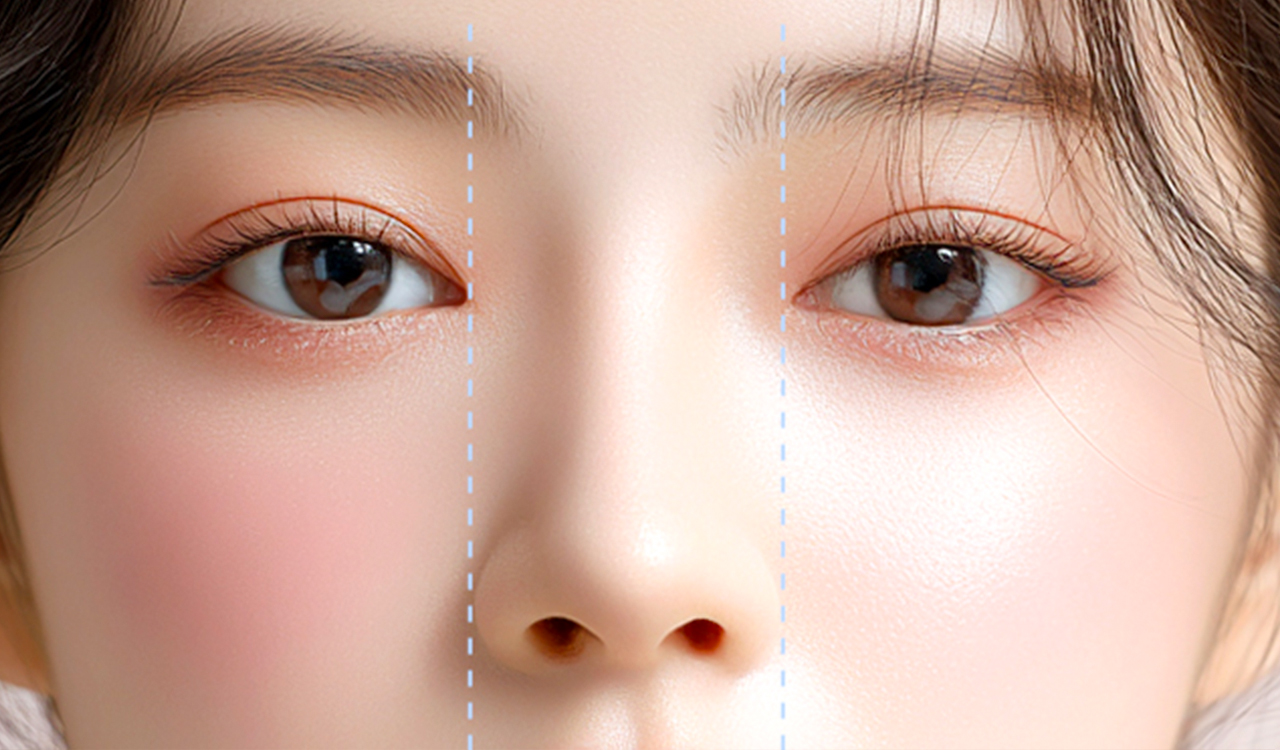
A nose wing reduction (alarplasty) is a surgical option for those whose nostril wings are naturally thick, wide, or flared while their nasal bridge height and tip projection already suit their overall facial proportions. This procedure selectively reshapes or excises
Alar Base Reduction Technique: Rolling vs. Excision Comparison
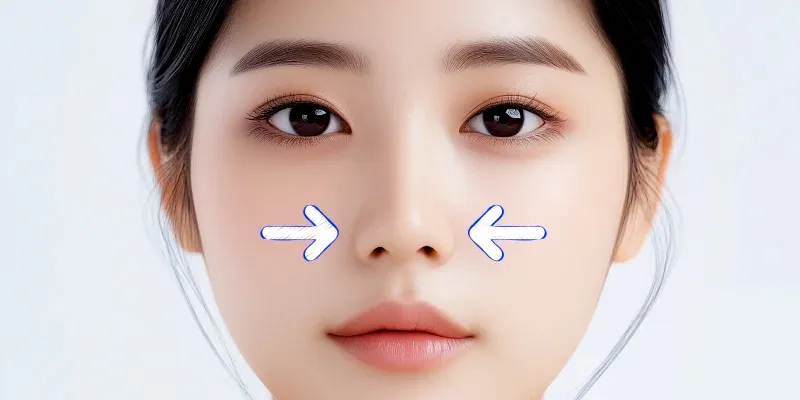
An alar base reduction technique narrows flared or wide nostrils by either folding the nostril rim inward with internal sutures or excising a targeted strip of tissue. In Ho Chi Minh City, Vietnam, plastic surgeons perform four main surgical variations
Top 5 Rhinoplasty Clinics in Ho Chi Minh
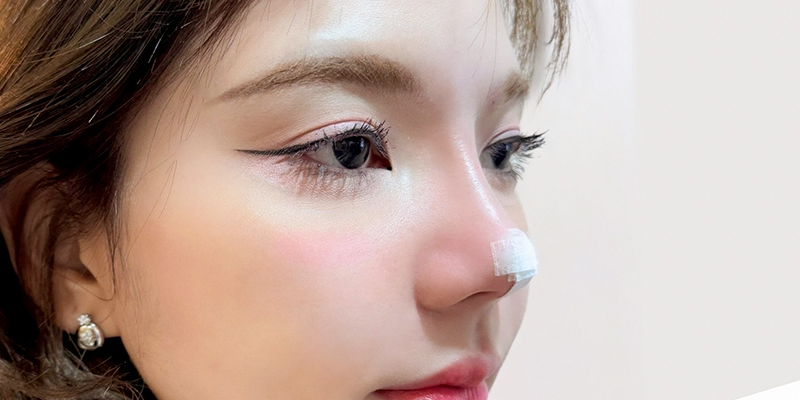
Rhinoplasty clinics in Ho Chi Minh City offer safe cosmetic nose surgery: Gangwhoo Aesthetic Hospital, JW Korean Aesthetic Hospital, Kangnam Aesthetic Hospital, Thu Cúc Aesthetic Hospital, and Keangnam Korea. In 2026, market rates for cosmetic nose surgery across these facilities

Collagen Injection vs. Laser for Facial Skin: Cost, Recovery, and Fit
A collagen injection vs laser for aging facial skin, which is better? They are two distinct approaches to facial rejuvenation and do not replace each other. Lasers work from the outside in to correct surface texture and pigment, while injected

Collagen Shots for the Face vs. Mesotherapy: Aging Grades, Cost, and Results
Deciding between collagen shots for the face and mesotherapy comes down to identifying which layer of your skin is experiencing aging. Mesotherapy nourishes the superficial skin layers for quick surface hydration, whereas collagen shots for the face rebuild structural density