Skip to content


Blepharoplasty for Men: Techniques, Cost, Recovery and Results
Blepharoplasty for men differs fundamentally in target anatomical design, specifically the position and shape of the upper eyelid crease. A male upper lid crease is typically established at 7 to 9 mm above the lash line and even lower at 6 to 8 mm for Asian male eyelids, compared to 8 to 10 mm on a female lid. Placing the crease fold above the male height band is the primary cause of an overly deep, unnatural, or feminized surgical outcome.
While blepharoplasty for men utilizes standard surgical incisions, tissue planes, and recovery timelines, the target crease height, skin excision boundaries, and fold arch must be carefully modified to preserve masculine facial proportions.
In Ho Chi Minh City, male eyelid surgery costs range from $110 to $2,290 USD (3 to 60 million VND) depending on whether the procedure involves non-incisional crease formation, upper lid skin excision, transconjunctival fat removal, or complex ptosis repair.

Male vs. Female Blepharoplasty Comparison
Male and female blepharoplasty differ primarily in surgical goals, crease height, fold shape, and skin conservation. While female eyelid surgery often aims for a higher, visibly defined crease that enhances makeup application, male eyelid surgery focuses on subtle structural refinement that preserves natural masculine proportions.
| Architectural Feature | Male Blepharoplasty | Female Blepharoplasty |
| Crease Height | 6 to 9 mm (lower on Asian male lids: 6 to 8 mm) | 8 to 10 mm (higher fold definition) |
| Fold Contour & Shape | Nearly parallel to the lash line (flat, conservative arch) | Higher arched crease (sweeping upward in the center) |
| Skin Excision Volume | Conservative (preserves tissue to prevent deep orbital hollows) | Moderate to high (removes more skin for a wider lid space) |
| Periorbital Volume | Maintains a fuller upper lid under a heavier brow bone | Creates a sleeker, defined lid space above the lash line |
| Lower Lid Tightening | Focuses on flat, smooth contours without over-pulling | Focuses on firming & almond-shaped lifting |
Why Surgical Techniques Diverge
Four anatomical and aesthetic factors dictate why a surgeon approaches a male upper lid differently from a female upper lid:
- Brow Bone Thickness & Position: Men naturally possess a heavier, lower supraorbital rim. Creating a high upper lid crease under a low brow bone leads to skin crowding and an unnatural, operated appearance.
- Skin Thickness & Elasticity: Male eyelid skin is denser and carries thicker subcutaneous muscle tissue. Removing too much skin can expose the underlying tarsal plate and create a deep, feminine fold.
- Feminization Risk: An arched crease—higher in the middle than at the outer corner—reads visually as feminine. Male creases are kept close to parallel with the lash line to preserve masculine eye proportions.
- Safety Reserve Threshold: Because men have heavier brow tissue, they reach the 20 mm skin safety reserve limit sooner than women. Preserving adequate skin reserve ensures complete, uninhibited eyelid closure after surgery.
Who Is a Candidate for Male Eyelid Surgery?
Men are strong candidates for eyelid surgery if they present with heavy upper lid hooding, levator muscle weakness, or persistent under-eye fat bags that obscure their natural periorbital contour. Clinical evaluation identifies four primary conditions where surgical intervention provides structural correction while preserving masculine facial proportions:
- Monolid or Hidden Crease: The lid fold is buried under skin folds, causing the eye opening to appear narrow.
- Drooping Lid Margin (Ptosis): The levator muscle weakens, causing the lid margin to cover more than the normal 1.0 to 2.0 mm of the upper cornea.
- Upper Lid Skin Hooding: Excess skin rests on or over the eyelash line, creating a heavy feeling over the eyes.
- Infraorbital Fat Herniation (Eye Bags): Forward-protruding fat pads beneath the lower lid cast constant dark shadows.
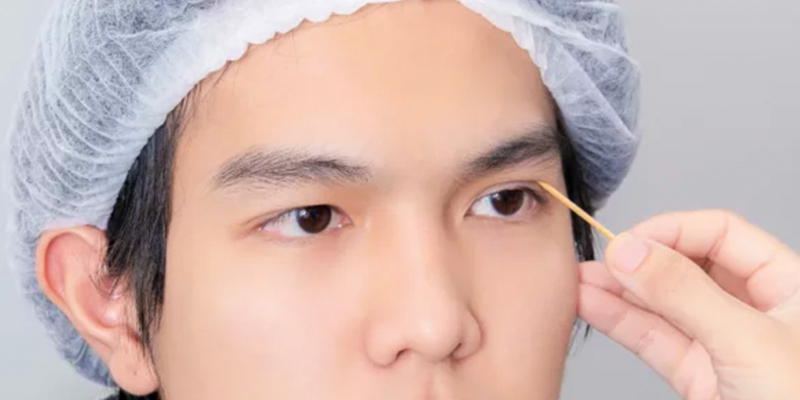
Surgical Solutions For Your Eyelid Conditions
Surgical options for male eyelid rejuvenation are selected based on which specific anatomical structure—skin, muscle, or fat—causes the heavy or tired appearance. The table below outlines how specific surgical techniques map directly to the common male eyelid conditions:
| Male Clinical Condition | Underlying Pathology | Primary Surgical Solution | Price Range (USD) |
| 1. Monolid or Hidden Crease | Lack of dermal-levator attachment | Non-incisional suture ligation OR double eyelid surgery | $110 – $570 |
| 2. Drooping Lid Margin (Ptosis) | Weakened levator muscle/tendon | Surgical ptosis repair (levator advancement) | $210 – $1,720 |
| 3. Upper Lid Skin Hooding | Excess, redundant upper lid skin | Hooded eye surgery (upper skin excision) | $300 – $990 |
| 4. Infraorbital Fat Herniation | Protruding under-eye fat pads | Transconjunctival fat removal OR repositioning | $190 – $1,150 |
1. Monolid or Hidden Crease: Non-Incisional or Incisional Crease Formation
When a male candidate presents with a monolid or a fold buried under skin, the objective is to establish a low, masculine crease fold without removing large amounts of tissue.
- Non-Incisional Crease Creation ($110 to $310 USD / 3 to 8 million VND): Fine sutures pass through micro-punctures to bind the skin to the levator aponeurosis without cuts. Suitable for younger men with firm skin, no skin redundancy, and minimal subcutaneous fat.
- Incisional Crease Creation ($300 to $570 USD / 7.9 to 15 million VND): For lids with thicker skin or subcutaneous fat, a clean incision creates a stable, low crease (6 to 8 mm) parallel to the lash line.
2. Ptosis: Surgical Ptosis Repair
When the eyelid margin droops lower than 2.0 mm over the upper cornea, the problem stems from levator muscle weakness rather than skin excess.
- The Procedure ($210 to $1,720 USD / 5.6 to 45 million VND): The surgeon shortens, tightens, or advances the levator aponeurosis to raise the lid margin back to its normal anatomical height above the pupil.
- Clinical Note: Performing skin excision alone on a candidate with underlying muscle ptosis leaves the eye reading as half-closed or tired even after skin removal.
3. Upper Lid Skin Hooding: Hooded Eye Surgery
When redundant upper eyelid skin sags down over the natural crease and rests on the eyelashes, the objective is to reduce vertical skin volume.
- The Procedure ($300 to $990 USD / 7.9 to 26 million VND): Incisional upper blepharoplasty removes the excess strip of skin and trimming herniated preaponeurotic fat.
- Diagnostic Boundary: Skin excision addresses redundant lid skin, but it does not alter a low lid margin or lift a descended brow. If upper lid weight is caused by forehead descent (brow ptosis), a brow lift ($230 to $1,530 USD) is required to restore brow height before removing lid skin.
4. Infraorbital Fat Herniation: Transconjunctival Fat Removal vs. Repositioning
Forward-protruding fat pads beneath the lower eyelid create constant dark shadows and a fatigued appearance. Surgical intervention removes or shifts the fat through internal or sub-ciliary approaches.
- Transconjunctival Fat Removal ($190 to $380 USD / 5 to 10 million VND): The surgeon accesses the herniated fat pads through an internal incision inside the lower eyelid, leaving no visible external scar. This is the primary choice for men with firm skin elasticity.
- Fat Repositioning ($630 to $1,150 USD / 16.5 to 30 million VND): Instead of discarding fat, the surgeon shifts the fat pad into the hollow tear trough groove, smoothing the transition between the lid and cheek.
- Lower Blepharoplasty with Skin Excision ($270 to $840 USD / 7 to 22 million VND): Required when under-eye bags are accompanied by loose, wrinkled skin. Surgeons exercise extreme caution during male lower skin excision to avoid over-resection, which can pull the lower lid down (retraction) and expose white sclera below the iris.
Blepharoplasty for Men: What to Expect During Consultation
During a male blepharoplasty consultation, surgical planning focuses on measuring exact millimeter parameters to ensure the new eyelid crease looks completely natural and preserves masculine facial traits. Experienced surgeons evaluate the upper eyelid with the eyebrow held stationary to distinguish primary skin hooding from forehead descent before establishing a conservative surgical plan.
To prevent an overly deep or feminized surgical outcome, the surgeon applies three core design choices during the assessment:
- Low Crease Positioning: The target crease height is measured strictly at 7 to 9 mm above the lash line for Western male lids, and lower at 6 to 8 mm for Asian male lids.
- Parallel Fold Contour: The crease is mapped almost parallel to the eyelash line rather than given an upward central arch, which would create a feminine eye shape.
- Conservative Skin Excision: The surgeon calculates skin removal against the mandatory 20 mm skin safety reserve (between the lash line and lower brow border) to preserve a fuller upper lid and guarantee complete eyelid closure.
During your visit, you will review 3D digital outcome simulations and confirm your exact crease measurements in millimeters before any procedure is scheduled.
Male Blepharoplasty Cost in Ho Chi Minh City
Male blepharoplasty cost in Ho Chi Minh City ranges from $110 to $2,290 USD (3 to 60 million VND) in 2026, categorized by surgical technique:
| Procedure Category | Price Range (USD) | Price Range (VND) | Surgical Scope |
| Non-Incisional Crease Formation | $110 – $310 | 3 – 8 million | Suture-based crease creation without skin excision |
| Incisional Upper Blepharoplasty | $300 – $990 | 7.9 – 26 million | Full-length incision, skin excision & fat removal |
| Transconjunctival Fat Removal | $190 – $380 | 5 – 10 million | Under-eye fat removal via internal eyelid incision |
| Lower Lid Skin Excision | $270 – $840 | 7 – 22 million | External sub-ciliary skin trimming & muscle tightening |
| Ptosis Repair | $210 – $1,720 | 5.6 – 45 million | Levator muscle shortening or aponeurosis advancement |
| Revision Blepharoplasty | $460 – $2,290 | 12 – 60 million | Scar tissue release & crease height correction |
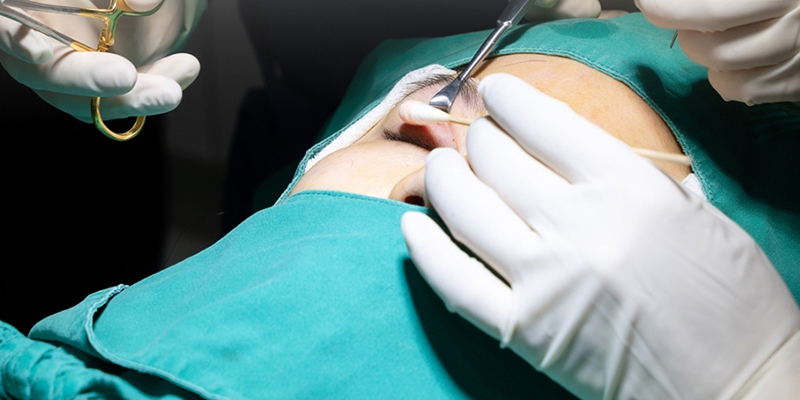
Evaluating a Surgical Clinic in Ho Chi Minh City
International visitors and resident expatriates evaluating clinics for male eyelid surgery should verify five core clinical standards:
- Official Facility Licensing: Confirm the clinic holds an official Department of Health operating license with a displayed license number.
- Surgeon Experience with Male Anatomy: Ensure the operating specialist has documented experience with male eyelid proportions and low crease design.
- Transparent Recovery Expectations: Verify that suture removal schedules (days 4 to 7) and expected downtime are clearly outlined.
- Verifiable Male Case Histories: Review before-and-after photographs of male eyes with similar starting structures.
- Post-Operative Care Protocols: Confirm review schedules and remote follow-up support after returning home.
Recovery Timeline
Most men return to light desk work 5 to 7 days post-surgery, with sutures removed between days 4 and 7.
- Days 1–3: Peak swelling and bruising. Apply cold compresses and keep the head elevated.
- Days 4–7: Sutures are removed. Localized bruising fades; glasses can help conceal residual swelling.
- Weeks 2–4: Swelling decreases significantly; initial surgical results become visible.
- Months 3–6: Incision line matures fully and final fold contours settle.
Air travel guidelines recommend waiting 7 to 14 days post-surgery before flying to manage cabin pressure changes and ocular dryness.
Explore more
- What an eyelid operation involves in Ho Chi Minh City
- Current eyelid surgery prices in Ho Chi Minh City
- Fat repositioning under the eye
- Tightening eyelid skin without an operation
- The week-by-week eyelid recovery
Male Eyelid Surgery at Keangnam Korea
Keangnam Korea establishes objective, millimeter-based crease targets tailored to male periorbital anatomy prior to surgery. Operating in Ho Chi Minh City under Department of Health license number 06303/HCM-GPHĐ, our surgical specialists bring over 10 years of clinical experience.
- Male-Specific Crease Design: Establishes low, parallel creases to prevent feminized fold arches.
- Quantitative Safety Limits: Measures lash-to-brow skin reserve to ensure the 20 mm minimum safety threshold is preserved.
- Levator Mobility Testing: Separates primary skin hooding from muscle ptosis during pre-operative exams.
- Hospital-Grade Sterility: Operates in sterile suites adhering to strict infection control workflows.
- Single-Surgeon Continuity: Ensures the specialist who conducts your consultation performs your procedure.
Dedicated English-speaking coordinators assist international visitors and resident expatriates throughout consultation, surgery, and follow-up care.

Book an Examination at Keangnam Korea to receive an objective eyelid assessment and a transparent, written surgical quote.
How do you qualify for eyelid surgery as a man?
Qualification is determined by diagnostic findings: identifying whether skin, fat, or muscle is the primary issue, confirming a 20 mm skin safety reserve, and verifying ocular surface health.
How much does male eyelid surgery cost in Ho Chi Minh City?
Male eyelid surgery costs range from $110 to $990 USD for primary upper lid procedures, $190 to $840 USD for lower lid work, and up to $2,290 USD for complex revision surgery.
Can eye bag surgery for men be done without cutting the skin?
Yes. Transconjunctival fat removal accesses under-eye fat pads through an internal eyelid incision, leaving no external scar ($190 to $380 USD).
How long after male eyelid surgery is it safe to fly?
Surgeons recommend waiting 7 to 14 days before long-haul flights to avoid dry cabin air and swelling complications.
RELATED ARTICLES

Collagen Injection vs. Laser for Facial Skin: Cost, Recovery, and Fit
A collagen injection vs laser for aging facial skin, which is better? They are two distinct approaches to facial rejuvenation and do not replace each other. Lasers work from the outside in to correct surface texture and pigment, while injected

Collagen Shots for the Face vs. Mesotherapy: Aging Grades, Cost, and Results
Deciding between collagen shots for the face and mesotherapy comes down to identifying which layer of your skin is experiencing aging. Mesotherapy nourishes the superficial skin layers for quick surface hydration, whereas collagen shots for the face rebuild structural density
How Long Does a Fox Eye Thread Lift Last? Costs, Risks, and Results
A fox eye thread lift is a minimally invasive procedure that uses dissolvable barbed threads to suspend the outer corner of the eye (lateral canthus) and the eyebrow tail toward the temple. By gently pulling these soft tissues upward, the

What Is a Liquid Nose Job? Cost, Longevity and When Do Threads Work Better?
What is a liquid nose job? A liquid nose job (clinically known as liquid rhinoplasty) is a non-surgical procedure that reshapes the nose using precision injections of hyaluronic acid (HA) filler. The treatment takes 10 to 15 minutes, requires zero

Semi-Structural Rhinoplasty for a Low Bridge and Wide Tip: Cost and Recovery
Semi-structural rhinoplasty is a targeted surgical procedure that reshapes specific portions of the nose, typically modifying a broad, rounded tip with autologous cartilage while elevating a slightly low bridge with a biocompatible implant. The procedure takes 45 to 90 minutes

Non-Surgical Rhinoplasty Price in 2026: Cost by Filler and Thread Type
The non-surgical rhinoplasty price in Ho Chi Minh City, Vietnam, ranges from $230 to $1,720 (6 to 45 million VND) per treatment in 2026. The overall cost is determined primarily by the specific material and technique selected: The material used