Skip to content


Canthopexy vs Canthoplasty: Key Differences
Canthopexy vs canthoplasty, what’s the difference? A canthopexy tightens the outer corner of the eye with a suture without detaching the tendon. A canthoplasty cuts, shortens, and reattaches the tendon, making it the choice for severe lower lid laxity.
The core difference is how much support each procedure provides. This affects total cost, swelling, and recovery time. Both techniques use a small incision at the outer corner to support the lower lid rather than enlarge the eye.
This guide covers how each technique works, key clinical measurements, costs in Ho Chi Minh City, recovery timelines, and when to avoid canthal surgery.

What Is a Canthoplasty?
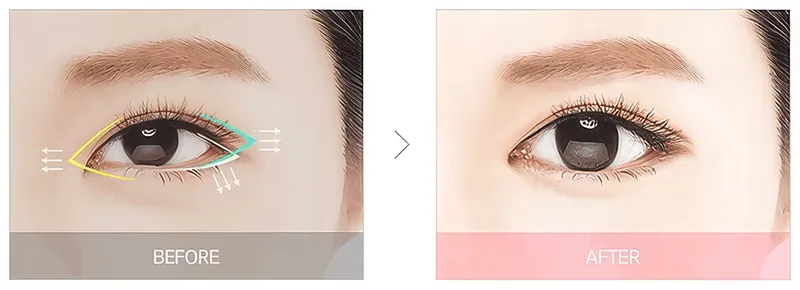
Canthoplasty is a reconstructive procedure that reshapes the outer eye corner. The surgeon detaches the lateral canthal tendon, shortens it, and anchors it in a tighter position.
The American Academy of Ophthalmology lists the following indications for canthoplasty:
- Ectropion: Lower lid rolling outward
- Entropion: Lower lid rolling inward
- Lid laxity: Loose or sagging lower lid
- Exposure keratopathy: Surface damage from incomplete closure
- Epiphora: Constant tearing or watering
Common surgical techniques include:
- Lateral tarsal strip
- Inferior retinacular lateral canthoplasty
- Lateral retinacular suspension
- Dermal orbicular pennant
- Tarsal sandwich
- Adapted aesthetic lateral canthoplasty for Asian eyelids
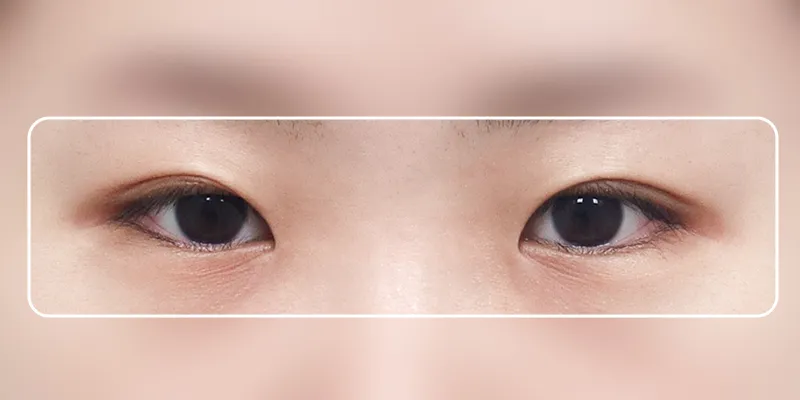
Ideal positioning relies on exact measurements:
- Outer corner placed about 1.2 mm higher than the inner corner
- An upward angle of roughly 4.1 degrees (maximum 3 mm lift)
Canthoplasty offers stronger correction than canthopexy, but recovery takes longer. The incision line may remain red for up to three months, and temporary dry eye is common.
What Is a Canthopexy?
Canthopexy places a suture through the lateral canthal tendon to pull the lower lid against the eyeball. The tendon remains attached to its natural anchor point.
- Anatomy: The tendon attaches to Whitnall’s tubercle, 5 mm inside the lateral orbital rim and 5 to 15 mm below the zygomaticofrontal suture.
- Best for: Mild lid laxity or as an added step during lower blepharoplasty.
- Limitation: Canthopexy reinforces a weak lid but cannot rebuild a misplaced eye corner.
Canthopexy vs Canthoplasty: Key Differences
| Feature | Canthopexy | Canthoplasty |
| Tendon treatment | Left attached; secured with a suture | Cut, shortened, and reattached |
| Lid laxity level | Mild | Severe |
| Surgical outcome | Tightens lower lid edge | Repositions the entire eye corner |
| Complications | Lid malposition, rounded corner, uneven height | Same risks, plus symblepharon (5.9%) and wound separation (0.01%) |
| Suture removal | 1 to 2 weeks | 5 to 7 days |
| Incision redness | Fades as swelling drops | Up to 3 months |
Which Procedure Do You Need?
Surgeons use two primary in-office tests to choose the right procedure:
- Snapback test: The lower lid is pulled down and released. If it returns slowly, elasticity is low.
- Lid distraction test: The lid is pulled forward away from the eye. A gap wider than 6 mm indicates significant laxity.
Canthoplasty is usually recommended if you have:
- Negative canthal tilt: Outer corner sits lower than the inner corner
- Severe laxity: Distraction gap over 6 mm
- Prominent eyes: Eye projects more than 18 mm from the orbital rim
- Negative vector: Eyeball sits further forward than the cheekbone
Using canthoplasty for mild laxity can lead to overcorrection, while using canthopexy for severe laxity may result in early sagging.
Canthopexy vs. Blepharoplasty: What Is the Difference?
A canthopexy and a lower blepharoplasty address two completely different structural issues in the lower eyelid. One reinforces the supporting tendon at the eye corner, while the other removes or repositions fat and skin.
| Feature | Canthopexy | Lower Blepharoplasty |
| Primary Goal | Tightens and supports the lower eyelid tendon | Removes or repositions excess fat and skin |
| Target Issue | Loose, sagging, or weak lower eyelid edge | Under-eye bags, hollows, and wrinkled skin |
| Tissue Action | Secures the lateral canthal tendon with sutures | Trims excess skin/fat or repositions fat pads |
| When Needed | Poor lower lid elasticity (fails distraction test) | Visible under-eye bags or skin excess |
These two operations are frequently performed together during a single session:
- Blepharoplasty alone: Best for people with good lower lid elasticity who only need bag or skin removal. Performing a blepharoplasty on an overly loose lid without canthal support increases the risk of the eyelid drooping or pulling away from the eye (ectropion).
- Canthopexy alone: Best for a loose, weak lower lid that does not have significant under-eye bags or excess skin.
- Combined treatment: The standard approach for sagging lower eyelids with under-eye bags. The surgeon clears the fat bags and uses a
How Much Do Canthopexy and Canthoplasty Cost in Vietnam?
Canthal surgery costs in Ho Chi Minh City range from $210 to $1,330 USD (5.6 to 35 million VND), depending on complexity:
- Corner release (no flap transfer): $210 – $380 USD (5.6 – 10M VND)
- W-plasty or Z-plasty flap transfer: $380 – $840 USD (10 – 22M VND)
- Lower lid retraction or ectropion repair: $380 – $1,330 USD (10 – 35M VND)
- Combined with double eyelid surgery: $570 – $990 USD (15 – 26M VND)
- Revision surgery: $460 – $2,290 USD (12 – 60M VND)
(Note: Most clinics bundle canthopexy under lower lid reconstruction or corner surgery rather than listing it separately. Ask for an itemized quote during your consultation.)
Factors influencing price include surgeon expertise, materials, case complexity, and facility standards.
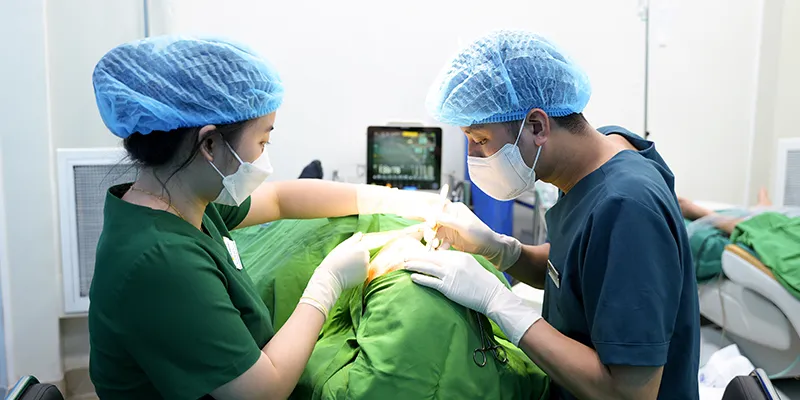
Canthopexy vs Canthoplasty Recovery Time
Initial recovery takes 1 to 2 weeks:
- Days 1–7: Peak bruising and swelling. Bruising fades within 7 to 10 days.
- Days 5–7: Canthoplasty sutures are removed. Most patients can return to desk work.
- Weeks 2–4: Swelling decreases significantly (90%+ resolved by week 4).
- Months 1–3: Incision redness fades completely.
Candidates and Contraindications
Good Candidates
- Individual with measured lower lid laxity (distraction > 6 mm or poor snapback)
- Individual undergoing lower blepharoplasty who need extra lid support
- Individual with downward-sloping outer eye corners
When to Postpone or Avoid Surgery
- Thyroid Eye Disease (Proptosis): High risk of relapse due to forward eye pressure.
- Active Dry Eye: Canthal surgery can temporarily worsen dry eye symptoms.
- Blood Thinners: Requires medical clearance before stopping medication.
- Short Trips (<10 Days): Insufficient time for suture removal (days 5–7) and post-op checks before flying.
.Explore more
- Lateral canthoplasty for a downward eye corner
- Eyelid surgery prices in Ho Chi Minh City
- Under-eye fat repositioning
- Eyelid recovery day by day
- Eyelid tightening without surgery
Canthal Surgery at Keangnam Korea
Keangnam Korea provides tailored eyelid and canthal procedures based on objective medical measurements:
- Measurement-driven plans: Snapback and distraction tests determine whether canthopexy or canthoplasty is required.
- Hospital-grade sterility: Operating rooms follow a one-way workflow to minimize infection risk.
- Surgeon continuity: The surgeon who conducts your consultation performs the operation.
- International support: Dedicated English-speaking coordinators assist medical tourists throughout treatment and follow-up.
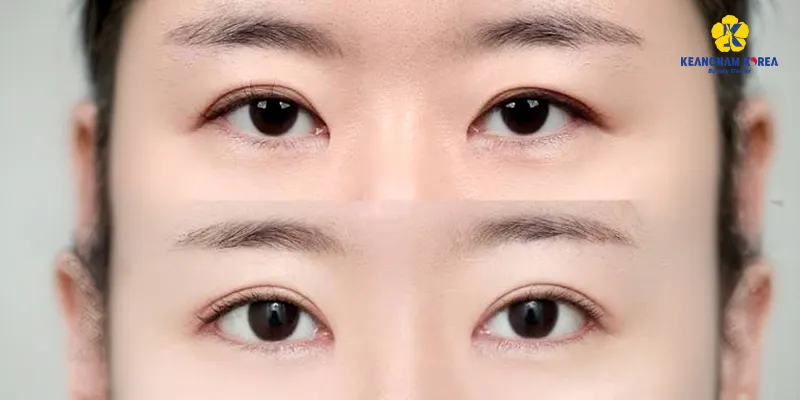
Schedule Your Consultation Today
Not sure whether your lower eyelids require structural support, fat repositioning, or both? A clinical examination measuring your lower lid distraction and snapback elasticity will determine the exact procedure your eyes need.
Book a One-on-One Consultation with our oculoplastic specialists to receive a personalized surgical plan and a clear, itemized quote based on your measurements. Send us your travel dates to build your schedule seamlessly.
Which procedure lasts longer?
Surgical literature does not assign a fixed lifespan in years to either procedure. Canthopexy is designed for mild laxity, while canthoplasty is for severe laxity. Matching the procedure to the degree of laxity ensures longer-lasting results.
How long after surgery can I fly home?
Surgeons typically recommend waiting 7 to 14 days before flying. Eyelid sutures must be removed (days 5–7) and the incision inspected before traveling.
Does canthal surgery change eye shape?
It changes the position and angle of the outer eye corner, which creates a firmer lower lid and a slight tilt lift. It does not alter the eyeball itself.
Is canthoplasty the same as lateral canthotomy?
No. Lateral canthotomy opens the outer corner to enlarge the eye opening. Canthoplasty detaches and reanchors the tendon to provide structural support to the lower lid.
RELATED ARTICLES

Collagen Injection vs. Laser for Facial Skin: Cost, Recovery, and Fit
A collagen injection vs laser for aging facial skin, which is better? They are two distinct approaches to facial rejuvenation and do not replace each other. Lasers work from the outside in to correct surface texture and pigment, while injected

Collagen Shots for the Face vs. Mesotherapy: Aging Grades, Cost, and Results
Deciding between collagen shots for the face and mesotherapy comes down to identifying which layer of your skin is experiencing aging. Mesotherapy nourishes the superficial skin layers for quick surface hydration, whereas collagen shots for the face rebuild structural density
How Long Does a Fox Eye Thread Lift Last? Costs, Risks, and Results
A fox eye thread lift is a minimally invasive procedure that uses dissolvable barbed threads to suspend the outer corner of the eye (lateral canthus) and the eyebrow tail toward the temple. By gently pulling these soft tissues upward, the

What Is a Liquid Nose Job? Cost, Longevity and When Do Threads Work Better?
What is a liquid nose job? A liquid nose job (clinically known as liquid rhinoplasty) is a non-surgical procedure that reshapes the nose using precision injections of hyaluronic acid (HA) filler. The treatment takes 10 to 15 minutes, requires zero

Semi-Structural Rhinoplasty for a Low Bridge and Wide Tip: Cost and Recovery
Semi-structural rhinoplasty is a targeted surgical procedure that reshapes specific portions of the nose, typically modifying a broad, rounded tip with autologous cartilage while elevating a slightly low bridge with a biocompatible implant. The procedure takes 45 to 90 minutes

Non-Surgical Rhinoplasty Price in 2026: Cost by Filler and Thread Type
The non-surgical rhinoplasty price in Ho Chi Minh City, Vietnam, ranges from $230 to $1,720 (6 to 45 million VND) per treatment in 2026. The overall cost is determined primarily by the specific material and technique selected: The material used