Skip to content


Canthoplasty Cost in Vietnam 2026
Canthoplasty cost in Ho Chi Minh City ranges from about 8,000,000 to 22,000,000 VND (roughly $320–$870) for a single procedure in 2026. Medial epicanthoplasty sits at the lower end, lateral canthoplasty in the mid-range, and a combined inner-and-outer correction at the top. This guide breaks down each technique, the real price drivers, and how to read a quote before you commit.
What is canthoplasty?
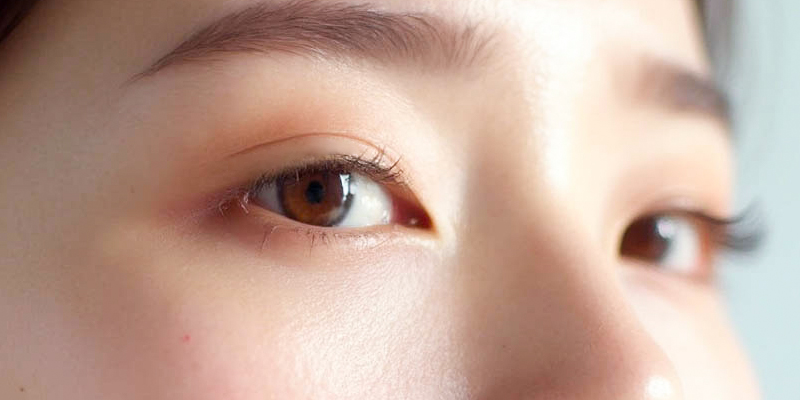
Canthoplasty is a minor surgical procedure that reshapes the corner of the eye to widen the eye horizontally. Most East Asian eyes carry an epicanthic fold – a small web of skin at the inner corner that covers part of the tear duct, shortens the eye, and makes the two eyes look further apart. Canthoplasty releases or repositions that structure so the eye opening looks longer and more defined.
The surgery is done on the soft tissue at the corner, not on the eyeball itself. A surgeon makes a fine incision, removes or repositions the excess skin and muscle band, then secures the new corner shape with delicate cosmetic sutures. The whole procedure usually takes 30–45 minutes under local anesthesia.
People typically consider canthoplasty for one of three reasons:
- Eyes that look short or small along the horizontal axis.
- A wide gap between the eyes caused by a prominent epicanthic fold.
- A downturned or “sleepy” eye tail they want lifted or extended.

The three canthoplasty techniques: medial, lateral, and combined
Canthoplasty is not a single operation. It splits into three approaches based on which corner is corrected, and the right one depends entirely on your anatomy.
1. Medial canthoplasty
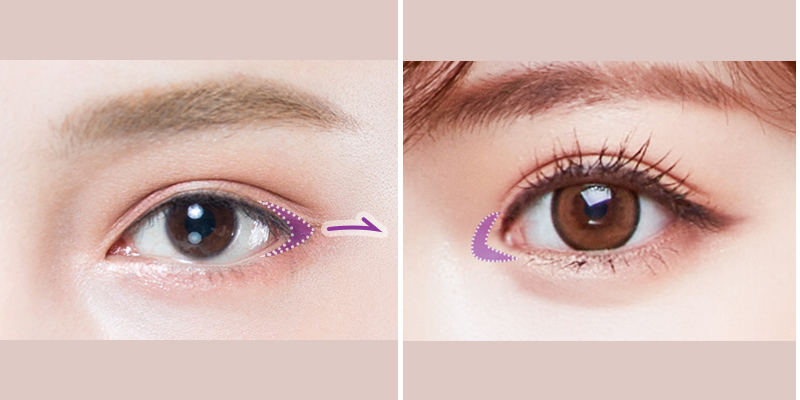
Medial canthoplasty (epicanthoplasty) works on the inner corner near the nose. The surgeon removes the epicanthic fold and the small muscle band beneath it, then redirects the tear-duct line to lengthen the eye toward the center of the face. This is the most common eye-corner procedure in Vietnam because the epicanthic fold is so prevalent in Asian eyes.
Key benefits: A longer eye, better balance between the two eyes, a brighter exposed inner corner, and a natural look that fits Asian facial structure. This technique is especially effective for individuals with a prominent epicanthal fold or eyes set wider apart than average.
2. Lateral canthoplasty
Lateral canthoplasty works on the outer corner toward the temple. It extends the eye tail outward to widen the eye, and for mildly upturned eyes the surgeon can lower the outer corner so it sits level with – or slightly below – the eye’s horizontal axis. The result is a longer, calmer, more balanced eye shape, with more of the white of the eye visible.
Key benefits: A lengthened eye tail that harmonizes with the brows and nose bridge, a good fit for short eyes or downturned outer corners, a long-lasting effect, and limited tissue disruption. Surgeons often recommend it for clients who want more eye length without altering the inner corner.
3. Combined inner and outer canthoplasty
Combined inner and outer canthoplasty corrects both corners in one session. It is reserved for eyes that are both short and carry a heavy fold, delivering maximum lengthening in both directions.
Key benefits: The eye is lengthened on both sides for a result that looks both bigger and longer, strong correction of unbalanced or flawed eye shapes, and overall facial harmony. This approach suits cases that have both a prominent epicanthal fold and a short or downturned outer corner.
To make this concrete, here is how the three map to common concerns:
| Technique | Corner treated | What it improves |
| Medial canthoplasty | Inner (near nose) | Removes epicanthic fold, narrows wide-set look |
| Lateral canthoplasty | Outer (toward temple) | Lengthens eye tail, lowers upturned corner |
| Combined | Both corners | Maximum widening for short + folded eyes |
Medial vs lateral canthoplasty: which one do you actually need?
Regarding inner-corner fold correction, there is a simple four-level read of the epicanthic fold, each level has its own techniques to correct:
- Level 1 – Minimal fold. The fold barely touches the tear duct. At this level, surgery often adds little, and we may advise against it.
- Level 2 – Moderate fold. The fold covers part of the inner corner and the eyes look slightly wide-set. Medial canthoplasty gives a clear, natural improvement.
- Level 3 – Prominent fold. The fold hides a large part of the inner corner and the eyes read as noticeably far apart. This is the strongest indication for epicanthoplasty.
- Level 4 – Prominent fold with a short eye. Here the inner correction alone is not enough, and a combined inner-and-outer approach is usually the better plan.
Lateral canthoplasty follows a different logic. It is indicated when the eye is short overall or the tail droops, and it is the technique chosen by people who want a longer eye without touching the inner corner. If your inner corners are already open and well-defined, paying for a medial procedure you do not need is simply spending more for no visible gain.
The practical takeaway: the technique should be decided at the consultation, on your eye, not from a price list. A clinic that quotes a “combined” package before assessing your fold level is selling, not diagnosing.
How much is canthoplasty in Vietnam
Across reputable clinics in Ho Chi Minh City, a single canthoplasty procedure runs from roughly 8,000,000 to 22,000,000 VND in 2026. The figure you land on depends mainly on which corner is treated and whether you combine procedures. Approximate USD values below use a rate near 25,000 VND/USD and are for orientation only.
| Service | Price range (VND) | Approx. USD | Best for |
| Medial canthoplasty (inner / epicanthoplasty) | 8,000,000 – 15,000,000 | ~$320 – $590 | Removing the epicanthic fold, narrowing a wide-set look |
| Lateral canthoplasty (outer) | 10,000,000 – 18,000,000 | ~$390 – $710 | Lengthening the eye tail, lowering an upturned corner |
| Combined inner + outer | 15,000,000 – 25,000,000 | ~$590 – $980 | Eyes that are both short and heavily folded |
A few notes on reading these numbers. The lower end usually reflects standard-complexity cases and seasonal promotions; the upper end reflects complex anatomy, premium aftercare, or revision work.
For overseas clients, the wider context matters: an eye procedure in Vietnam typically costs 50–70% less than the equivalent in the US, Australia, or Singapore, while still using FDA/CE-approved materials and meeting strict surgical-safety standards. That gap is the main reason eye corner surgery has become a core part of Vietnam’s medical-tourism mix.
What makes canthoplasty cost go up or down?
Two quotes for “canthoplasty” can differ by millions of dong for reasons that have nothing to do with the clinic’s honesty. The biggest single driver is whether this is a first-time procedure or a revision.
- Primary vs revision surgery. A first procedure on healthy tissue stays in the standard range. Correcting a botched corner – exposed tear duct, contracted scar, an over-opened or pulled-down eye – requires releasing scar tissue, rotating skin flaps, and rebuilding the corner ligament. Revision work commonly adds 5,000,000–15,000,000 VND depending on how much scarring has set in.
- Which corner, and how many. Inner-only is cheapest, outer is mid-range, and a combined correction sits highest because it is effectively two procedures in one session.
- Surgeon experience. The eyelid holds the levator muscle and sensitive nerve branches, so millimeter precision is non-negotiable. Time on the table with a senior, properly licensed surgeon is a real cost, and it is where the gap between a licensed surgical clinic and an unlicensed spa technician shows up.
- Technique and technology. Modern tools – plasma scalpels that cauterize as they cut to limit bleeding and swelling, and 3D pre-op simulation so you see the planned result first – raise the price but lower the risk and shorten recovery.
- What the quote includes. Higher listed prices often bundle post-op medication, follow-up care, and a long-term result warranty (3 years to lifetime, depending on the clinic). A bare “surgery only” quote can look cheaper and end up costing more.
Double eyelid surgery and canthoplasty: why the combo costs less per result
Eye corner surgery is rarely done on its own. When clients search double eyelid surgery and canthoplasty cost, they are usually looking for the most complete eye transformation, and the combination is what delivers a genuinely larger, more balanced eye.
The reason a combined package costs less per result comes down to fixed costs. A single procedure still carries the full cost of preparing a sterile operating room, a one-time surgical instrument set, anesthesia, and the surgical team. Bundling double eyelid creation with a corner opening spreads those fixed costs across both procedures, which is why clinics can discount the add-on procedure by 30–50%.
For you, the combination delivers a double benefit: a more harmonious overall eye shape – since the lid crease and the corner are designed together rather than in isolation – and a single recovery period instead of two rounds of swelling and downtime. A combined double eyelid + canthoplasty package in Ho Chi Minh City typically lands in the 11,000,000–20,000,000 VND range, well below the sum of the two procedures bought separately.
→ Learn more at: Double eyelid surgery service at Keangnam Korea
Canthoplasty scars: will the inner corner show?
The fear behind almost every canthoplasty consultation is the scar. It is a fair concern, and the honest answer is that scarring depends far more on technique and aftercare than on luck.
A well-executed corner uses a micro-suture closure: the incision is hidden along the natural corner line, where the skin folds conceal it as it heals. In the first few weeks the corner may look slightly pink, which is normal and fades. Plasma scalpels reduce bleeding and tissue trauma, and cold-plasma light therapy during recovery helps disinfect the wound and speed cell regeneration, both of which keep the final scar minimal.
Scarring risk roughly tracks three levels:
- Low risk – a clean primary procedure, fine sutures, disciplined aftercare. The corner heals to a faint line.
- Moderate risk – skin that scars easily, or aftercare instructions that were not followed (rubbing, sun exposure, early makeup).
- High risk – revision of a previously botched corner, where existing scar tissue must be released and the area is more prone to contracture.
*Note: the surgeon’s hand and the closure technique decide whether your corner heals invisibly. This is exactly where experience earns its cost.
Canthoplasty result: before and after comparison
A good canthoplasty result reads as a brighter, longer, more open eye – not as an eye that has obviously had surgery. Before-and-after images are the single most useful thing to study before you book, because they show you a clinic’s actual aesthetic sense rather than its marketing.
When you review before-and-after photos, check for 3 things below:
- Natural corner shape. The inner corner should not expose so much red tear duct that the eye looks raw or over-opened – a common sign of overcorrection.
- Symmetry. Both eyes should match in corner angle and length, not just look good individually.
- Consistency across cases. One stunning result can be luck; a clinic’s whole gallery looking consistently natural reflects a reliable hand.
The 2026 aesthetic trend has moved firmly away from dramatic, over-widened corners toward subtle, proportionate refinement that suits the whole face. This is also why 3D pre-op simulation has become standard at serious clinics – it lets you preview your own projected result and align expectations with your surgeon before anything is done.
Complications and warning signs to recognize
Canthoplasty is a low-risk procedure in trained hands, but you should know the danger signs so you can act early if something is off. Most serious problems trace back to overcorrection or an inexperienced operator rather than the surgery itself.
Watch for these after surgery, and contact your clinic promptly if they appear:
- Exposed or pulled tear duct that leaves the inner corner looking permanently red and raw.
- A pulled-down or rounded lower corner (ectropion-like change) where the eye no longer closes comfortably.
- Scar contracture that tightens and visibly puckers the corner over weeks.
- Persistent watering, irritation, or incomplete eye closure, which can signal the corner was over-released.
- Asymmetry that worsens rather than settles after the first month.
There is also a natural degree of relapse to expect: a small amount of the corner can close back as it heals, which is why experienced surgeons slightly over-plan the release and why a result warranty matters. The key distinction is between normal settling and a true complication – and a clinic that stays reachable for follow-up is what lets you tell the difference safely.
How to choose a clinic for eye corner surgery
Choosing where to have canthoplasty matters more than chasing the lowest quote, because the eye area leaves little margin for error. Rather than rank venues for you, here is the checklist that you can use on every clinic you shortlist, including ours:
- The surgeon, by name and credential. Confirm a properly licensed surgeon with formal training and years of eye-specific experience will personally perform and assess your case.
- Diagnosis before price. A trustworthy clinic grades your fold and eye shape first, then quotes. Be wary of a “combo package” pushed before anyone has looked closely at your eyes.
- Real before-and-after evidence. Ask to see a full gallery of the surgeon’s own cases, not stock images, and look for consistent, natural results.
- Technology that lowers risk. 3D simulation, micro-suture closure, and modern plasma tools should be standard, not upsells.
- Aftercare and warranty in writing. Recovery is where results are won or lost; confirm the follow-up schedule and result guarantee before you pay.
To find out which technique actually fits your eyes – or whether you need surgery at all – book a free 1:1 consultation via hotline 0911 833 555
RELATED ARTICLES

Collagen Injection vs. Laser for Facial Skin: Cost, Recovery, and Fit
A collagen injection vs laser for aging facial skin, which is better? They are two distinct approaches to facial rejuvenation and do not replace each other. Lasers work from the outside in to correct surface texture and pigment, while injected

Collagen Shots for the Face vs. Mesotherapy: Aging Grades, Cost, and Results
Deciding between collagen shots for the face and mesotherapy comes down to identifying which layer of your skin is experiencing aging. Mesotherapy nourishes the superficial skin layers for quick surface hydration, whereas collagen shots for the face rebuild structural density
How Long Does a Fox Eye Thread Lift Last? Costs, Risks, and Results
A fox eye thread lift is a minimally invasive procedure that uses dissolvable barbed threads to suspend the outer corner of the eye (lateral canthus) and the eyebrow tail toward the temple. By gently pulling these soft tissues upward, the

What Is a Liquid Nose Job? Cost, Longevity and When Do Threads Work Better?
What is a liquid nose job? A liquid nose job (clinically known as liquid rhinoplasty) is a non-surgical procedure that reshapes the nose using precision injections of hyaluronic acid (HA) filler. The treatment takes 10 to 15 minutes, requires zero

Semi-Structural Rhinoplasty for a Low Bridge and Wide Tip: Cost and Recovery
Semi-structural rhinoplasty is a targeted surgical procedure that reshapes specific portions of the nose, typically modifying a broad, rounded tip with autologous cartilage while elevating a slightly low bridge with a biocompatible implant. The procedure takes 45 to 90 minutes

Non-Surgical Rhinoplasty Price in 2026: Cost by Filler and Thread Type
The non-surgical rhinoplasty price in Ho Chi Minh City, Vietnam, ranges from $230 to $1,720 (6 to 45 million VND) per treatment in 2026. The overall cost is determined primarily by the specific material and technique selected: The material used