Skip to content


Nose Surgery Recovery Time: Healing Stages and Timeline
Nose surgery recovery time typically requires 1 to 2 weeks before returning to daily work, with 90% of facial swelling resolving within 3 months and the final nasal shape fully settling at 12 months. Overall recovery speed depends directly on the surgical complexity and the extent of cartilage or bone restructuring performed during your procedure.
Initial healing windows vary across surgical techniques:
- Alarplasty (Nostril Narrowing): Normal routine resumes in 3 to 5 days, with suture removal scheduled around day 7.
- Simple Bridge Implant: Basic daily activities resume in about 1 week, with stitches removed on days 5 to 7.
- Implant with Ear Cartilage Tip Shield: Initial healing takes approximately 10 days, with splints/sutures removed on days 7 to 10.
- Structural or Semi-Structural Rhinoplasty: Initial recovery requires 1 to 2 weeks, with protective splints removed on days 7 to 10.
- Autologous Rib Cartilage Rhinoplasty: Recovery requires 2 to 3 weeks, with chest donor site monitoring and splint removal in 15 to 20 days.
Below is an itemized breakdown of recovery times by procedure type, the 5 clinical stages from day 1 to month 3, post-operative care tips, and travel guidance for flying home from Ho Chi Minh City.

Nose Job Healing Time by Type of Surgery
Nose job healing time lengthens in direct proportion to the volume of cartilage, bone, and soft tissue modified during surgery.
| Type of Nose Surgery | Wound & Splint Removal | Return to Daily Routine | Recommended Stay in HCMC Before Flying |
| Alarplasty (Nostril Narrowing) | Stitches removed ~Day 7 | 3 to 5 days | 7 to 10 days |
| Bridge Implant (Silicone / Softxil) | Stitches removed Days 5–7 | ~1 week | ~1 week |
| Implant + Ear Cartilage Tip Shield | Stitches/splint removed Days 7–10 | ~10 days | ~10 days |
| Structural / Semi-Structural Rhinoplasty | Splint removed Days 7–10; stitches Days 10–15 | 1 to 2 weeks | ~2 weeks |
| Autologous Rib Cartilage Rhinoplasty | Splint removed Days 7–10; wound settling 15–20 days | 2 to 3 weeks | ~3 weeks |
| Septorhinoplasty Surgery | Internal splints removed Days 5–7 | 7 to 14 days (desk work) | ~2 weeks |
Non-surgical Nose Lift Recovery Time
Non-surgical alternatives (such as hyaluronic acid dermal fillers or thread lifts) do not involve surgical tissue disruption. Thread lifts require 1 to 3 days of mild downtime, while dermal fillers require zero recovery time.
Alarplasty Recovery Time
Alarplasty recovery time is the shortest of the surgical options. Swelling is mild in the first one to three days, stitches come out around day seven, the area feels settled by day 10 to 14, and the incision fades over about one month.
Rhinoplasty Healing Stages
The rhinoplasty healing stages follow a predictable sequential order across all techniques, with complex structural modifications moving through each stage more gradually than simple bridge implants.
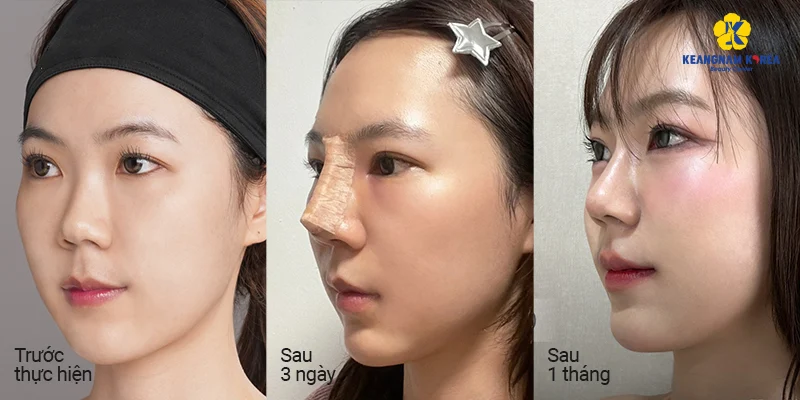
Days 1 to 3: Localized Swelling
Mild bruising and puffiness around the nose and eyelids are completely normal in the first couple of days. You might notice light pink drainage, and any internal packing will be safely removed during your early check-up. As your skin adapts, your nose will naturally feel tight and firm. Keep the incision area bone-dry, don’t touch your face, and keep your facial expressions gentle while you heal.
Days 4 to 7: Initial Splint and Suture Removal
Puffiness starts to level off, and any bruising gradually fades from deep purple to a lighter yellow. Your surgeon will carefully remove your external protective splint around day 7. Gently clean your incision lines exactly as guided by your care team, and keep sleeping on your back with your head propped up to keep everything aligned.
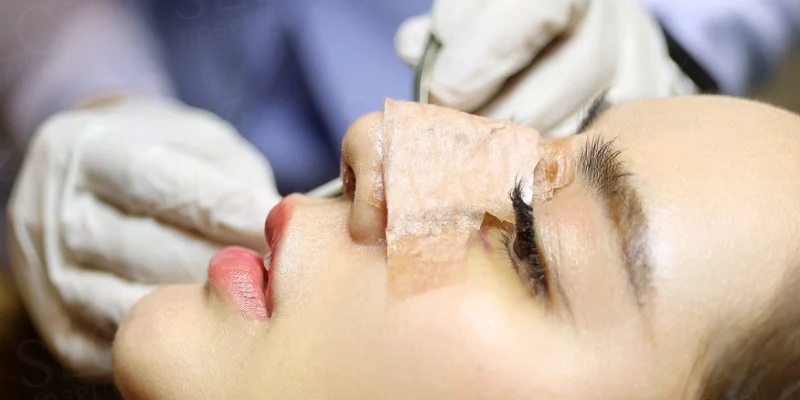
Days 7 to 15: Early Tissue Settlement
Incision sites fully dry up, and that initial tight sensation slowly begins to ease. Your nose might still feel firm or rigid to the touch as internal tissues start settling in. Stick to gentle routines and avoid any heavy physical effort or accidental bumps to your face.
Weeks 3 to 6: Profile Definition
Soft tissue settles smoothly over your new nasal framework, showing off a much more natural profile. Any faint redness around the tip fades away completely. If your surgeon gives you the green light, you can ease back into light exercise—just make sure to stay clear of contact sports or heavy impacts.
Months 1 to 3: Resolution of Major Swelling
About 90% of noticeable swelling disappears by month 3, making your new nose look natural and socially ready. You can confidently return to your full daily routine, apply light makeup, and switch back to wearing lightweight contact lenses or approved eyewear.
Rhinoplasty Swelling Stages
The rhinoplasty swelling stages extend beyond basic wound closure because deep dermal tissue requires up to 12 months to fully settle and mature:
- Weeks 4 to 6: Residual soft tissue fullness around the bridge and tip steadily diminishes.
- Months 1 to 3: Approximately 90% of overall surgical swelling resolves during this window, revealing clear profile definition.
- Months 3 to 12: The remaining 10% of hidden swelling slowly clears up over the rest of the year. The tip of your nose is always the very last area to settle, so slight firmness or faint puffiness at the tip might linger for up to 12 months before your final shape is completely set.
Asymmetric swelling during the initial weeks is a completely normal part of biological healing and does not indicate a surgical flaw or technical error.
Septorhinoplasty Recovery Expectations
A septorhinoplasty recovery timeline involves internal airway healing in addition to external profile changes, making initial nasal congestion the primary focal point during early days.
- Days 1 to 3: Stuffiness reaches its peak, so you will need to breathe through your mouth. Change the small gauze pad under your nose gently as light fluid drains out.
- Days 5 to 7: Your surgeon removes the soft internal plastic sheets or splints, making breathing through your nose much easier right away.
- Days 7 to 14: You can comfortably get back to light desk work, studying, and light daily tasks.
- Weeks 2 to 3: You can start light cardio exercises (like walking or gentle cycling) once your doctor gives you the clearance.
- Week 4 Onward: Heavy gym workouts, heavy lifting, and intense sports can safely resume.
- Months 3 to 6: The inside of your nose finishes healing completely, giving you stable, smooth breathing for the long run.
Note: Avoid blowing your nose forcefully during the early weeks to protect the delicate tissue healing inside.
Factors That Extend Recovery Duration
Individual recovery timelines can extend beyond standard benchmarks due to specific anatomical and health factors:
- Individual Skin Thickness: Thicker nasal skin retains fluid longer, particularly at the nasal tip, extending the final settling timeline.
- Non-Compliance with Aftercare: Touching the nose, premature heavy exercise, or sleeping on your side can prolong swelling or shift graft placement.
- Tissue Sensitivity to Graft Materials: In rare instances, localized tissue sensitivity to synthetic implants or specialized grafts can prolong low-grade inflammation.
- Underlying Health Conditions: Unmanaged diabetes, circulation disorders, or compromised immune function slow dermal tissue repair.
- Infection: Bacterial contamination along incision lines delays healing and requires immediate antibiotic intervention.
- Surgical Technique: Extensive structural or autologous rib cartilage reconstructions require longer tissue settling times than simple bridge implants.
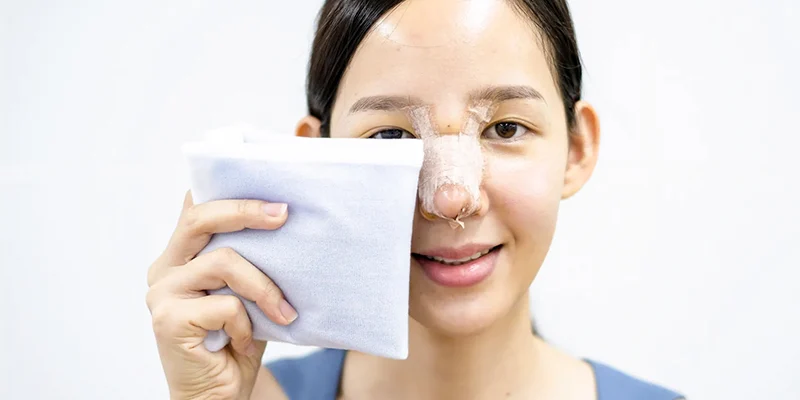
Daily Symptoms During Early Recovery
Navigating early recovery involves managing five standard post-operative physical responses, all of which represent normal tissue healing:
- Swelling & Bruising: Reaches peak intensity during the first 48 hours. Apply cool compresses exclusively to the upper cheeks and under-eye area—never directly on the nasal bridge or tip. From day 4 onward, gentle warm compresses help fade residual bruising.
- Tightness & Mild Discomfort: Post-operative discomfort is generally mild to moderate and subsides within a few days to a week. Take only medications prescribed by your surgeon.
- Light Serous Drainage: Minimal clear or pinkish discharge during the first 24 to 48 hours is expected.
- Localized Itching: Sensations of itching along incision lines indicate nerve fiber regeneration and tissue repair. Do not scratch or rub the area.
- Temporary Asymmetry: Uneven swelling across the nostrils or bridge can cause a temporary off-center appearance during initial weeks.
Essential Rhinoplasty Recovery Tips
Applying proven rhinoplasty recovery tips protects your new nasal contour while soft tissue and cartilage grafts stabilize:
- Sleep Elevated: Use 2 to 3 pillows to keep your head elevated above heart level for the first 2 weeks to limit localized fluid accumulation. Avoid side sleeping.
- Avoid Blowing Your Nose: Dab drainage gently with sterile gauze; do not blow your nose forcefully for at least 4 weeks.
- Keep Glasses Off the Bridge: Avoid resting eyeglasses or heavy sunglasses directly on the nasal bridge for 4 to 8 weeks. Use contact lenses or tape glasses to your forehead if cleared by your doctor.
- Postpone Strenuous Workouts: Avoid heavy lifting, intense gym workouts, and strenuous cardio for 4 to 6 weeks to prevent elevated blood pressure in the face.
- Strict Sun Protection: Shield healing incision lines from direct sunlight using broad-spectrum sunscreen and wide-brimmed hats to prevent hyperpigmentation.
- Avoid Alcohol & Smoking: Abstain from alcohol and tobacco for at least 4 weeks post-surgery, as they dilate blood vessels, increase bleeding risks, and impair tissue healing.
Clinics in Vietnam also recommend avoiding specific foods (such as sticky rice, seafood, and water spinach) for 2 to 3 weeks post-surgery to support clean scar maturation. Follow the specific dietary guidelines provided by your attending surgeon.
When to Contact Your Surgeon
Contact your surgical clinic immediately if you experience any of the following warning signs during your recovery:
- Sudden or progressive difficulty breathing that worsens over time
- Elevated body temperature (fever) or dark, foul-smelling nasal discharge
- Progressive swelling or severe throbbing pain that increases after day 3
- Uncontrolled nosebleeds that do not stop with light pressure
- Spreading redness, localized heat, or skin pallor near incision sites
- Persistent nausea or vomiting following medication
A nose that remains significantly off-center or asymmetrical after 1 month should also be evaluated during a formal follow-up review.
Explore more
- Day-to-day aftercare for a new nose
- What semi-structural rhinoplasty involves
- The structural rhinoplasty procedure
- Septoplasty prices in Vietnam
- Nose wing reduction
What is the recovery time of a nose job before going back to work?
Most individuals return to office or desk work 1 to 2 weeks after rhinoplasty. The recovery timeline before returning to work is approximately 1 week for a simple bridge implant and 2 to 3 weeks for autologous rib cartilage surgery. Mild bruising around the cheeks may remain faintly visible during the second week.
When does the nose look normal after rhinoplasty?
The nose looks socially presentable and normal to casual observers after approximately 2 to 4 weeks. About 90% of overall surgical swelling resolves by month 3, while final tip refinement settles completely at 12 months.
When can I wear glasses after rhinoplasty?
Avoid resting eyeglasses or sunglasses directly on the nasal bridge for 4 to 8 weeks post-surgery. Surgeons in Vietnam typically clear regular eyewear at the 1 to 3-month stage once structural tissue is firm. Contact lenses can usually be worn after week 1.
Can I fly home one week after a nose job?
You can fly home 1 week after a simple bridge implant or alarplasty, provided external stitches are removed and your surgeon grants final clearance. Complex structural or autologous rib cartilage procedures require a stay of 10 to 14 days in Ho Chi Minh City before long-haul flights.
RELATED ARTICLES

Alarplasty and Rhinoplasty Comparison: Which Procedure Fits Your Nose Shape
Selecting between alarplasty and rhinoplasty depends on whether your lower nose appears wide due to flared soft tissue or a low, unsupported structural bridge. Alarplasty isolates and reshapes the nostril wings at the base, whereas rhinoplasty elevates, straightens, or rebuilds
Nose Wing Reduction: Is Alarplasty Worth It? Pros, Cons, and Recovery Time
A nose wing reduction (alarplasty) is a surgical option for those whose nostril wings are naturally thick, wide, or flared while their nasal bridge height and tip projection already suit their overall facial proportions. This procedure selectively reshapes or excises

Alar Base Reduction Technique: Rolling vs. Excision Comparison
An alar base reduction technique narrows flared or wide nostrils by either folding the nostril rim inward with internal sutures or excising a targeted strip of tissue. In Ho Chi Minh City, Vietnam, plastic surgeons perform four main surgical variations
Top 5 Rhinoplasty Clinics in Ho Chi Minh
Rhinoplasty clinics in Ho Chi Minh City offer safe cosmetic nose surgery: Gangwhoo Aesthetic Hospital, JW Korean Aesthetic Hospital, Kangnam Aesthetic Hospital, Thu Cúc Aesthetic Hospital, and Keangnam Korea. In 2026, market rates for cosmetic nose surgery across these facilities

Collagen Injection vs. Laser for Facial Skin: Cost, Recovery, and Fit
A collagen injection vs laser for aging facial skin, which is better? They are two distinct approaches to facial rejuvenation and do not replace each other. Lasers work from the outside in to correct surface texture and pigment, while injected

Collagen Shots for the Face vs. Mesotherapy: Aging Grades, Cost, and Results
Deciding between collagen shots for the face and mesotherapy comes down to identifying which layer of your skin is experiencing aging. Mesotherapy nourishes the superficial skin layers for quick surface hydration, whereas collagen shots for the face rebuild structural density