Skip to content


5 Types of Nose Jobs in Vietnam & 2026 Costs
There are five types of nose jobs in Vietnam, and the cost differs depending on the targeted nasal area: Bridge height only: $230 to $1,710 (6 to 45 million VND) Tip shape: $380 to $1,520 (10 to 40 million VND) Nostril width: $190 to $570 (5 to 15 million VND) A hump or a crooked bridge: $380 to $840 (10 to 22 million VND) The whole nasal structure: $1,140 to $8,380 (30 to 220 million VND)
Skin thickness, septal length, and tip support decide which of the five a nose can take, which is why an examination comes before a quote. Below is what each type changes, what it costs in Ho Chi Minh City, how long it holds, and which cases are better off waiting.
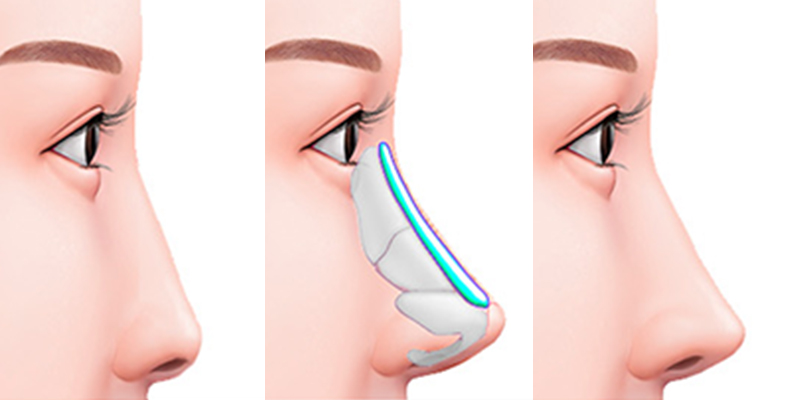
Types of Nose Jobs in Vietnam by What They Change
Nose jobs in Vietnam are divided into five groups by the part of the nose being altered: the bridge, the tip, the nostril base, the hump or deviation, and the entire structure.
| What You Want Changed | Type of Nose Job (Surgical Term) | Estimated Cost in HCMC (USD) | Estimated Cost in VND |
| A flat or low bridge | Nose bridge surgery (Augmentation via liquid rhinoplasty, threads, or implants) | $230 – $1,710 | 6M – 45M VND |
| A round, wide, or drooping tip | Nose tip surgery (Tip plasty with autologous cartilage graft) | $380 – $1,520 | 10M – 40M VND |
| Nostrils that flare too wide | Alar reduction (Alar trimming or base cinching) | $190 – $570 | 5M – 15M VND |
| A hump, deviation, or saddle dip | Septorhinoplasty (Bone shaving, hump reduction, or septal alignment) | $380 – $840 | 10M – 22M VND |
| A short, upturned, or previously operated nose | Structural rhinoplasty / Autologous rib cartilage reconstruction | $1,140 – $8,380 | 30M – 220M VND |
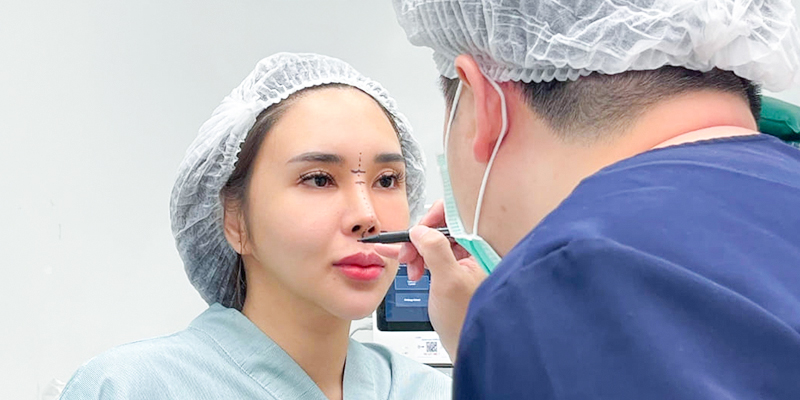
1. Nose Bridge Surgery for Flat Bridges
For candidates seeking to raise a flat nasal bridge, surgical bridge augmentation in Ho Chi Minh City ranges from $530 to $1,260 USD (14 to 33 million VND). Two main techniques exist for this type of nose job: Synthetic Implant and Dermofat Graft.
Nose Bridge Surgery (Synthetic Implant)
A synthetic implant procedure costs $530 to $850 (14 to 22.4 million VND), takes 15 to 30 minutes, and lasts 10 to 25 years. During nose bridge surgery, a pre-carved silicone or Softxil bar is placed beneath the skin of the bridge through a single hidden incision inside the nostril.
- Procedure Scope & Recovery: This technique does not alter the tip, septum, or nasal bone. As a result, it offers the fastest recovery, the most accessible nose job price, and the least structural change. Clients looking for temporary bridge elevation without surgery often consider liquid rhinoplasty instead.
- Anatomical Suitability & Risks: This method works best for noses with thick soft tissue, adequate length, and a slim tip. For those with thin skin, synthetic implants carry risks of shifting off-center, causing tip redness, or wearing down the skin layer over time.
Dermofat Graft Augmentation
A dermofat graft uses a strip of autologous tissue (fat attached to the dermis layer) harvested from the patient’s own body. Placed over an implant or used on its own, this procedure costs $570 to $1,260 (15 to 33 million VND).
- Tissue Cushioning: Because it relies on natural tissue, a dermofat graft cushions thin nasal skin and eliminates the show-through issues typical of synthetic implants.
- Aesthetic Outcome: The resulting bridge shape is softer and less sharply defined than an implant alone. Surgeons typically pair dermofat grafts with autologous cartilage rather than relying on them solely for height.

2. Nose Tip Surgery for Tip Refinement
Nose tip surgery narrows, lifts, or projects the tip for $380 to $1,520 USD (10 to 40 million VND). As the defining focal point from the front view, the tip sets overall facial harmony. Because a standard implant in nose bridge surgery cannot alter tip projection or bulk, many augmentation plans end up adding tip refinement.
Three primary procedures shape the nasal tip, each priced as an individual line item:
Nose Tip Lift (Ptosis Correction)
Cartilage at the tip is repositioned and secured higher to shorten the appearance of a drooping nasal tip.
- Cost & Complexity: Soft-tissue adjustments cost less than completely rebuilding the tip cartilage framework.
- Outcome: Provides an elevated, more youthful tip angle.
Bulbous Rhinoplasty (Tip Narrowing)
Targeted at round or boxy tips, this technique trims and sutures the lower lateral cartilages closer together.
- Anatomical Limit: Thick nasal skin restricts how sharply the underlying structural changes show on the surface. A surgeon who highlights this during a consultation is accurately diagnosing your anatomy rather than lowering expectations.
- Complementary Options: For those seeking non-surgical tip narrowing, structural limits often make surgical refinement more effective than soft-tissue treatments like alar reduction.
Cartilage Tip Graft
A sheet of autologous ear cartilage is harvested and placed over the tip above a synthetic implant. This procedure takes 45 to 60 minutes and costs $760 to $1,050 USD (20 to 28 million VND).
- Skin Protection: The graft acts as a protective barrier, preventing thin skin from reddening or showing the hard outline of an implant edge.
- Longevity & Healing: Approximately 5% to 10% of the graft is absorbed within the first 1 to 2 years, while the remainder integrates into a firm, permanent cushion offering 15 to 20 years of stability. Harvesting ear cartilage adds a secondary donor site incision and extends recovery time by about three days.
Note on Structural Limits: While nose tip surgery refines shape and projection, a severely short or upturned nose requires deeper septal extension support that tip work alone cannot provide.

3. Alar Reduction for a Wide Alar Base
Alar reduction narrows flaring nostrils and wide alar bases for $190 to $570 USD (5 to 15 million VND), making it the most accessible nose job price entry point on any Ho Chi Minh City clinic price list.
During the procedure, the surgeon removes a precise wedge of tissue at the alar base and closes the incision within the natural crease where the nostril meets the cheek.
Key Considerations & Clinical Nuances
- Irreversible Precision: Results are measured in millimeters and are strictly permanent. Because tissue is excised rather than added or reshaped, alar reduction cannot be reversed.
- Scarring Risks & Skin Types: Hidden within the natural alar-facial crease, scars are generally discreet. However, candidates with thick or oily skin face a higher risk of visible post-surgical scarring.
- Dynamic Flaring: Clients whose nostrils flare exclusively when smiling, rather than at rest, are typically advised against surgery, as static tissue removal can distort natural facial expressions.
- Cost Efficiency via Combined Procedures: Booking an alar base reduction alongside nose bridge surgery or nose tip surgery reduces overall costs compared to a standalone procedure, as operating room fees and anesthesia are shared within a single session.
4. Septorhinoplasty Surgery for a Hump or Crooked Nose
Correcting a dorsal hump, a crooked bridge, or a saddle dip costs $380 to $840 USD (10 to 22 million VND) in Ho Chi Minh City. Septorhinoplasty is the surgical term for simultaneously straightening the internal nasal septum (the wall of cartilage and bone dividing the nostrils) and reshaping the external nose in a single operation.
Surgical Techniques & Recovery Expectations
- Dorsal Hump Reduction: Excess bone and cartilage along the bridge are filed down or shaved to create a smooth profile.
- Deviated Bridge Realignment: Controlled osteotomies (precise surgical cuts in the nasal bone) are performed to straighten a crooked or off-center bridge framework.
- Saddle Dip Restoration: Depressions along the bridge are filled using autologous cartilage grafts or biological implants to restore structural continuity.
- Recovery Timeline: Because osteotomies alter the nasal bone, post-operative swelling takes significantly longer to resolve than soft-tissue procedures like alar reduction or nose tip surgery. The final nasal contour gradually evolves over several months.
5. Structural Rhinoplasty & Rib Cartilage Reconstruction
Full nasal reconstruction ranges from $1,140 to $8,380 USD (30 to 220 million VND) and represents the highest level of surgical complexity. It is the definitive solution for correcting short upturned noses, severe scar contracture, or complications from previous surgeries.
This category comprises two main reconstructive techniques, alongside a preliminary implant removal phase for revision cases.
Structural Rhinoplasty
Priced between $1,140 and $2,930 USD (30 to 77 million VND), structural rhinoplasty opens the nasal framework via an incision across the columella (the tissue strip separating the nostrils). Operating time spans 60 to 120 minutes.
- Hybrid Material Framework: Septal cartilage is harvested for structural support struts, micro-porous ePTFE implants (such as Surgiform or Nanoform) build bridge height, and autologous ear cartilage refines the tip (combining structural nose tip surgery with nose bridge surgery).
- Tissue Integration: Millions of microscopic pores in ePTFE allow native tissue and micro-vessels to grow into the material. This anchoring prevents shifting, though it makes potential future removal more complex than silicone.
- Aesthetic Proportions: Surgeons aim for precise anatomical metrics—typically maintaining a bridge height of 9–11 mm and an L-line profile with a nasofrontal angle of 140° to 150° (or an S-line profile for softer contours).
Autologous Rib Cartilage Reconstruction
At $3,050 to $8,380 USD (80 to 220 million VND), rib cartilage reconstruction is the most comprehensive nose operation performed in Ho Chi Minh City, taking 120 to 180 minutes under general anesthesia.
- 100% Autologous Material: The surgeon harvests 2 to 3 cm from the sixth or seventh rib to carve the support struts, septum, and bridge. Using zero synthetic materials eliminates graft rejection risks.
- Surgical Requirements: Harvesting requires a hospital operating theater and creates a secondary donor-site wound beneath the breast.
- Warping Risks & Indications: Rib cartilage carries a 2% to 5% risk of slight warping or partial reabsorption during initial healing. Consequently, this technique is reserved for noses damaged by infection, stiffened by severe scar contracture, subjected to multiple failed operations, or sensitive to synthetics.
Implant Removal and Repair
Taking out an implant and treating an inflamed nose costs $300 to $840 (8 to 22 million VND). Where infection has been running long enough to shorten and stiffen the nose, nose reconstruction surgery with rib cartilage and a dermofat graft costs $1,520 to $4,570 (40 to 120 million VND).
Removal and reconstruction are executed in separate stages. The old implant is removed, tissue inflammation is allowed to settle over several weeks or months, and only then is structural reconstruction planned. Revision cases rarely fit a short travel timeline.
Non-Surgical Rhinoplasty With Fillers and Threads
Non-surgical rhinoplasty modifies the outline of the nasal bridge for 6 to 18 months, with an overall nose job price ranging from $230 to $1,710 (6 to 45 million VND). These minimally invasive options require no incisions or sutures. However, because non-surgical treatments do not alter the underlying cartilage or skeletal framework, issues like a deviated bridge, a wide tip, or a short nose remain unchanged.
Liquid Rhinoplasty (Nose Fillers)
Liquid rhinoplasty uses hyaluronic acid (HA) nose fillers to add volume along the bridge in just 10 to 15 minutes. Results are immediate due to the water-binding gel properties of HA, typically lasting 12 to 18 months at a price of $230 to $760 (6 to 20 million VND).
- Risk & Limitations: Repeated filler injections can spread sideways at the root over time, potentially widening the area intended for definition. More critically, intravascular injection carries serious vascular risks. For safety, nose fillers must be performed by a qualified physician with deep expertise in facial vascular anatomy.
- Reversibility Advantage: Unlike any surgical alternative, HA filler can be reversed within 24 to 48 hours using Hyaluronidase—an enzyme that completely dissolves the hyaluronic acid gel.
Bio-Thread Nose Lift
A bio-thread nose lift uses absorbable barbed threads made of PDO, PLLA, or PCL to elevate the bridge through tiny entry points in 20 to 30 minutes. Results last 6 to 12 months, costing between $270 and $1,710 (7 to 45 million VND), with thicker PCL threads occupying the higher end of the price spectrum.
- Trade-Offs & Removal: Unlike fillers, thread lifting is difficult to undo. The barbs anchor tightly into nasal tissue and form fibrous bands, requiring surgical dissection if revision is needed.
- Best Candidates: Thread lifts are ideal for candidates who already have a straight bridge, require minor elevation for nose bridge surgery, or want to preview a higher bridge profile before committing to a permanent surgical procedure.
Nose Job Prices in Vietnam by Procedure Type
Nose job prices in Vietnam depend on the targeted nasal area and procedural complexity. While costs vary significantly on a case-by-case basis, align your surgical plan with a realistic travel schedule to ensure safe recovery and travel.
| Procedure | Cost in HCMC | How long it holds |
| Nose fillers | $230–$760 | 12–18 months |
| Bio-thread lift | $270–$1,710 | 6–12 months |
| Alar reduction | $190–$570 | Not replaced later |
| Hump, deviation, or saddle correction | $380–$840 | Not replaced later |
| Tip reduction or tip lift | $380–$1,520 | Not replaced later |
| Synthetic bridge implant | $530–$850 | 10–25 years |
| Dermofat graft to the nose | $570–$1,260 | |
| Cartilage tip graft | $760–$1,050 | 15–20 years |
| Structural, Surgiform or Nanoform | $1,140–$2,930 | Not replaced later |
| Rib cartilage reconstruction | $3,050–$8,380 | Not replaced later |
| Implant removal and treatment of an inflamed nose | $300–$840 | Not applicable |
| Full reconstruction of a damaged nose | $1,520–$4,570 | Not replaced later |
Where your quote falls within these price bands depends on four primary variables:
- Material & Technology Grade: Certified medical-grade materials incur regulatory licensing and manufacturing costs. For instance, high-density microporous ePTFE implants (like Surgiform or Nanoform) carry a higher fee than standard silicone bars used in basic nose bridge surgery.
- Surgeon Expertise & Specialization: Board-certified plastic surgeons with extensive clinical experience and specialization in complex procedures (such as septorhinoplasty or revision surgery) command higher fees than junior practitioners.
- Case Complexity & Surgical History: Revision procedures to repair damaged framework or clear infected implants require significantly more operating time and precision than primary (first-time) operations – even if they share similar procedure names.
- Facility Accreditation & Surgical Safety: Operating room sterility standards, board-certified anesthesiologists, emergency response equipment, and post-operative care protocols account for a critical portion of the overall nose job price, even if not itemized on clinic marketing menus.
Planning a Nose Job at Keangnam Korea in Ho Chi Minh City
Located in the heart of Ho Chi Minh City, Keangnam Korea Beauty Center (394-396 Cao Thang, Ward 12, District 10) is a fully accredited plastic surgery hospital operating under Department of Health License 06303/HCM-GPHĐ (Business Registration: 0314529669). Designed for maximum efficiency, our all-in-one medical facility allows international clients to seamlessly combine nose bridge surgery, eyelid refinement, and facial rejuvenation into a single, streamlined trip.
When choosing among the types of nose jobs in Vietnam, Keangnam Korea stands out by committing to four customer-first standards:
- Transparent, Itemized Pricing: We measure your bridge height, tip projection, and alar base independently. You only pay for the exact procedures your anatomy needs, such as alar reduction or nose tip surgery with zero hidden fees or rigid, unnecessary packages.
- 100% Surgical Continuity: The board-certified plastic surgeon who evaluates your nose during consultation is the exact specialist performing your procedure in the operating room.
- VIP Private Care: Enjoy complete privacy and comfort with individual recovery suites assigned to you from your initial visit through post-operative discharge.
- Dedicated 1-on-1 English Coordinator: A personal bilingual medical assistant guides you through every step—from pre-op photo reviews and transparent risk disclosures to post-procedure checkups.
Ready to design your personalized rhinoplasty plan? Contact our international team today to receive a preliminary photo evaluation and custom quote before you fly!
Related reading
RELATED ARTICLES

Collagen Injection vs. Laser for Facial Skin: Cost, Recovery, and Fit
A collagen injection vs laser for aging facial skin, which is better? They are two distinct approaches to facial rejuvenation and do not replace each other. Lasers work from the outside in to correct surface texture and pigment, while injected

Collagen Shots for the Face vs. Mesotherapy: Aging Grades, Cost, and Results
Deciding between collagen shots for the face and mesotherapy comes down to identifying which layer of your skin is experiencing aging. Mesotherapy nourishes the superficial skin layers for quick surface hydration, whereas collagen shots for the face rebuild structural density

How Long Does a Fox Eye Thread Lift Last? Costs, Risks, and Results
A fox eye thread lift is a minimally invasive procedure that uses dissolvable barbed threads to suspend the outer corner of the eye (lateral canthus) and the eyebrow tail toward the temple. By gently pulling these soft tissues upward, the

What Is a Liquid Nose Job? Cost, Longevity and When Do Threads Work Better?
What is a liquid nose job? A liquid nose job (clinically known as liquid rhinoplasty) is a non-surgical procedure that reshapes the nose using precision injections of hyaluronic acid (HA) filler. The treatment takes 10 to 15 minutes, requires zero

Semi-Structural Rhinoplasty for a Low Bridge and Wide Tip: Cost and Recovery
Semi-structural rhinoplasty is a targeted surgical procedure that reshapes specific portions of the nose, typically modifying a broad, rounded tip with autologous cartilage while elevating a slightly low bridge with a biocompatible implant. The procedure takes 45 to 90 minutes

Non-Surgical Rhinoplasty Price in 2026: Cost by Filler and Thread Type
The non-surgical rhinoplasty price in Ho Chi Minh City, Vietnam, ranges from $230 to $1,720 (6 to 45 million VND) per treatment in 2026. The overall cost is determined primarily by the specific material and technique selected: The material used