Skip to content


Is Vietnam Safe for Plastic Surgery?
Is Vietnam Safe for Plastic Surgery? The answer is yes. Vietnam is safe for plastic surgery, provided you choose an accredited hospital or specialist clinic licensed by the Ministry of Health or local Departments of Health.
Safety in Vietnam depends on three non-negotiable factors: verifying the operating surgeon’s credentials, confirming the facility’s official licensing, and ensuring emergency anesthesiology protocols are in place before paying a deposit.
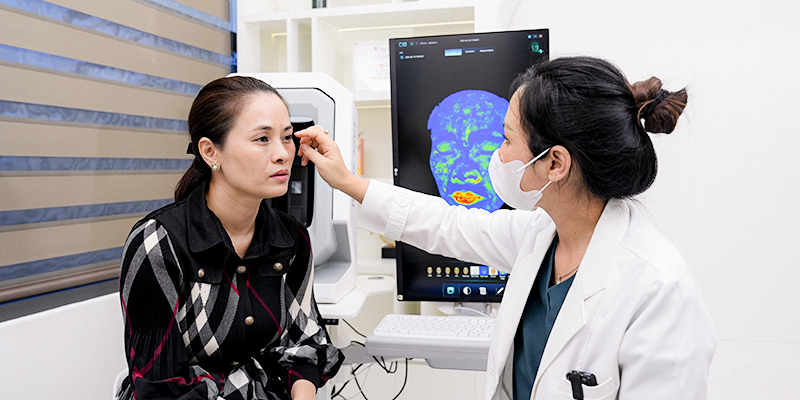
What Decides Whether Plastic Surgery in Vietnam Is Safe?
Safety in medical tourism is determined at the facility level, not by geographic location. Evaluating whether plastic surgery in Vietnam is safe comes down to four verifiable legal and clinical standards, all of which can be confirmed before paying any upfront deposit.
1. Legal Facility Classification: Spa vs. Clinic vs. Hospital
In Vietnam, healthcare facilities operate under strict legal tiers defined by the Ministry of Health. Understanding these distinctions ensures you receive care at an appropriately credentialed venue:
| Facility Class | Permitted Scope of Care | Safety Level for Surgery |
| Beauty Spas / Skincare Salons | Non-invasive skin maintenance, facials, topical care. | UNLICENSED for Surgery: Cannot perform injections, incisions, or surgical alterations. |
| Specialist Cosmetic Clinics | Local anesthetic procedures (e.g., upper/lower eyelid surgery, minor tip plasty). | LICENSED for Minor Surgery: Authorized for outpatient procedures under local anesthesia. |
| Accredited Cosmetic Hospitals | Full surgical procedures (e.g., rib cartilage rhinoplasty, deep plane facelifts, breast augmentation). | LICENSED for Major Surgery: Equipped with 24/7 operating theaters, anesthesiology teams, and ICU suites. |
2. Official Scope of Approved Procedures
A facility license issued by the Department of Health comes with an explicitly defined scope of practice. A clinic permitted to offer non-invasive laser treatments or skin rejuvenation is legally prohibited from performing surgical procedures.
Always verify that the facility’s licensed scope matches your specific surgical booking.
3. Surgeon Credentials Under Law 15/2023/QH15
Under Vietnam’s updated Law on Medical Examination and Treatment (Law 15/2023/QH15), all practicing physicians must hold a medical license subject to renewal and continuous evaluation every five years.
- Safety Checklist: Ask for the operating surgeon’s full name and license number rather than relying on building branding or general clinic prestige.
- Verification: Confirm that the physician holds a sub-specialty certification in Plastic and Reconstructive Surgery.
4. Emergency Response & Anesthesia Capabilities
Complex operations requiring general anesthesia such as autologous rib cartilage harvesting or full facelifts, demand hospital-grade infrastructure.
For instance, harvesting costal (rib) cartilage carries a minor risk of pleural membrane injury, making it a procedure that must strictly take place inside an accredited hospital with a dedicated anesthesiology team and emergency resuscitation facilities, never in a boutique clinic.
Key Takeaway for International Clients
Whether you are seeking the best plastic surgery in Vietnam or researching local clinic safety, never rely on country-level generalizations. Verify the facility tier, confirm the surgeon’s license under Law 15/2023/QH15, and ensure the operating room matches the clinical complexity of your procedure before booking travel.
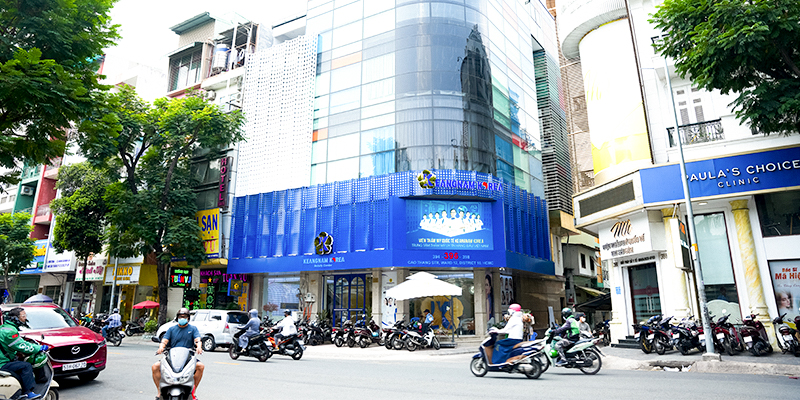
How to Verify a Vietnamese Cosmetic Clinic License Online
Verifying a clinic’s medical credentials takes less than 10 minutes from overseas and provides far more reliable safety proof than online review sites or social media galleries.
- Step 1: Request the Facility Operating License Number
- Step 2: Confirm Procedure on Approved Technique List
- Step 3: Verify Operating Surgeon’s Practice License & Specialty
- Step 4: Clarify Consultation Language & Translator Requirements |
Step 1: Verify the Facility Operating License
Every accredited specialist clinic and Vietnam plastic surgery hospital must display an official operating license number issued by the Ministry of Health or local Department of Health.
- Format in Ho Chi Minh City: Operating licenses follow a standardized legal format, such as 06303/HCM-GPHĐ.
- How to Check Online: Visit the official Ho Chi Minh City Department of Health portal at thongtin.medinet.org.vn and input the license number or facility name to confirm active registration.
Step 2: Request the Approved Technique List
A valid facility license alone does not authorize every surgical procedure. The Department of Health attaches an official Approved Technique List to each license, defining exactly what operations the venue may legally perform.
- Action: Request a written copy of the clinic’s approved technique list.
- Red Flag: If a clinic is licensed for non-invasive dermatology or minor skin care, it cannot legally perform surgical procedures like blepharoplasty or rhinoplasty.
Step 3: Check the Operating Surgeon’s Practice License
Under Vietnam’s Law on Medical Examination and Treatment, practicing physicians must hold an individual medical practice license that specifies their surgical specialty and requires renewal every 5 years.
- Action: Ask for the operating surgeon’s full name, license number, and sub-specialty certification in Plastic and Reconstructive Surgery.
- Red Flag: An expired practice license or a general practitioner operating without a plastic surgery sub-specialty certification.
Step 4: Confirm Consultation Language & Interpretation Protocols
Vietnamese medical regulations require physicians to conduct physical examinations in Vietnamese, with specific legal exceptions granted for treating non-Vietnamese-speaking foreign nationals.
- Action: Confirm in writing whether your surgeon speaks fluent English or if a dedicated bilingual medical coordinator will be assigned to translate your consultation and risk assessment forms.
A clinic or Vietnam plastic surgery hospital that provides clear, written responses to these four verification steps demonstrates total legal transparency. Conversely, any facility that hesitates or treats these basic safety inquiries as unusual should be immediately excluded from your travel plans.
What a Surgical Price in Vietnam Has to Cover
When reviewing surgical quotes in Ho Chi Minh City, foreign clients should note that Vietnamese pricing is generally all-inclusive. Unlike in the US or Australia, where surgeon fees, hospital facility charges, and anesthesiology are billed separately, a single cosmetic surgery quote in Vietnam typically covers:
- Pre-operative medical screening & blood tests
- Operating surgeon & assistant fees
- Anesthesiology team & operating theater overhead
- Implants, grafts, or specialized surgical materials
- Mandatory post-operative check-ups & suture removal
→ Explore more at: Aesthetic Clinics in Ho Chi Minh City, Vietnam
1. Eyelid Surgery Vietnam Price Breakdown (2026)
Eyelid surgery in Vietnam offers world-class precision at a fraction of Western costs. Prices vary based on surgical technique (non-incisional vs. incisional) and surgical complexity:
| Eyelid Procedure Type | Cost in USD | Cost in Vietnamese Dong (VND) | Surgical Focus & Complexity |
| Non-Incisional Double Eyelid (Suture Method) | $110 – $950 | 3M – 25M VND | Anchors eyelid skin to levator muscle via micro-entry points. |
| Upper Blepharoplasty (Incisional) | $270 – $1,670 | 7M – 44M VND | Removes excess skin/fat and creates a natural, permanent crease. |
| Lower Blepharoplasty (Eye Bag Removal) | $200 – $950 | 5.2M – 25M VND | Smooths lower lid contours and repositions under-eye fat pads. |
| Eyelid Revision Surgery | $460 – $2,280 | 12M – 60M VND | Corrects scarred, asymmetrical, or damaged lids from prior operations. |
Key Takeaway: Revision eyelid surgery costs several times more than a primary operation due to scar dissection and tissue restoration. This cost gap is the strongest reason to verify your surgeon’s medical license before focusing on price alone.

2. Rhinoplasty in Vietnam Cost Breakdown (2026)
Rhinoplasty in Vietnam costs span a wide range ($530 to $8,360) because different structural techniques require vastly different clinical resources, operating times, and facility tiers:
| Rhinoplasty Technique | Cost in USD | Operating Time | Clinical Requirements & Materials |
| Synthetic Implant Augmentation | $530 – $850 | 15 – 30 mins | Silicone bridge implant under local anesthesia. |
| ePTFE Structural Rhinoplasty | $1,140 – $2,930 | 60 – 120 mins | Uses Surgiform/Nanoform ePTFE + ear cartilage tip cap. |
| Autologous Rib Cartilage Rhinoplasty | $3,040 – $8,360 | 180 – 240 mins | Requires general anesthesia in an accredited hospital + chest incision. |
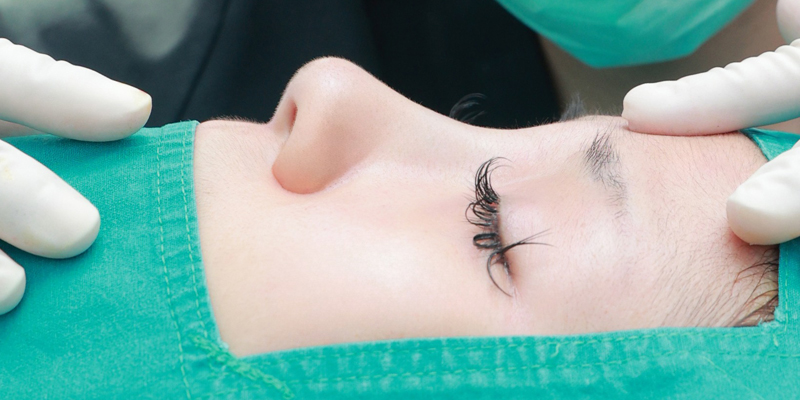
3. Facelift in Vietnam Cost Breakdown (2026)
Facial rejuvenation pricing in Ho Chi Minh City falls into three distinct clinical tiers, which should never be confused or mixed in a single quote:
- Surgical Facelifts: Standard accredited hospitals charge $1,330 to $3,040 (35M to 80M VND) for full-face SMAS lifting, while premium private hospitals charge $5,700 to $11,400.
- Thread Lifting: Non-surgical PDO/PLLA thread placement repositions mild skin laxity but does not remove excess skin.
- Energy-Based Tightening: Devices like HIFU, Ultherapy, and Radiofrequency tighten skin non-invasively without deep tissue dissection.
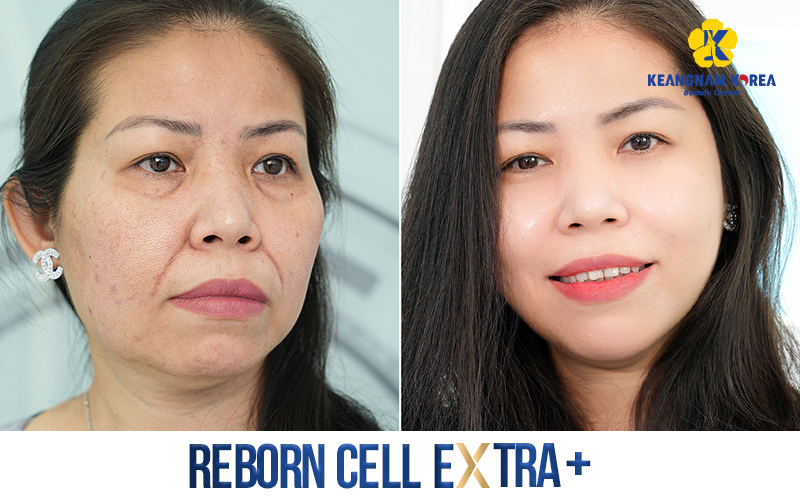
Warranties Cover the Shape, Not the Healing
Vietnamese hospitals commonly attach a warranty to surgery, and the periods are longer than most visitors expect. Basic eyelid stitching is typically covered for around 10 years, high-technology incisional eyelid work for up to 20 years or for life, and large private hospitals advertise five years to lifetime cover across their surgical menu.
The document covers the structural result, meaning a crease that fades, an implant that moves, or a shape that does not hold. Healing complications, infection, and anything caused by another facility’s work usually fall outside it, and terms differ enough between hospitals that only the written version answers the question.
Three points are worth settling in writing before surgery:
- Which events trigger the warranty, and who decides whether a case qualifies.
- Whether the warranty pays for the theater and anesthesia on a second operation, or only the surgeon’s time.
- How long you have to raise a problem, and whether a remote assessment by photograph counts.
A warranty is not a refund policy, and it does not replace the revision terms. Ask for both documents rather than assuming one covers the other.
Risks That Belong to the Operation
Every procedure on a cosmetic menu carries risk that no license removes, and knowing the specific ones sharpens the questions worth asking at consultation.
- Bleeding, infection, and scarring: Any incision carries all three. Eyelid cuts follow the natural crease, so a mature scar usually disappears into the fold once healing finishes at one to three months.
- Asymmetry after ptosis correction: The lid can end up a little high or a little low. Measuring the lifting muscle in both eyes before the first incision is what prevents it.
- Implant problems under thin skin: A silicone bridge can move, thin the skin above it, or redden at the tip. A cushion of ear cartilage over the tip is the standard answer, and 5% to 10% of that graft is absorbed in the first two years while the rest firms into a stable layer.
- Warping after rib cartilage reconstruction: Warping or partial reabsorption is reported in 2% to 5% of rib cases, and harvesting the cartilage carries a small risk of injuring the lung lining.
- Vascular complications from filler: The FDA warns that filler entering a blood vessel can cut off blood supply and cause vision changes, blindness, stroke, or tissue death, and reports these events most often around the nose and eyes.
- Thread lifts that disappoint: Barbed threads bind to tissue and form fibrous bands, so removing them means surgical dissection rather than a simple reversal.
Call the hospital that operated on you the same day if pain climbs after the first day, if redness spreads or fever appears, if skin near an injection point turns pale or dusky, or if a wound edge opens. Any change in vision after a facial injection needs emergency care rather than a phone call.
Who Should Not Book Surgery in Vietnam Yet
Postponing costs nothing, and a surgeon who suggests it has given you useful information.
- If the license and technique list have not been confirmed, hold the deposit. Both are public record and take minutes to check, and no consultation date is worth skipping them for.
- If fewer than 10 days remain on the trip, book the consultation and schedule surgery for a later visit. Sutures come out between day five and day seven, a review appointment follows, and cabin pressure and dry cabin air work against a wound that is not yet stable.
- If the case needs repeated in-person review, a compressed schedule does not hold. Rib cartilage reconstruction and complex revision need 15 to 20 days of healing before review appointments even begin.
Safety Standards at Keangnam Korea in Ho Chi Minh City
Located at 394-396 Cao Thang, Ward 12, District 10, Ho Chi Minh City, Keangnam Korea operates under Department of Health Operating License No. 06303/HCM-GPHĐ (Tax Registration: 0314529669). In full compliance with Vietnamese medical law, Keangnam Korea holds explicit Department of Health authorization to perform cosmetic surgical procedures for foreign nationals and international visitors.
How Keangnam Korea Protects International Customers:
- Surgery runs in a licensed operating theater: The license number above covers the room, the anesthesia setup, and the post-operative care that follows it.
- The technique is chosen after the examination: The surgeon assesses structure, skin thickness, and proportion before proposing a procedure, so the plan matches the case rather than a menu.
- Screening happens before surgery is confirmed: Pre-operative assessment covers 36 health measurements to check that the anesthesia and the procedure are safe for you.
- The doctor who consults with you operates: One client is seen per room, and an English-speaking coordinator stays through the visit so the risk list is heard in your own language before anything is signed.

For visitors, appointments are arranged around the days left on the trip, and a follow-up channel stays open after the flight home.
BOOK YOUR PRIVATE CONSULTATION TODAY
Direct Booking Hotlines: 0911 833 555 | 0988 222 158
Explore more
RELATED ARTICLES

Collagen Injection vs. Laser for Facial Skin: Cost, Recovery, and Fit
A collagen injection vs laser for aging facial skin, which is better? They are two distinct approaches to facial rejuvenation and do not replace each other. Lasers work from the outside in to correct surface texture and pigment, while injected

Collagen Shots for the Face vs. Mesotherapy: Aging Grades, Cost, and Results
Deciding between collagen shots for the face and mesotherapy comes down to identifying which layer of your skin is experiencing aging. Mesotherapy nourishes the superficial skin layers for quick surface hydration, whereas collagen shots for the face rebuild structural density
How Long Does a Fox Eye Thread Lift Last? Costs, Risks, and Results
A fox eye thread lift is a minimally invasive procedure that uses dissolvable barbed threads to suspend the outer corner of the eye (lateral canthus) and the eyebrow tail toward the temple. By gently pulling these soft tissues upward, the

What Is a Liquid Nose Job? Cost, Longevity and When Do Threads Work Better?
What is a liquid nose job? A liquid nose job (clinically known as liquid rhinoplasty) is a non-surgical procedure that reshapes the nose using precision injections of hyaluronic acid (HA) filler. The treatment takes 10 to 15 minutes, requires zero

Semi-Structural Rhinoplasty for a Low Bridge and Wide Tip: Cost and Recovery
Semi-structural rhinoplasty is a targeted surgical procedure that reshapes specific portions of the nose, typically modifying a broad, rounded tip with autologous cartilage while elevating a slightly low bridge with a biocompatible implant. The procedure takes 45 to 90 minutes

Non-Surgical Rhinoplasty Price in 2026: Cost by Filler and Thread Type
The non-surgical rhinoplasty price in Ho Chi Minh City, Vietnam, ranges from $230 to $1,720 (6 to 45 million VND) per treatment in 2026. The overall cost is determined primarily by the specific material and technique selected: The material used