Skip to content


How Much Does Lateral Canthoplasty Cost in Vietnam?
The average lateral canthoplasty cost in Vietnam ranges from $210 to $840 (5.6 to 22 million VND) in 2026, with most written quotes settling between $460 and $690. The specific structural rebuilding required at the outer corner of the eye determines where a quote falls within this range.
Surgical technique and case complexity influence the final lateral canthoplasty price far more than clinic branding. This guide breaks down what each procedure covers, compares regional costs across Asia, outlines suitable eye shapes for asian lateral canthoplasty, details the week-by-week recovery timeline, and explains how to plan your cosmetic lateral canthoplasty procedure around your travel itinerary in Vietnam.
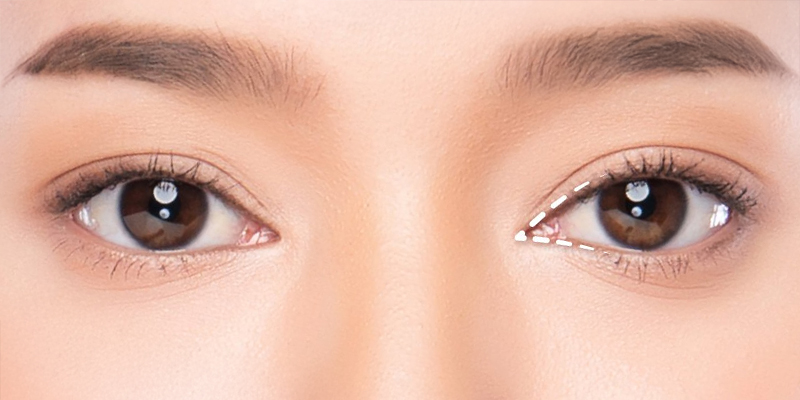
Lateral Canthoplasty Cost Breakdown in Ho Chi Minh City
The total lateral canthoplasty cost in Ho Chi Minh City falls into three distinct pricing tiers based on the extent of tissue manipulation and flap reconstruction required at the outer canthus:
- Simple Outer Corner Opening: $210 to $380 (5.6 to 10 million VND)
- Flap Transfer (W-Plasty or Z-Plasty): $380 to $840 (10 to 22 million VND)
- Combined Outer Corner & Double Eyelid Surgery: $570 to $990 (15 to 26 million VND)
| Surgical Tier | Cost in USD | Cost in VND | What the Fee Covers |
| Simple Outer Corner Opening | $210 – $380 | 5.6 – 10 million VND | Releasing and closing the outer corner without skin flap transfer. |
| W-Plasty or Z-Plasty Flap Transfer | $380 – $840 | 10 – 22 million VND | Mobilizing a skin flap to secure the new outer corner position and prevent re-webbing. |
| Combined Outer Corner & Double Eyelid Surgery | $570 – $990 | 15 – 26 million VND | Simultaneous crease creation, fat removal, and lateral canthus lengthening in one session. |
Correcting or repairing previous lateral canthoplasty surgery performed elsewhere operates on a separate price scale, ranging from $460 to $2,290 (12 to 60 million VND). Revisional procedures require significantly more clinical time to perform scar tissue release, address web deformities, and reconstruct the underlying lateral canthal tendon.
Related reading
Lateral Canthoplasty Price Across Asia
The lateral canthoplasty price starts at $210 in Ho Chi Minh City and reaches up to $4,500 in Singapore for the same family of outer corner procedures. While surgical techniques like W-plasty and Z-plasty flap transfers remain identical across international markets, localized operational fees and facility overhead drive significant cost variations across major Asian medical hubs.
2026 Regional Cost Comparison for Canthoplasty Procedures
| Regional Market | Procedure Listing Name | Price Range (USD Equivalent) |
| Ho Chi Minh City (Vietnam) | Outer or Inner Corner Surgery | $210 – $950 (5.6 – 25M VND) |
| South Korea | Canthoplasty | $1,000 – $3,500 |
| Thailand | Cat Eye Surgery / Canthoplasty | $1,400 – $2,200 (47,600 – 74,800 THB) |
| Japan | Epicanthoplasty | From $1,040 (165,000 JPY) |
| Singapore | Epicanthoplasty (Basic) | $2,800 – $4,500 |
Key Financial & Travel Factors for International Visitors
- Technique Parity vs. Cost Gap: A cosmetic lateral canthoplasty procedure in Ho Chi Minh City costs roughly four to five times less than in Seoul for equivalent surgical maneuvers. The price differential stems from lower localized operating theater and clinical staffing expenses rather than differences in surgical skill or equipment.
- Travel Schedule Requirements: Surgical quotes cover the procedure itself, but international travel planning must account for essential recovery time. Leading medical hubs recommend a stay of 7 to 10 days to complete initial consultations, lateral canthoplasty surgery, and 1 to 3 post-operative review sessions before flying.
- Why Short Visits Are Not Recommended: Combining complex outer corner surgery with a brief 3 to 5 day holiday is medically ill-advised, as suture removal and early-stage flap monitoring require a full 7 to 10 day window in-country.
Types of Lateral Canthoplasty Technique in Vietnam
The specific lateral canthoplasty surgery technique utilized depends on the desired modification to the outer corner of the eye. Four primary variations cover most cosmetic lateral canthoplasty requests:
- Asian Lateral Canthoplasty (Downward Tilt): Lowers the outer corner to elongate the eye horizontally by 2 to 3 mm via a 3 to 5 mm incision placed along the outer lid crease.
- Upper Lateral Canthoplasty (Upward Tilt): Elevates the outer corner up to a maximum limit of 3 mm toward the brow for a cat-eye effect.
- Lower Canthoplasty (Lid Laxity Support): Tightens and repositions the outer corner to support a slack lower lid, typically accompanying lower eyelid surgery.
- W-Plasty and Z-Plasty Flap Transfer: Mobilizes a skin flap so the newly repositioned corner holds its placement without contracting back, representing the $380 to $840 price tier in Ho Chi Minh City.
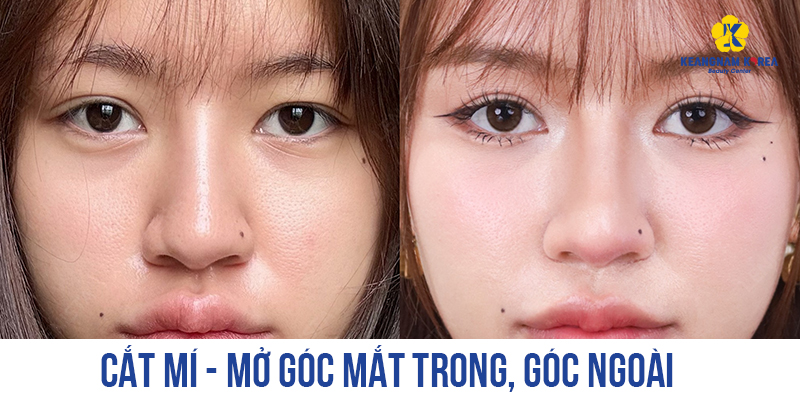
1. Asian Lateral Canthoplasty
In contrast to conventional Western procedures that elevate the outer canthus, Asian lateral canthoplasty frequently focuses on lowering the outer corner while lengthening the eye horizontally.
- Mechanism: Lowers a sharply upward-slanted lateral commissure to create a rounder, softer, and visually larger eye contour.
- Incision & Incision Extent: Performed via a 3 to 5 mm incision placed discreetly along the outer eyelid crease.
- Expected Expansion: Provides approximately 2 to 3 mm of horizontal widening.
2. Upper Lateral Canthoplasty
Upper lateral canthoplasty elevates the outer corner toward the brow – the foundational technique behind “cat-eye” or “fox-eye” procedures.
- Structural Baseline: In a naturally balanced eye, the lateral canthus sits approximately 1.2 mm (about 4.1 degrees) superior to the medial canthus.
- Surgical Elevation: Elevates the outer corner up to a maximum workable limit of 3 mm.
- Clinical Limit: Over-elevating beyond 3 mm creates an unnatural, excessively pulled appearance and risks eyelid distortion.
3. Lower Canthoplasty
Lower canthoplasty tightens and anchors the lateral canthal tendon to reinforce a lax lower eyelid.
- Clinical Indications: Primarily used to correct ectropion, lower lid laxity, canthal dystopia, or eyelid retraction.
- Procedure Mapping: Commonly performed alongside lower blepharoplasty rather than as an isolated cosmetic procedure.
4. W-Plasty and Z-Plasty Flap Transfers
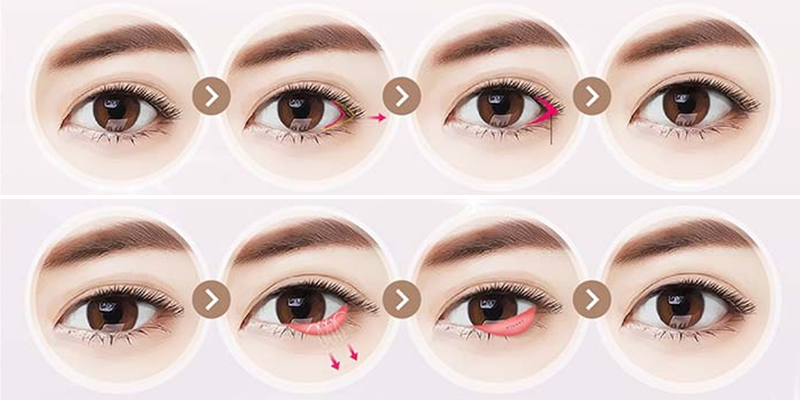
Flap repositioning techniques utilize geometric skin transfers to stabilize the newly created outer corner and prevent post-surgical web formation or re-contraction.
- Surgical Indication: Indicated whenever the outer canthus needs to be shifted more than a few millimeters.
- Tier Mapping: Forms the foundation of the $380 to $840 price tier in Ho Chi Minh City due to the increased surgical precision required.
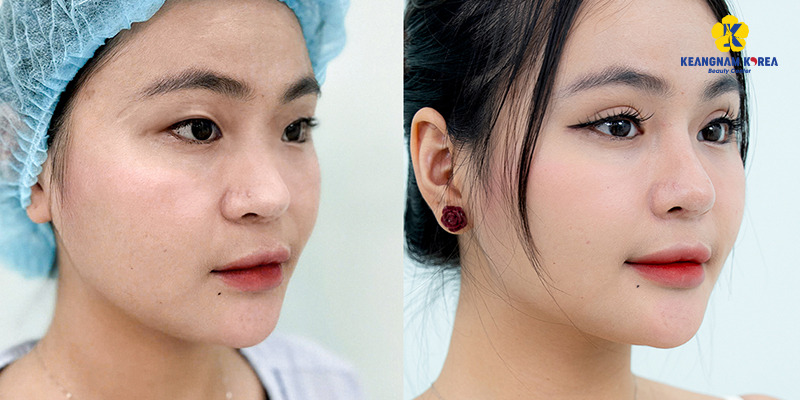
Lateral Canthoplasty vs. Inner Corner Surgery
While discussing outer eye rejuvenation, searches often confuse lateral epicanthoplasty with lateral canthoplasty surgery. In clinical practice, these two operations modify opposite ends of the eye, and mistaking one for the other directly impacts your treatment plan, scar placement, and overall cost.
- Inner Corner Surgery (Medial Epicanthoplasty): Releases the epicanthal fold near the bridge of the nose, shortening the distance between the eyes and revealing more of the inner corner. The incision scar rests on the nasal side where skin is thinner and initial healing lines are harder to conceal.
- Outer Corner Surgery (Cosmetic Lateral Canthoplasty): Reshapes and lengthens the outer corner toward the temple to modify the eye’s tilt or horizontal span. Incision scars are hidden within the natural crease of the outer lid.
- Combined Dual-Corner Surgery: Widens the eye opening from both ends in a single session. Clinics bill these as two distinct surgical procedures rather than offering a bundled discount.
Because the term lateral epicanthoplasty is often misapplied to outer corner work, candidates evaluating Asian lateral canthoplasty options should clearly describe their physical goals rather than naming the procedure during their initial consultation.
Related reading
Who Is a Good Candidate for Cosmetic Lateral Canthoplasty?
Cosmetic lateral canthoplasty is designed for individuals seeking to modify the horizontal span or tilt of the eyelid aperture. Candidates typically evaluate lateral canthoplasty surgery when their natural eye shape exhibits specific structural characteristics:
- Short Horizontal Eye Span: An eye aperture that appears visually narrow or short in proportion to the overall facial width.
- Steep Upward Corner Tilt: An outer corner angled sharply upward, creating a severe or harsh resting expression.
- Age-Related Canthal Downward Drift: An outer corner that has descended below the level of the inner corner due to natural aging.
- Post-Surgical Lower Lid Laxity: A lower eyelid that lacks support or sags following prior blepharoplasty procedures.
- Incomplete Eye Enlargement: An eye shape that remains narrow even after undergoing double eyelid crease creation alone.
Understanding the Visual Transformation & Result Longevity
It is essential to recognize that lateral canthoplasty modifies the soft-tissue frame around the eye rather than altering the eyeball or iris itself. By expanding the outer corner, the procedure exposes more of the sclera (white portion of the eye), creating the optical illusion of a larger, more open eye from a conversational distance.
- Surgical Result Longevity: Outcomes generally hold for 5 to 10 years in most cases.
- Weight Stability Factor: Because flap placement and tension rely on surrounding dermal firmness, significant weight fluctuations can shift skin tension and alter long-term structural placement.
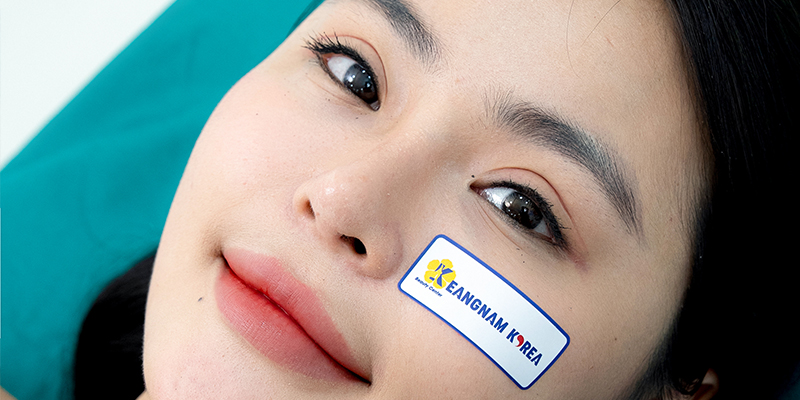
→ Related reading: Phoenix eye surgery
Lateral Canthoplasty Recovery Timeline & Key Travel Considerations
1. Recovering timeline
Following lateral canthoplasty surgery, external sutures are removed between day 5 and day 7. The outer corner typically appears natural and settled to observers by around week 4. Recovery progresses across four distinct phases:
- Days 1 to 3 (Peak Swelling): Post-surgical swelling reaches its peak. Chemosis (swelling of the clear membrane over the white of the eye) may occur and typically lasts 3 to 5 days.
- Days 5 to 7 (Suture Removal): Sutures are removed. Most candidates resume light desk work at this point, though prolonged screen time may cause eye fatigue, which artificial tears help alleviate.
- Days 7 to 10 (Bruising Clearance): Bruising largely fades during this window, and eye makeup can generally be reapplied once the incision line has fully closed.
- Weeks 2 to 4 (Final Shape Stabilization): Residual swelling steadily decreases throughout the month. By week 4, the outer corner reveals its final stabilized contour rather than looking operated on.
→ Related reading: what eyelid recovery looks like day by day
2. When Can You Fly After Lateral Canthoplasty Surgery?
Board-certified plastic surgeons typically advise waiting 7 to 14 days post-surgery before flying, with many recommending a full 10 to 14 days prior to long-haul transit. Low cabin humidity and air pressure changes can exacerbate eye dryness and post-operative swelling, making it essential for the incision line to stabilize and sutures to be removed before departure.
Pre-Flight Clearance Checklist:
Before confirming your return flight home, ensure you satisfy all four recovery conditions:
- Incision Stability: External sutures are removed and the outer corner incision line is fully closed.
- Contact Lens Restriction: No contact lenses are worn until cleared by your surgeon, typically 1 to 2 weeks post-procedure.
- Hand Luggage Essentials: Prescribed eye drops, artificial tears, and oral pain medications are kept in your carry-on luggage for easy access during flight.
- Physician Approval: Your flight date is directly authorized by the operating surgeon during your final post-operative review visit.
Travel Tip: Booking an open-ended return flight or flexible travel fare avoids unexpected rebooking fees if your surgeon recommends extending your recovery stay in Vietnam by a few additional days.
Enhance Your Eyes with Precision Lateral Canthoplasty at Keangnam Korea
If you want to widen short eyes, soften a harsh upward tilt, or achieve a beautifully balanced eye shape during your visit to Ho Chi Minh City, Keangnam Korea Beauty Center offers medical-grade, physician-led eye corner surgery tailored for international clients and expats.
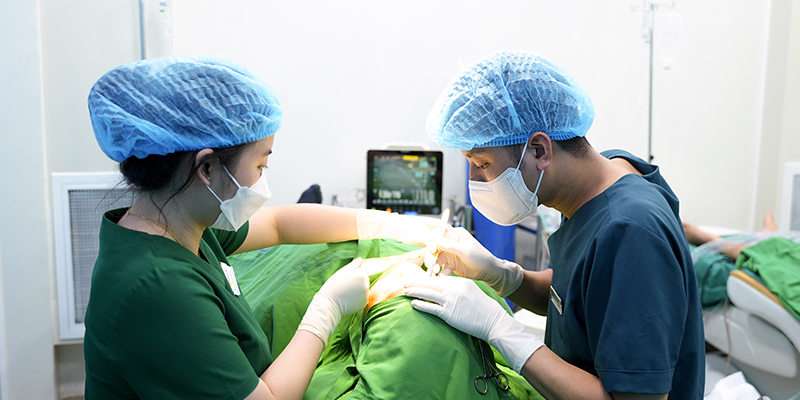
Why International Visitors Choose Keangnam Korea:
- Fully Licensed Medical Safety: Surgery is performed at our licensed clinic (Department of Health Operating License: 06303/HCM-GPHĐ, Business Registration: 0314529669), fully cleared to provide specialized surgical care to foreign nationals.
- Upright Marking for Flawless Symmetry: Your surgical measurements are taken while sitting upright rather than lying down. This critical step ensures that once swelling subsides, your outer corners remain perfectly level in your natural daily posture.
- 1:1 Physician Continuity: The specialized plastic surgeon who evaluates your eyelids during consultation is the exact surgeon who performs your operation—ensuring your personal aesthetic plan is carried out precisely as discussed.
- Dedicated English-Speaking Coordinators: Experienced coordinators accompany you through every step, translating technique details, risk assessments, and aftercare guidelines clearly in English before any agreement is signed.
- Private, Sterile Environment: All procedures take place in private, single-client operating rooms adhering to strict hospital-grade sterilization protocols.
- Itinerary-Aligned Scheduling: Treatments, suture removal, and review appointments are scheduled around your remaining travel dates, supported by an active post-flight digital channel for continuous follow-up photos and inquiries.
Preparing for Your First Consultation
To ensure the most accurate surgical assessment and custom itinerary planning, please bring:
- A complete list of any daily medications or supplements you take.
- Details of any facial laser treatments or chemical peels performed within the past 4 weeks.
- Your exact remaining days in Vietnam so your surgical and review schedule can be mapped efficiently.
You will receive a comprehensive physical evaluation followed by a fully itemized, transparent written quote before committing to your procedure.
Book Your VIP Consultation
- Location: 394-396 Cao Thang, Ward 12, District 10, Ho Chi Minh City
- Direct Hotline: 0911 833 555
How much does lateral canthoplasty cost in Vietnam?
Corner surgery costs $210 to $840 (5.6 to 22 million VND) in Ho Chi Minh City in 2026, and most written quotes fall between $460 and $690. A simple opening is priced at the lower end, while W-plasty or Z-plasty flap transfer takes the fee toward the upper end of the band.
Is lateral canthoplasty cheaper in Vietnam than in Korea?
Yes. Korean sources publish $1,000 to $3,500 for canthoplasty, against $210 to $950 for corner surgery in Ho Chi Minh City. The difference is what each market pays for facilities and staff, since the flap techniques used are the same ones described in both places.
How long after lateral canthoplasty can you fly home?
Surgeons quoted on eyelid surgery recommend seven to 14 days, and many prefer 10 to 14 days even for short flights. Sutures come out on day five to day seven, and the incision needs to be closed before cabin pressure and dry air add to swelling and dryness.
Does outer corner surgery leave a visible scar?
The incision runs 3 to 5 mm along the natural crease at the outer lid, which is where it is least visible. It flattens over one to two months and keeps fading for another two to three. Scarring is still on the published risk list, and healing varies by skin type.
How long do the results of corner surgery last?
Results hold five to 10 years in most cases when weight stays stable, since the corner position depends on the tension of the surrounding skin. Significant weight change alters that tension. Aging continues afterward, so the lower lid may loosen again over a longer horizon.
RELATED ARTICLES

Alarplasty and Rhinoplasty Comparison: Which Procedure Fits Your Nose Shape
Selecting between alarplasty and rhinoplasty depends on whether your lower nose appears wide due to flared soft tissue or a low, unsupported structural bridge. Alarplasty isolates and reshapes the nostril wings at the base, whereas rhinoplasty elevates, straightens, or rebuilds
Nose Wing Reduction: Is Alarplasty Worth It? Pros, Cons, and Recovery Time
A nose wing reduction (alarplasty) is a surgical option for those whose nostril wings are naturally thick, wide, or flared while their nasal bridge height and tip projection already suit their overall facial proportions. This procedure selectively reshapes or excises

Alar Base Reduction Technique: Rolling vs. Excision Comparison
An alar base reduction technique narrows flared or wide nostrils by either folding the nostril rim inward with internal sutures or excising a targeted strip of tissue. In Ho Chi Minh City, Vietnam, plastic surgeons perform four main surgical variations
Top 5 Rhinoplasty Clinics in Ho Chi Minh
Rhinoplasty clinics in Ho Chi Minh City offer safe cosmetic nose surgery: Gangwhoo Aesthetic Hospital, JW Korean Aesthetic Hospital, Kangnam Aesthetic Hospital, Thu Cúc Aesthetic Hospital, and Keangnam Korea. In 2026, market rates for cosmetic nose surgery across these facilities

Collagen Injection vs. Laser for Facial Skin: Cost, Recovery, and Fit
A collagen injection vs laser for aging facial skin, which is better? They are two distinct approaches to facial rejuvenation and do not replace each other. Lasers work from the outside in to correct surface texture and pigment, while injected

Collagen Shots for the Face vs. Mesotherapy: Aging Grades, Cost, and Results
Deciding between collagen shots for the face and mesotherapy comes down to identifying which layer of your skin is experiencing aging. Mesotherapy nourishes the superficial skin layers for quick surface hydration, whereas collagen shots for the face rebuild structural density