Skip to content

Structural Rhinoplasty vs. Semi-Structural Rhinoplasty: Differences, Costs, and Which to Choose
Structural rhinoplasty rebuilds the entire nasal framework (bridge, tip, columella, and septal support) and costs about 35,000,000 to over 100,000,000 VND (roughly 1,330 to 3,800 USD or more) in Vietnam, while semi-structural rhinoplasty refines only part of the nose and runs about 20,000,000 to 40,000,000 VND (760 to 1,520 USD).
The right choice depends on how strong your existing nasal structure is and how much correction the nose actually needs. This guide explains what each technique is, how they differ, which cartilage they use, who suits each one, and what they cost in 2026.

Structural Rhinoplasty vs. Semi-Structural Rhinoplasty
What Is Structural Rhinoplasty?
Structural rhinoplasty is a comprehensive nose surgery that reconstructs the whole nasal framework. The surgeon fully exposes the septum and lower cartilages, then rebuilds or reinforces the columella (the strip of tissue between the nostrils) using the individual’s own cartilage, usually combined with a synthetic implant to raise the bridge.
Because it rebuilds the support of the tip independently, it can lengthen a short nose and lift the tip without pressing on the delicate tip skin.
What Is Semi-Structural Rhinoplasty?
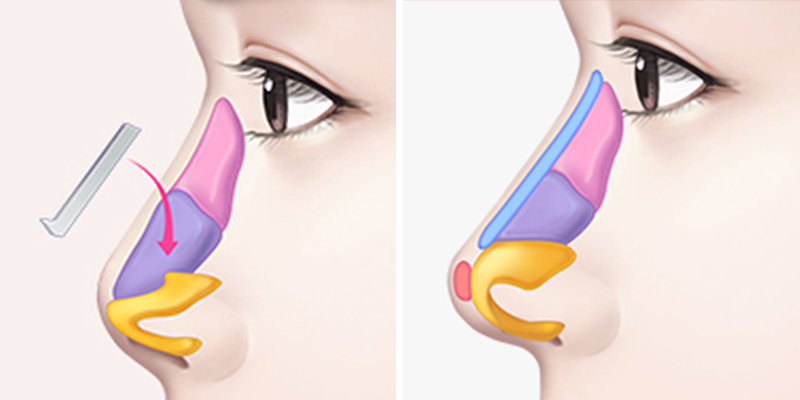
Semi structural rhinoplasty is a less invasive technique that corrects only part of the nose. It mainly raises the bridge and lightly reinforces the tip, while leaving the natural columella underneath largely intact.
The strength of the tip in a semi-structural (or partial structural rhinoplasty) result therefore depends on the cartilage foundation the individual already has. For that reason, this approach suits noses that already have a firm columella, a reasonably long tip, and only minor concerns along the bridge or nostrils.
The Key Differences: Structural vs. Semi-Structural Rhinoplasty
The core difference comes down to how deeply each method intervenes in the load-bearing framework of the nose. Structural rhinoplasty rebuilds that framework; semi-structural rhinoplasty works on top of it.
The table below sets the two techniques side by side across the criteria that matter most when comparing structural vs. semi-structural rhinoplasty. This is also the practical answer to the related searches for structural vs. preservation rhinoplasty and structural vs. cellular rhinoplasty, since both terms describe the same trade-off: full reconstruction versus limited, surface-level correction.
| Criteria | Structural rhinoplasty | Semi-structural rhinoplasty |
| Scope of correction | Rebuilds the entire nose: bridge, tip, columella, and septum | Refines the bridge and part of the tip only |
| Incision type | Open rhinoplasty (small incision across the columella) | Closed rhinoplasty (inside the nostril, no external scar) |
| Cartilage used | Autologous rib, septal, or ear cartilage plus a synthetic implant | Mainly a synthetic implant, sometimes with an ear cartilage wrap |
| Concerns handled | Short, upturned, crooked, very flat, or revision noses | Minor bridge or nostril concerns on an already-strong nose |
| Surgery time | About 60 to 120 minutes | About 30 to 45 minutes |
| Anesthesia | Deep sedation or general anesthesia | Local anesthesia |
| Recovery | Stitches out in 10 to 14 days; settles over 6 to 12 months | Stitches out in 7 to 10 days; settles over 2 to 4 weeks |
| Durability | Long-lasting, often 20 to 30 years or more | Around 10 to 15 years; the tip may soften over time |
| Cost | Higher (35,000,000 VND and up) | More affordable (about 20,000,000 to 40,000,000 VND) |
The incision difference drives most of the clinical contrast.
- The open approach in structural rhinoplasty lifts the nasal skin so the surgeon sees the cartilage and bone directly, which allows precise reconstruction at the cost of a fine columella scar that usually fades close to skin tone by the third to sixth month.
- The closed approach in semi-structural rhinoplasty leaves no external scar and swells less, but the limited view demands very skilled implant positioning to avoid later deviation.
What Cartilage Is Used in Each Technique?
Cartilage choice is one of the clearest dividing lines between the two methods. The material decides how much support the nose gains and how natural the tip feels.
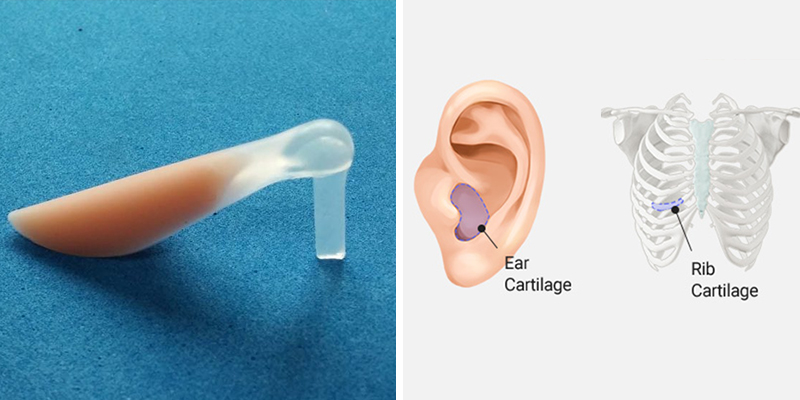
- Rib cartilage rhinoplasty: Rib cartilage rhinoplasty uses the individual’s own rib cartilage (typically the 6th, 7th, or 8th rib) and is the strongest option for deep structural work. Its firmness and volume make it the standard for rebuilding a destroyed septum, supporting a collapsed tip, or correcting a severely contracted nose, which is why it sits at the top of the structural rhinoplasty range.
- Septal cartilage rhinoplasty: Septal cartilage rhinoplasty uses the straight, flat cartilage from the nasal septum to build and lengthen the columella. It is considered an ideal material for first-time structural cases because it is naturally compatible with the nasal cavity and adds little donor-site recovery.
- Rhinoplasty with ear cartilage: Rhinoplasty with ear cartilage uses the soft, naturally curved cartilage from the ear to wrap and round the tip. Its gentle curve gives a soft, natural tip and lowers the risk of an implant showing through thin skin. Ear cartilage is common in both full structural cases and in semi-structural rhinoplasty, where it cushions the tip above a synthetic bridge implant.
In a typical semi-structural result, a synthetic implant raises the bridge while an ear cartilage graft (or a biologic membrane such as Megaderm) protects the tip. Structural rhinoplasty goes further, combining septal or rib cartilage to rebuild the columella itself.
Which One Should You Choose?
The decision comes down to matching the technique to your nasal anatomy, your concerns, and your budget. Both methods can deliver a natural looking rhinoplasty, but they suit very different starting points.
- Choose semi-structural rhinoplasty if: Your nose already has a firm columella and a reasonably long, well-defined tip, and you mainly want a higher bridge or a small refinement. This partial structural rhinoplasty is faster, more affordable, has a shorter recovery, and protects the tip without deep reconstruction.
- Choose structural rhinoplasty if: Your nose is very flat, short and upturned, wide, crooked, or has a deviated septum that affects breathing. Full reconstruction is also the only safe option for revision rhinoplasty, where a previous surgery has failed, the tip has contracted, or scar tissue has formed. In these cases a semi-structural approach cannot provide enough support, and rebuilding the framework with rib or septal cartilage is the appropriate medical choice.
A short way to frame it: semi-structural rhinoplasty enhances a nose that is already structurally sound, while structural rhinoplasty rebuilds a nose that is not. A direct consultation, ideally with 3D simulation, is the most reliable way to confirm which technique fits your face and goals.
Cost Comparison: Structural vs. Partial Structural Rhinoplasty
Structural rhinoplasty cost is consistently higher than semi-structural rhinoplasty cost because it uses more materials, takes longer, and often requires deeper anesthesia and a larger surgical team. The table below gives a 2026 planning reference for prices in Vietnam. USD figures are approximate, based on an exchange rate of about 26,330 VND to 1 USD.
| Technique | Reference price (VND) | Approximate (USD) |
| Semi-structural rhinoplasty (synthetic implant only) | 20,000,000 – 25,000,000 | 760 – 950 |
| Semi-structural with ear cartilage or Megaderm wrap | 25,000,000 – 40,000,000 | 950 – 1,520 |
| Structural rhinoplasty (ear or septal cartilage) | 35,000,000 – 70,000,000 | 1,330 – 2,660 |
| Structural with rib cartilage | 70,000,000 – 100,000,000 | 2,660 – 3,800 |
| Revision or full rib cartilage reconstruction | 100,000,000 – 260,000,000 | 3,800 – 9,875 |
Several factors move the final number within these bands.
- Cartilage and materials: Structural rhinoplasty often combines a premium imported implant (such as Surgiform or Nanoform) with autologous rib, septal, or ear cartilage and a tip-protecting membrane. The licensed, imported materials make up a large share of the price.
- Surgical complexity: Rib cartilage rhinoplasty involves two procedures at once, harvesting the rib and reshaping the nose, which requires a sterile hospital operating room and a larger specialist team. That complexity raises both the structural rhinoplasty cost and the safety standard.
- Revision and risk: Revision rhinoplasty for a contracted or damaged nose carries a higher risk of scarring and mucosal tearing. Prices in the 100,000,000 to 260,000,000 VND range reflect extended care, longer monitoring, and a longer warranty from the center.
- The facility and surgeon: Accredited centers with experienced surgeons price the same procedure differently from smaller clinics, and that gap usually reflects safety standards and aftercare quality.

What Should You Expect in Recovery?
Recovery tracks the depth of the surgery, so structural and semi-structural rhinoplasty heal on different timelines. Knowing the stages helps set realistic expectations.
- The first week: Bruising and swelling around the nose and eyes are normal, and more noticeable after structural rhinoplasty because it works deeper into bone and cartilage. The splint comes off and external stitches are removed around day 7 to day 10.
- The first month: Surface swelling fades and the shape begins to refine, though the tip and bridge can still feel firm as new collagen forms around the grafts and implant.
- Months three to twelve: The nose softens and settles. According to guidance from the American Society of Plastic Surgeons, deep-tissue swelling continues to decrease over roughly a year, so a structural nose looks its most refined well after the first month. Semi-structural results stabilize faster, usually within 2 to 4 weeks.
Across both techniques, the same aftercare protects the result: avoid bending the head far forward in the first week or two, do not rest heavy glasses on the bridge or press on the nose for about four weeks, sleep with the head elevated, and keep the incisions clean and dry.
Are There Risks With Either Technique?
Every surgical procedure carries some risk, and a balanced view is part of choosing well. The two methods carry different risk profiles rather than one being simply “safer.”
- Semi-structural rhinoplasty: Because it does not touch the bone, it avoids the deeper complications of full reconstruction. The main risks come from relying on a synthetic implant: bridge deviation, redness or thinning over the tip if the implant is set too high, and a small risk of infection or rejection.
- Structural rhinoplasty: Using the individual’s own cartilage lowers the risk of allergy and rejection, and it produces a more stable long-term result. The trade-off is a more complex operation, where outcomes depend heavily on the surgeon’s skill, plus a donor site when rib cartilage is used.
- Capsular contracture: In poorly performed cases of either type, the body can form a tight scar capsule around an implant, pulling the tip upward and shortening the nose. This is one reason a contracted or revision nose usually needs a staged, rib-cartilage structural rebuild rather than a quick re-implant.
Choosing an accredited facility and an experienced surgeon is the single most effective way to reduce these risks, regardless of which technique you choose.
Book an appointment
Both techniques have their own strengths. Semi-structural rhinoplasty is a safe, efficient, and cost-effective option for anyone who already has a strong nasal foundation and wants a natural, modest improvement with a quick recovery. Structural rhinoplasty is the appropriate choice, and often a medical necessity, for very flat, short, crooked, congenitally deformed, or previously failed noses, delivering a durable, comprehensive result that can last for decades.
The best decision is never based on price alone; it rests on an assessment of your nasal anatomy and the expertise of the center you choose.
Keangnam Korea offers both structural and semi-structural nose surgery in Ho Chi Minh City, combining detailed one-on-one consultation, a highly trained surgical team, and modern equipment, with clear pricing provided before any decision is made. A consultation and pre-surgery assessment is the most reliable way to confirm which technique fits your nose.
→ Explore the full rhinoplasty service at Keangnam Korea.
Book a free 1:1 consultation with a Keangnam Korea surgeon to get a fixed quote based on your own nose, with no cost beyond the price you are quoted.
What is the difference between structural and semi-structural rhinoplasty?
Structural rhinoplasty rebuilds the entire nasal framework, including the bridge, tip, columella, and septum, using autologous cartilage. Semi structural rhinoplasty (also called partial structural rhinoplasty) corrects only the bridge and part of the tip, leaving the natural columella largely intact, so it suits noses that are already structurally sound.
How much does structural rhinoplasty cost in 2026?
Structural rhinoplasty cost in Vietnam ranges from about 35,000,000 to over 100,000,000 VND (roughly 1,330 to 3,800 USD), and revision or full rib cartilage cases can reach 260,000,000 VND. Semi-structural rhinoplasty is more affordable at about 20,000,000 to 40,000,000 VND (760 to 1,520 USD).
Which is better, rib cartilage or ear cartilage rhinoplasty?
Rib cartilage rhinoplasty is firmer and is used to rebuild the columella or correct severe and revision cases. Rhinoplasty with ear cartilage uses softer, curved cartilage to round and protect the tip. They serve different roles, and structural cases often use both, while septal cartilage rhinoplasty is preferred for straight columella support in first-time surgery.
Do I need structural rhinoplasty for a revision nose job?
Yes. For revision rhinoplasty, where a previous surgery has failed or the tip has contracted, a semi-structural approach cannot provide enough support. Rebuilding the framework with rib or septal cartilage is the appropriate and safer choice.
Which technique gives a more natural looking rhinoplasty?
Both can achieve a natural looking rhinoplasty. Semi-structural rhinoplasty looks natural on a nose with few existing flaws, while structural rhinoplasty produces a natural result on noses that need full reshaping, because it corrects proportion and support rather than only adding height.
How long does each type of rhinoplasty last?
Structural rhinoplasty is long-lasting, often 20 to 30 years or more, because it uses the individual’s own cartilage for support. Semi-structural rhinoplasty typically lasts around 10 to 15 years, and the tip may soften or settle over time.
RELATED ARTICLES

Alarplasty and Rhinoplasty Comparison: Which Procedure Fits Your Nose Shape
Selecting between alarplasty and rhinoplasty depends on whether your lower nose appears wide due to flared soft tissue or a low, unsupported structural bridge. Alarplasty isolates and reshapes the nostril wings at the base, whereas rhinoplasty elevates, straightens, or rebuilds
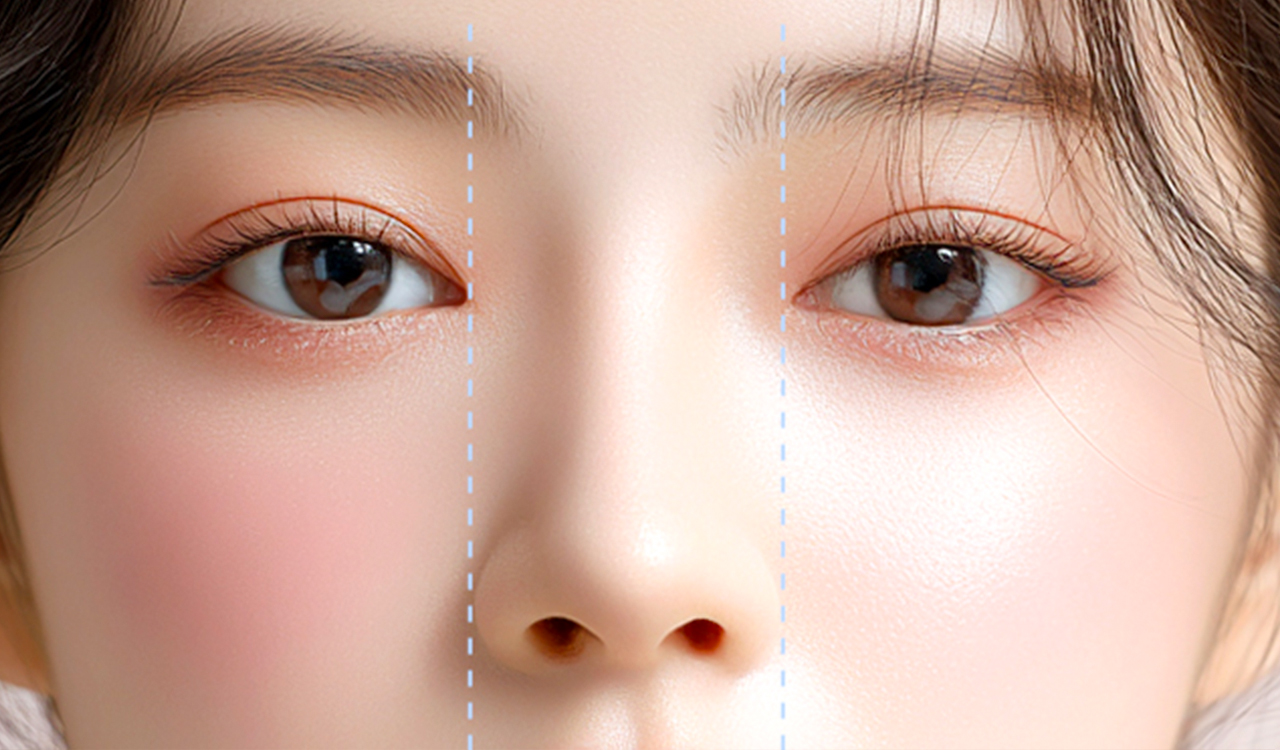
Nose Wing Reduction: Is Alarplasty Worth It? Pros, Cons, and Recovery Time
A nose wing reduction (alarplasty) is a surgical option for those whose nostril wings are naturally thick, wide, or flared while their nasal bridge height and tip projection already suit their overall facial proportions. This procedure selectively reshapes or excises

Alar Base Reduction Technique: Rolling vs. Excision Comparison
An alar base reduction technique narrows flared or wide nostrils by either folding the nostril rim inward with internal sutures or excising a targeted strip of tissue. In Ho Chi Minh City, Vietnam, plastic surgeons perform four main surgical variations
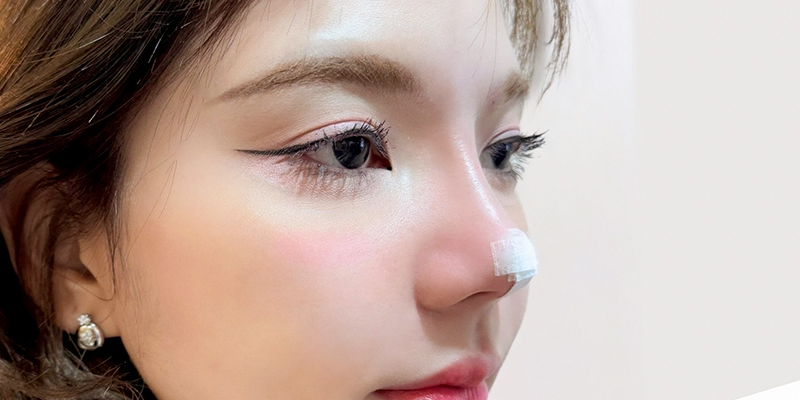
Top 5 Rhinoplasty Clinics in Ho Chi Minh
Rhinoplasty clinics in Ho Chi Minh City offer safe cosmetic nose surgery: Gangwhoo Aesthetic Hospital, JW Korean Aesthetic Hospital, Kangnam Aesthetic Hospital, Thu Cúc Aesthetic Hospital, and Keangnam Korea. In 2026, market rates for cosmetic nose surgery across these facilities

Collagen Injection vs. Laser for Facial Skin: Cost, Recovery, and Fit
A collagen injection vs laser for aging facial skin, which is better? They are two distinct approaches to facial rejuvenation and do not replace each other. Lasers work from the outside in to correct surface texture and pigment, while injected

Collagen Shots for the Face vs. Mesotherapy: Aging Grades, Cost, and Results
Deciding between collagen shots for the face and mesotherapy comes down to identifying which layer of your skin is experiencing aging. Mesotherapy nourishes the superficial skin layers for quick surface hydration, whereas collagen shots for the face rebuild structural density